How to Organize a Construction Estimate into Sections That Make Sense
A flat list of 40 line items is one of the fastest ways to lose a client's attention. According to ConstructionOnline, organizing estimates into categories and subcategories is a best practice for both clarity and traceability. We see this play out constantly with the contractors we work with: when estimates are grouped into logical sections, clients read them faster, ask fewer confused questions, and approve them sooner. Sections are not about making the document longer. They are about making it easier to say yes.
Why flat lists confuse clients
Most homeowners do not think about a project in terms of individual line items. They think in phases. Tear out the old stuff, run the new plumbing, put up the walls, make it look finished. When you hand them an estimate that is a single unbroken list of 30 or 40 items, they have to do the mental work of grouping those items themselves.
Most will not bother. They will scan the list, skip to the total, and have no real understanding of what they are paying for. That confusion breeds doubt, and doubt is what sends the job to a competitor. A sectioned estimate does the organizing for them so they can focus on the scope instead of trying to decode the document.
Organize by trade or by phase
There are two common ways to break an estimate into sections, and both work well depending on the project. For multi-trade jobs like a full kitchen remodel, organizing by trade (plumbing, electrical, carpentry, tile, painting) makes sense because it mirrors the subcontractor structure. For single-trade work, organizing by phase (demo, rough-in, materials, finish, cleanup) follows the natural sequence of the job.
The key is that each section tells the client what is happening and roughly when. A bathroom remodel estimate with sections for demolition, plumbing rough-in, tile and waterproofing, fixtures, and finish work reads like a plan. The same items dumped into a flat list read like a parts catalog.
Mirror the client's mental model
When a homeowner walks through a project in their head, they picture stages. First the old cabinets come out, then the new plumbing goes in, then the countertops arrive. Your estimate sections should follow that same narrative. When the structure of your estimate matches the way the client already thinks about the project, they feel understood.
That feeling matters more than most contractors realize. A client who reads your estimate and thinks "this person gets it" is far more likely to sign than a client who reads it and thinks "I have no idea what half of this means." Sections are the simplest way to close that gap. As we covered in our guide on what clients look at on estimates, people scan section headings before they ever read individual line items.
Keep sections consistent across projects
One of the biggest time savings from using sections is reusability. If every bathroom remodel you estimate follows the same section structure (demo, rough-in, waterproofing, tile, fixtures, finish), you are not starting from scratch each time. You adjust the quantities and pricing, but the skeleton stays the same.
This consistency also helps you spot patterns over time. If your tile section always comes in higher than expected, you know where to adjust. If demo keeps running over budget, you know that section needs a buffer. According to the Associated General Contractors of America, consistent cost categorization is a foundational practice for improving project-level cost tracking. That starts at the estimate level.
Sections make change orders manageable
Change orders are inevitable on most projects. The client decides they want a different tile, or the electrician finds outdated wiring behind the wall. When your original estimate is organized into clear sections, the change order has a natural place to land. "Add $1,200 to the Electrical section for panel upgrade" is a sentence the client can understand in five seconds.
Without sections, change orders feel arbitrary. "Add $1,200" to what? Where does that money go? The client has no frame of reference, and that lack of context leads to pushback. We covered the full change order process in a separate guide, but the short version is: sectioned estimates make change orders feel like updates to a plan, not surprise charges tacked onto a mystery total.
Good sections carry through to invoicing
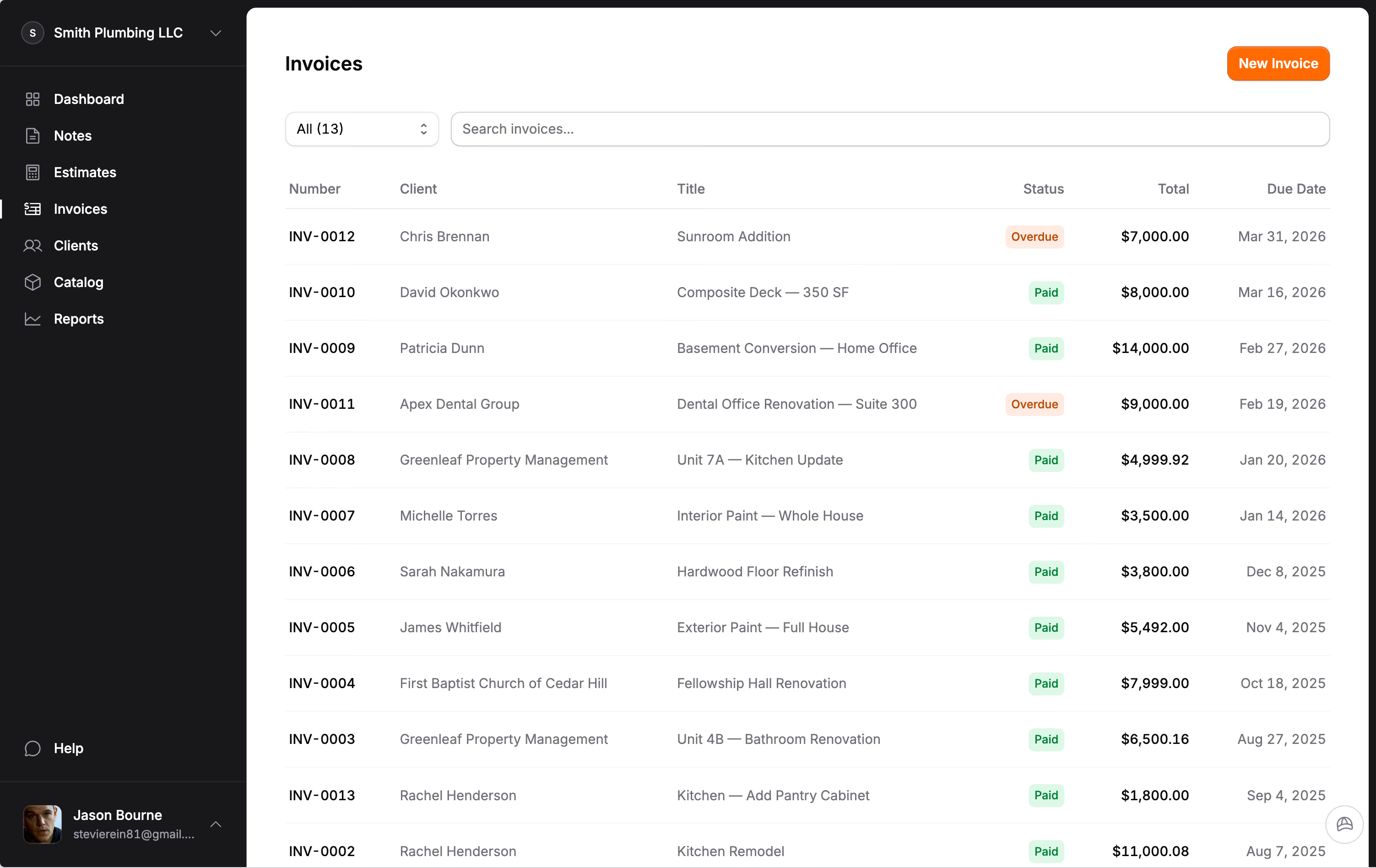
The structure you set in the estimate should follow the project all the way to the final invoice. When your estimate has five clear sections and your invoice references those same five sections, the client can trace every dollar from the original scope through to the final bill. There are no surprises.
This is where most contractors miss the real value of sections. It is not just about winning the job. It is about reducing payment disputes after the work is done. A client who can look at an invoice and immediately connect it to the approved estimate is a client who pays on time. That estimate-to-invoice continuity is something we built into Jobkore specifically because we heard from contractors that disconnected documents were causing payment delays.
A simple section structure that works
If you are not sure where to start, here is a section framework that works for most residential projects. Adapt it to your trade, but the principle is the same: group related work, follow the natural order of the job, and make each section understandable on its own.
Demolition and site prep. Everything that comes out before new work begins. Tear-out, haul-off, protection of existing surfaces.
Rough-in work. Structural, plumbing, electrical, HVAC. The behind-the-wall work that happens before anything visible goes in.
Materials and fixtures. What the client is actually getting: cabinets, countertops, tile, fixtures. Specify brands and models where possible.
Finish work. Painting, trim, hardware, final connections. The work that makes the project look complete.
Cleanup and final. Debris removal, final walkthrough items, punch list allowance. Including this as its own section sets the expectation that the job ends clean.
Five sections. Each one tells the client what is happening at that stage and what it costs. That is all it takes to turn a confusing list into a document that builds trust. If you are building estimates from your phone or laptop, tools like Jobkore let you create and reuse section templates so the structure stays consistent without extra effort.
Frequently Asked Questions
What sections should a construction estimate include?
Most residential estimates work well with five to seven sections organized by work phase: demolition, rough-in (electrical, plumbing, framing), materials and fixtures, finish work, and cleanup. The exact sections depend on the trade and project scope, but the key is grouping related line items so the client can scan the estimate and understand the project flow without reading every line.
Should I organize my estimate by room or by trade?
By trade or work phase. Clients think in rooms, but estimates should be organized by the type of work: demolition, framing, electrical, plumbing, finish. This structure mirrors how the project will actually be built, makes change orders easier to manage, and carries directly into your invoice without reorganization.
How many line items should a contractor estimate have?
Enough to be clear, not so many that the client gets lost. A bathroom remodel might have 15 to 25 line items grouped into five or six sections. A full home renovation might have 50 or more. The number matters less than the organization. Well-sectioned estimates with 40 line items read faster than flat lists with 15.
Do estimate sections help with change orders?
Yes. When your estimate is organized by section, a change order slots naturally into the right category. Adding a recessed light to the electrical section is straightforward. Adding it to a flat list of 30 random line items creates confusion. Sections make scope changes traceable from estimate to change order to invoice.