Electrical estimates and invoices that pass inspection on paper first.
Price by the device or the hour, write the code items a quick bid skips, and bill around the inspection. For solo electricians and small shops.
Price by the device, the circuit or the hour.
Most residential electrical work is priced by the piece: so much per outlet, per recessed light, per dedicated circuit, per panel. Troubleshooting is by the hour until you find the problem. Good electrical contractor software lets you do both on one estimate, without forcing every job into a single rate.
In Jobkore every line carries its own unit. Six recessed lights are six of one line. A 50-amp circuit for a range or an EV charger is one each. Diagnostic time is hours. The totals add up on their own, and the homeowner sees what each piece of the job costs.
Load the electrical trade pack and your catalog starts with the work you price every week: outlets and switches, GFCI receptacles, dimmers, fixtures and fans, 20-amp and 50-amp dedicated circuits, a 200-amp panel upgrade, a sub-panel, a Level 2 EV charger, a whole-house surge protector, smoke and CO detectors, and diagnostic and hourly service lines. The prices are national averages. Change them to yours and every estimate starts from your numbers.
Write the code items a quick bid skips.
The electrician who wins on price and then gets red-tagged at rough inspection did not save the homeowner anything. AFCI and GFCI protection where code requires it, tamper-resistant receptacles, and surge protection at the panel where your jurisdiction has adopted NEC 2020 all belong on the estimate, where the client can see them.
A few more that cost money when they are missing. Recessed lights priced without IC-rated housings or damp-location trims. Smoke and CO detectors that some jurisdictions require when the service changes. The drywall patch where you fished a run, because the homeowner expects the wall repaired. And the permit and inspection fee as its own line.
Listing them does two things. It shows why your number is higher than the one that left them off, and it answers what every electrical customer is asking: is this safe, will it pass inspection, and is this person licensed? More on what goes on an electrical estimate.
Your license number on every estimate.
Put your license number in Jobkore once and it prints on every estimate and invoice you send. For a homeowner deciding between electricians, that number is the first thing worth checking, and it is already on the page.
In some states it is also the law. Washington makes it unlawful to advertise, offer to do work or even submit a bid for electrical work without an electrical contractor license. Licensing rules differ from state to state, so check yours, but an estimate that carries the license number is never the wrong move.
Add photos to the estimate too: up to 20 on the document and 6 on a single line. A photo of the scorched breaker or the double-tapped neutral next to the line that fixes it explains the job better than a paragraph.
A panel swap and a service upgrade are not the same job.
One of the most expensive estimating mistakes in residential electrical is quoting a "panel swap" that turns out to be a service upgrade: a new meter base, a new service entrance, a different permit and a utility disconnect and reconnect. Scope it as what it is before you price it, and run the load calculation first.
When the walls open on knob and tube, aluminum branch wiring or a circuit with no ground, write a change order on the invoice. The homeowner signs it online and the invoice total updates. The work that was not in the original scope is priced and signed before you do it, not argued about after.
Group bigger jobs into sections (service, panel, branch circuits, devices, patch) and the estimate reads like a plan the homeowner can follow.
Bill around the inspection, not around your memory.
Panel upgrades and EV chargers usually pay in two parts: a deposit when the client signs, which covers the equipment, and the balance once the job passes inspection and the power is back on. New construction adds a rough-in draw and a trim draw. Put all of it on one invoice with a payment schedule, each row named and dated, in the order the money comes in.
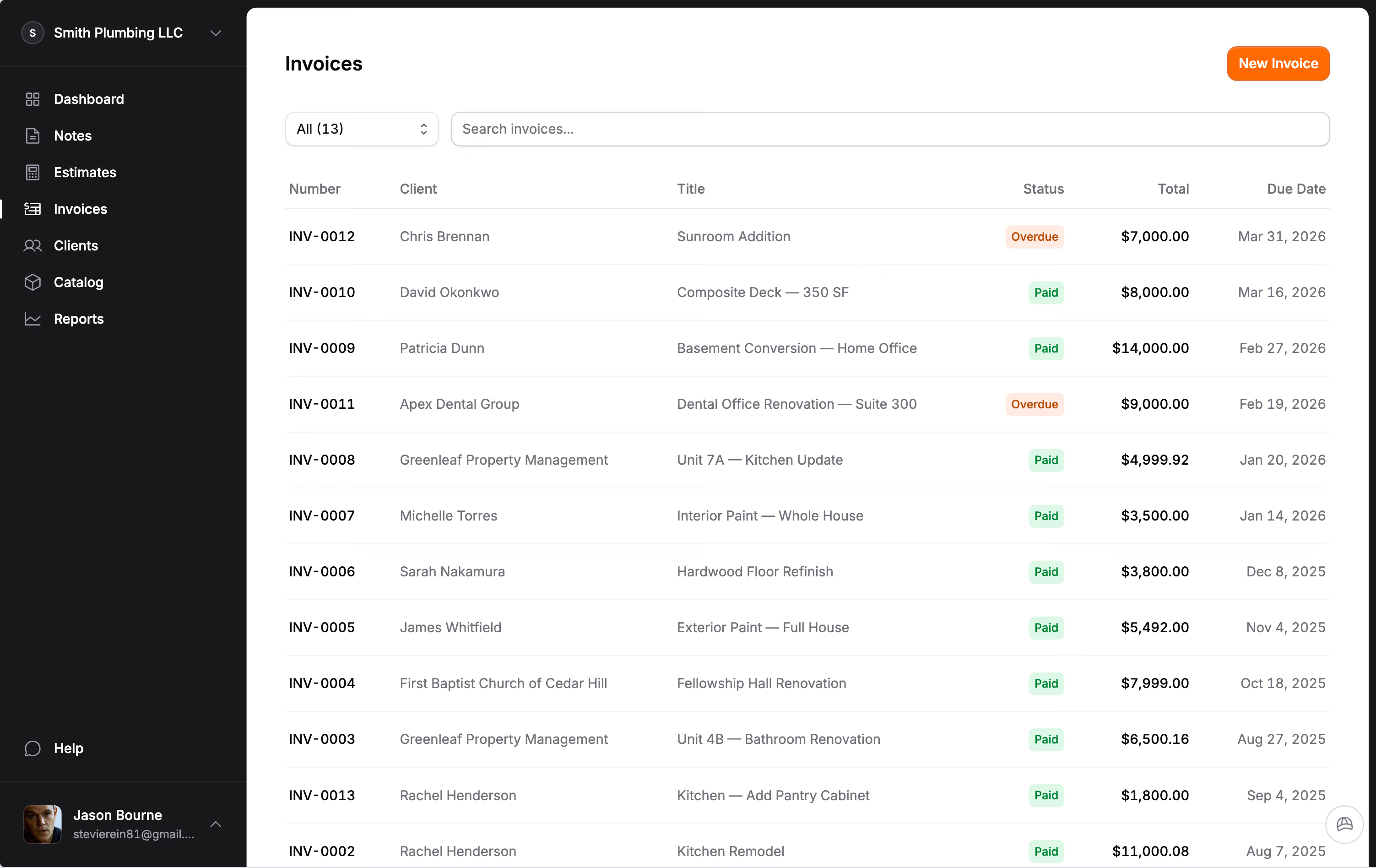
Payments fill the rows in order and the last row is always the balance, so the math is always right. The client pays by card or bank transfer from the invoice link. Stripe charges its standard rate, Jobkore adds nothing, and late payments get reminders at 1, 7 and 14 days.
A service call is simpler: invoice it the day you do it and let the client pay from the link. Invoices and payments sync one way to QuickBooks Online.
Hank knows what the inspector looks for.
Jobkore includes Hank AI™, an assistant that knows the trade you picked at signup. Tell him the job by typing or with a voice memo: 100-amp panel to 200, add a 50-amp circuit for a Level 2 charger in the garage, existing house built in 1978. He drafts the estimate in sections, quantities filled in and priced from your catalog first, with the code items and the permit line included.
Turn on a review before sending and Hank checks it against the same electrical list: a service upgrade scoped as a panel swap, missing AFCI or GFCI protection, no surge device, no drywall repair on fished runs. He can add the missing line and never changes your prices in a review.
Jobkore does not do takeoff from plans, labor-unit databases, dispatch or GPS. It does the bid and the billing for residential and light commercial work, on your phone, in English or Spanish. Related trades: solar, HVAC and general contracting. The price is on the pricing page.
Common questions.
Ready to get after it?
Stop fighting your software. Start running your business.
Try for free14-day free trial. No credit card required.