Masonry estimates and invoices, brick by brick and block by block.
Price walls, veneer and repointing by the square foot, name the mortar and the flashing, and carry an allowance for the damage behind the face. For small brick, block and stone crews.
Price by the square foot of wall, and name the mortar.
Masonry estimating software has to price the way masons bid: new brick, block and stone veneer by the square foot of wall, repointing by the square foot, caps and flashing by the linear foot, chimney work and lintels each. In Jobkore every line has its own unit, so one estimate covers a new block wall, the stone veneer on its face and the cap on top.
Name the mortar on the estimate, because it is a structural decision, not a detail. Type N for most above-grade veneer and general work, Type S where the wall carries more load, Type M for load-bearing work below grade. Count the waste in the quantity: around 5 percent on brick and block, about 10 on mortar.
Load the Concrete & Excavation trade pack and your catalog starts with block and CMU walls, brick repair and tuckpointing, block retaining walls and foundation crack repair by the square or linear foot, plus dumpsters and hauling by the load. Change the national-average prices to yours once, and every estimate starts from your numbers.
Weep holes, flashing, and water going the right way.
Masonry fails from water far more often than from load. On any cavity or veneer wall, the flashing at the base and over openings and the weep holes at grade are what let water that gets behind the brick find its way out. Leave them off and the wall looks fine for years, then spalls and stains from the inside.
Put the flashing and weeps on the estimate as their own lines, along with caps on chimneys and walls. The homeowner will never see them once the wall is up, which is exactly why they need to see them on paper.
The homeowner's real question with masonry is whether it will stand up and stay dry. An estimate that names the mortar, the reinforcement, the flashing and the drainage answers it before the first course is laid.
Repointing and repair: allow for what is behind the face.
On repair work, the damage you can see is rarely all of it. A few spalled bricks can turn into a section that has to be rebuilt once you start cutting out joints. Carry an allowance on the estimate for brick or block replacement, a budget the homeowner signs knowing it will be reconciled.
When the job finds more than the allowance covers, the difference goes on the invoice as a change order the homeowner signs online, and the invoice total moves to include it. More on running change orders that get paid.
Photos help here more than anywhere: up to 20 on the document and 6 on a single line. A photo of the crumbling joints and the cracked lintel beside the lines that fix them explains the scope before the scaffold goes up.
Silica dust has its own rule.
Cutting block and grinding out mortar throws off respirable silica, and OSHA's construction silica standard covers it. For handheld grinders used for mortar removal, the standard's table calls for a shroud and a dust collection system on the tool, plus respiratory protection for the worker. If you run a crew, that is equipment and time, and it belongs in your price.
Dust control near the house belongs on the estimate too: covering windows, protecting landscaping and cleaning up the slurry and dust when the day ends. Put wet cutting or vacuum dust collection on the estimate when the job calls for it.
Structural walls, retaining walls over 4 feet and chimney rebuilds usually need a permit. Call 811 for a utility locate before digging footings, and write the ticket number down.
Deposit, progress and completion.
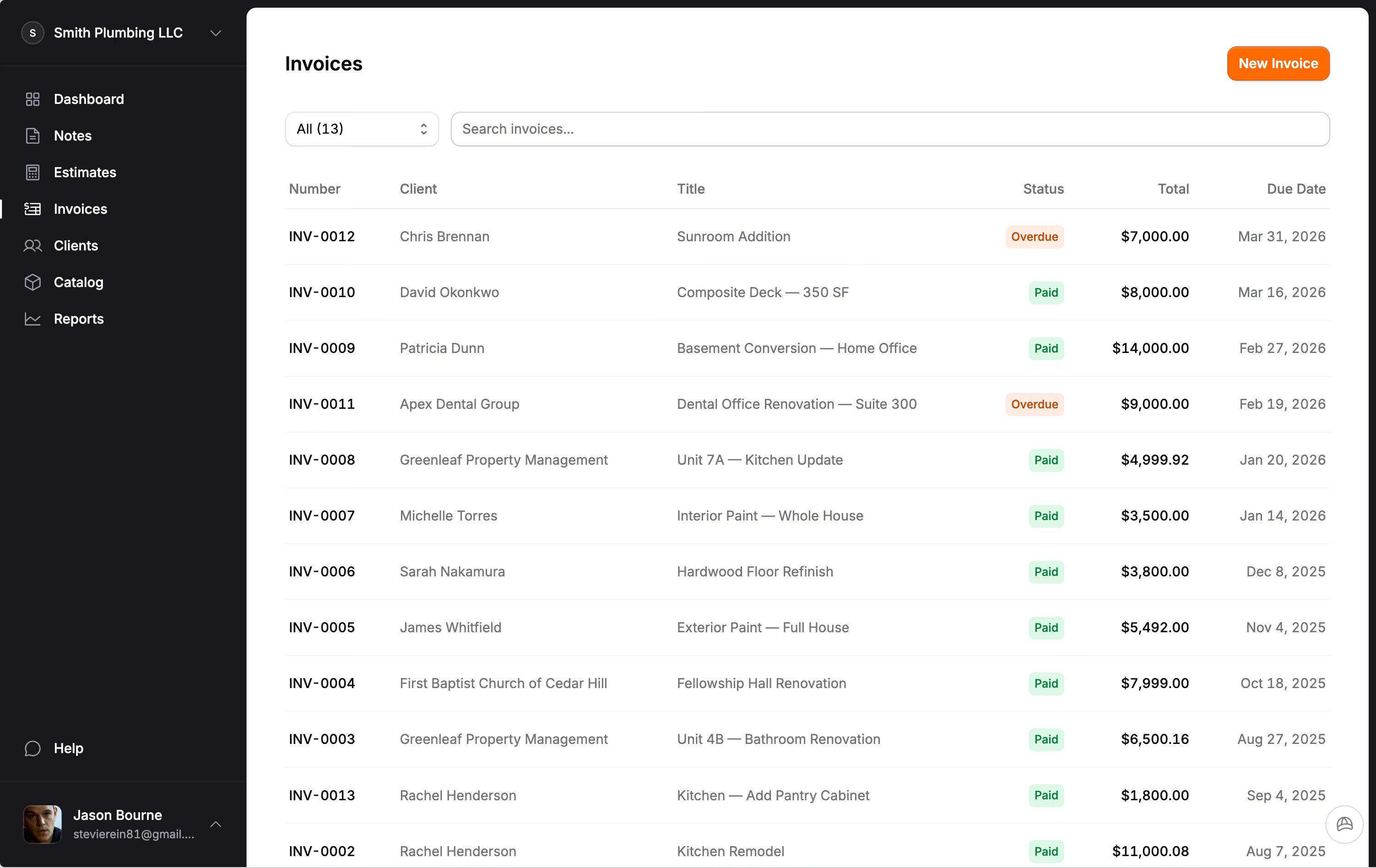
Masonry jobs usually pay a deposit for materials, progress payments on bigger walls, and the balance at completion. Put them on one invoice with a payment schedule, each row named and dated in the order the money comes in. Payments fill the rows in order and the last row is always the balance.
The homeowner pays by card or bank transfer from the invoice link, or you record a check. Stripe charges its standard rate and Jobkore adds nothing on top. Late payments get reminders at 1, 7 and 14 days.
If you work as a subcontractor for a general contractor, bill on their terms and add a separate row for any amount they hold until the job is finished, with a later due date.
Hank knows the masonry traps.
Jobkore includes Hank AI™, an assistant that knows the trade you picked at signup. Tell him the job by typing or with a voice memo: repoint the south and west walls of a two-story brick house, replace about 40 spalled bricks, rebuild the chimney crown, new cap flashing. He drafts the estimate with the repointing, repair, crown and flashing lines, priced from your catalog first, with the usual waste.
Turn on a review before sending and he checks it against a masonry list: no weep holes at grade, mortar type left unnamed, no 811 locate before digging footings, a permit missing on structural work. He can add the missing line or an allowance and never changes your prices in a review.
Jobkore does not do takeoff from plans or scheduling. It does estimates, change orders, invoices and payments, in English or Spanish. Related trades: concrete, stucco and plaster and landscaping. See the pricing page.
Common questions.
Ready to get after it?
Stop fighting your software. Start running your business.
Try for free14-day free trial. No credit card required.