Drywall estimates and invoices, priced to the finish level.
Price hang and finish by the square foot, name the finish level so nobody argues about it, and bill homeowners or general contractors. For solo drywallers and small crews.
Price by the square foot, and count the waste.
Drywall contractor software has to price the way drywall is bid: hang and finish by the square foot of board, patches by the piece, texture and skim by the square foot, and time by the hour when a repair has no clear edge. In Jobkore every line has its own unit, so one estimate holds all of it, grouped by room or by floor.
Count the waste in the quantity. Around 10 percent on a standard job, closer to 15 on cut-up ceilings, soffits and vaulted rooms, and a bit on joint compound too. A bid without it is a bid where the last few sheets come out of your margin.
Load the Painting & Drywall trade pack and your catalog starts with hang and finish, small and large patches, ceiling texture, skim coat, popcorn ceiling removal and primer, with plaster repair lines as well. Change the national-average prices to yours once, and every estimate starts from your numbers. More on pricing a drywall job.
Name the finish level, because the price changes with it.
The homeowner's real question is whether the wall will look flat under the light, or whether they will see every seam. The answer is the finish level, and it belongs on the estimate in plain words. Level 3 for walls that will be textured. Level 4 for flat paint, which is what most rooms get. Level 5, a full skim coat, for gloss paint or walls washed by raking light from a big window.
Level 5 takes two to three times the labor of Level 4. Quote Level 4 to a homeowner who expected Level 5 and you are redoing it for free; quote Level 5 when they wanted Level 4 and you lose the job on price. Writing it down settles it before anyone picks up a knife.
Texture works the same way. Smooth, orange peel, knockdown or a heavy hand trowel: name it, and on repairs, say you are matching the existing texture, which is never a straight-line cost.
The right board in the right room.
Two board choices get drywallers red-tagged more than any others. Moisture-resistant board belongs in bathrooms and behind tub surrounds. Five-eighths Type X fire-rated board belongs on garage ceilings, house-to-garage walls and furnace rooms. Put the board type on each line so the homeowner, the GC and the inspector all see it.
Specify the details that are easy to argue about later: corner bead type (paper-faced metal, vinyl or bullnose), the compound, and whether sanding is hand-pole or a dustless system, which is worth charging for. Make sure plumbing, electrical and HVAC have passed their rough inspection before the board goes up.
Say whether primer is yours or the painter's. When the painter shows up to unprimed walls, the argument over whose job it was is the one you want settled on paper.
Patches have a minimum, and a mess.
A doorknob hole takes minutes to fix and a morning to get to, so small repairs need a minimum charge on the estimate. In Jobkore the minimum can be one visit, the patch one each, and anything bigger by the square foot. Carry an allowance for texture blending on repairs, because matching an old hand-trowel finish is part craft and part luck.
Dust is the other cost. In an occupied house, a drop cloth is not enough; zipwall and plastic containment and floor protection belong on the estimate as their own line, and so does hauling off the scrap board and the empty buckets.
Photos help settle the scope: up to 20 on the document and 6 on a single line. A photo of the water-damaged ceiling beside the line that replaces it explains the price at a glance.
Homeowners pay one way, general contractors another.
Working for a homeowner is usually a deposit and the balance at completion. Working as a subcontractor for a general contractor is usually an invoice on net terms, and sometimes a portion held back until the job is done. Jobkore handles both with a payment schedule on one invoice: named rows with their own due dates, such as "Hang complete," "Finish complete" and "Held until final," filled in order, with the last row always the balance.
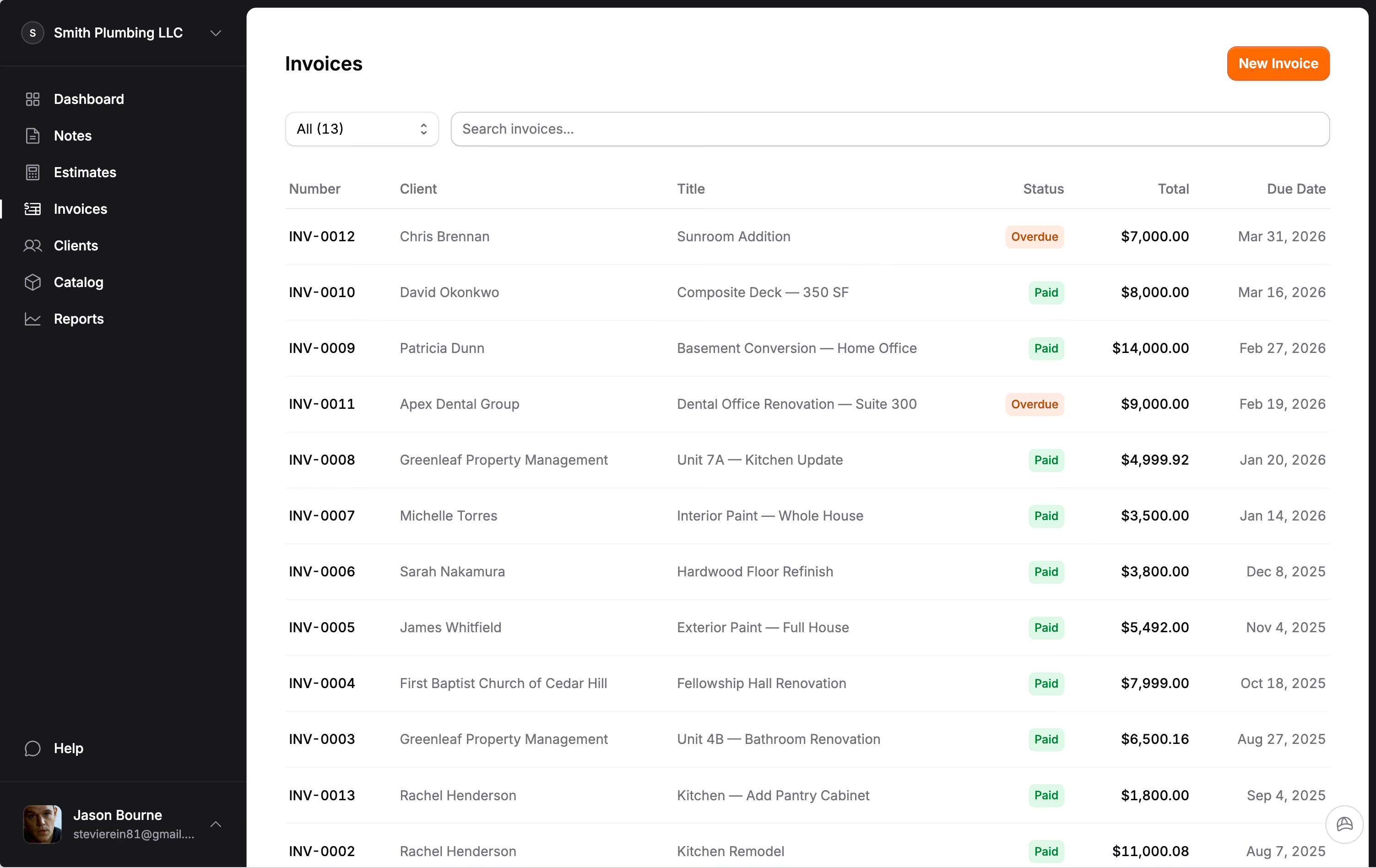
The client pays by card or bank transfer from the invoice link, or you record a check. Stripe charges its standard rate and Jobkore adds nothing on top. Late payments get reminders at 1, 7 and 14 days.
When the GC adds a room or the homeowner decides the ceiling should be smooth after all, write a change order on the invoice. It is signed online and the invoice total moves to include it.
Hank knows the drywall traps.
Jobkore includes Hank AI™, an assistant that knows the trade you picked at signup. Tell him the job by typing or with a voice memo: finish the basement, 1,200 square feet of board, 9-foot ceilings, Level 4 walls, knockdown ceiling, furnace room included, bathroom with a shower. He drafts the estimate with the board types and quantities, priced from your catalog first, with the usual waste.
Turn on a review before sending and he checks it against a drywall list: no Type X in the furnace room, no moisture-resistant board in the bath, a repair priced flat when it needs a texture match, primer nobody owns. He can add the missing line or an allowance and never changes your prices in a review.
Jobkore does not do takeoff from plans or scheduling. It does estimates, change orders, invoices and payments, in English or Spanish. Related trades: painting, plastering and insulation. See the pricing page.
Common questions.
Ready to get after it?
Stop fighting your software. Start running your business.
Try for free14-day free trial. No credit card required.