Paving estimates and invoices, from the base stone to the seal coat.
Price every layer, the edges and the tie-ins, say when it is an overlay and when it is a tear-out, and bill the job on one invoice. For small paving and sealcoating crews.
Price every layer, not just the square feet of blacktop.
Paving estimating software has to price what is under the surface, because that is what decides how long the surface lasts. The subgrade graded for drainage and proof-rolled. Base stone compacted in lifts, typically several inches on a residential driveway and more on commercial work. Then the asphalt: a binder course and a surface course on a full-depth driveway, just a surface course on an overlay over a sound base.
In Jobkore every line has its own unit. Paving by the square foot, hot mix by the ton, base stone by the ton or cubic yard, saw cuts and edging by the linear foot. Count the waste, around 5 percent on hot mix and a bit more on base stone. Put mobilization on its own line too: the trucks, the paver and the roller cost the same to set up for a small job as a big one.
Load the Concrete & Excavation trade pack and your catalog starts with asphalt driveways, asphalt patching and repair, gravel and concrete driveways, grading, removal and disposal, and hauling by the load. Change the national-average prices to yours once, and every estimate starts from your numbers.
Overlay or tear-out, drainage, and the edges.
The homeowner's real question is whether the driveway will hold up to a truck and the winter, or be alligatored in three years. Answer it on the estimate. Say whether the job is an overlay or a tear-out, and why: an overlay only works over a base that is still sound. If the base has failed, new asphalt on top will crack along the same lines.
Write the drainage into the scope. The surface needs a cross slope so water runs off, and the low point has to go somewhere; ponded water is where cracks start. Then the edges, which is where asphalt fails first. A tapered edge crumbles into the lawn; a curbed or edged one holds.
Finally the tie-ins. A saw cut where the new asphalt meets the garage apron, the street or an existing slab, instead of a cold joint butted up against it, is a line item, and it is one a cheap bid leaves off.
Temperature, compaction and cure time.
Asphalt has to be placed and rolled while it is hot enough to reach density. Placed too cold, it will not compact and the surface ravels. That is why paving has a season, and why the estimate should say how a cold or wet day is handled.
Tell the homeowner how long to stay off it. New asphalt usually needs a day or two before vehicles, and concrete about a week for normal use. Put it on the estimate so they do not park on the fresh surface the same evening.
On commercial lots, striping, stall layout and accessible parking count and signage are part of the scope, and the estimate should list them. Photos of the failed base and the ponding spots, up to 20 on the document, show why the job is priced as a tear-out and not an overlay.
Seal coating and crack filling.
Seal coating has its own rules. New asphalt needs time to cure before the first seal coat, often six months to a year, and then a new coat every few years. Cracks get filled with hot rubberized crack filler before any seal coat or resurfacing, or the seal just bridges them for a season.
Price seal coating by the square foot, crack filling by the linear foot, and put both on the estimate so the homeowner sees the maintenance plan. Jobkore does not bill maintenance on a schedule automatically, but each visit is a quick estimate or invoice, priced from your catalog.
For a new driveway, a note on the estimate about when to schedule the first seal coat is how you get the next job.
Deposit, completion, and the soft spot.
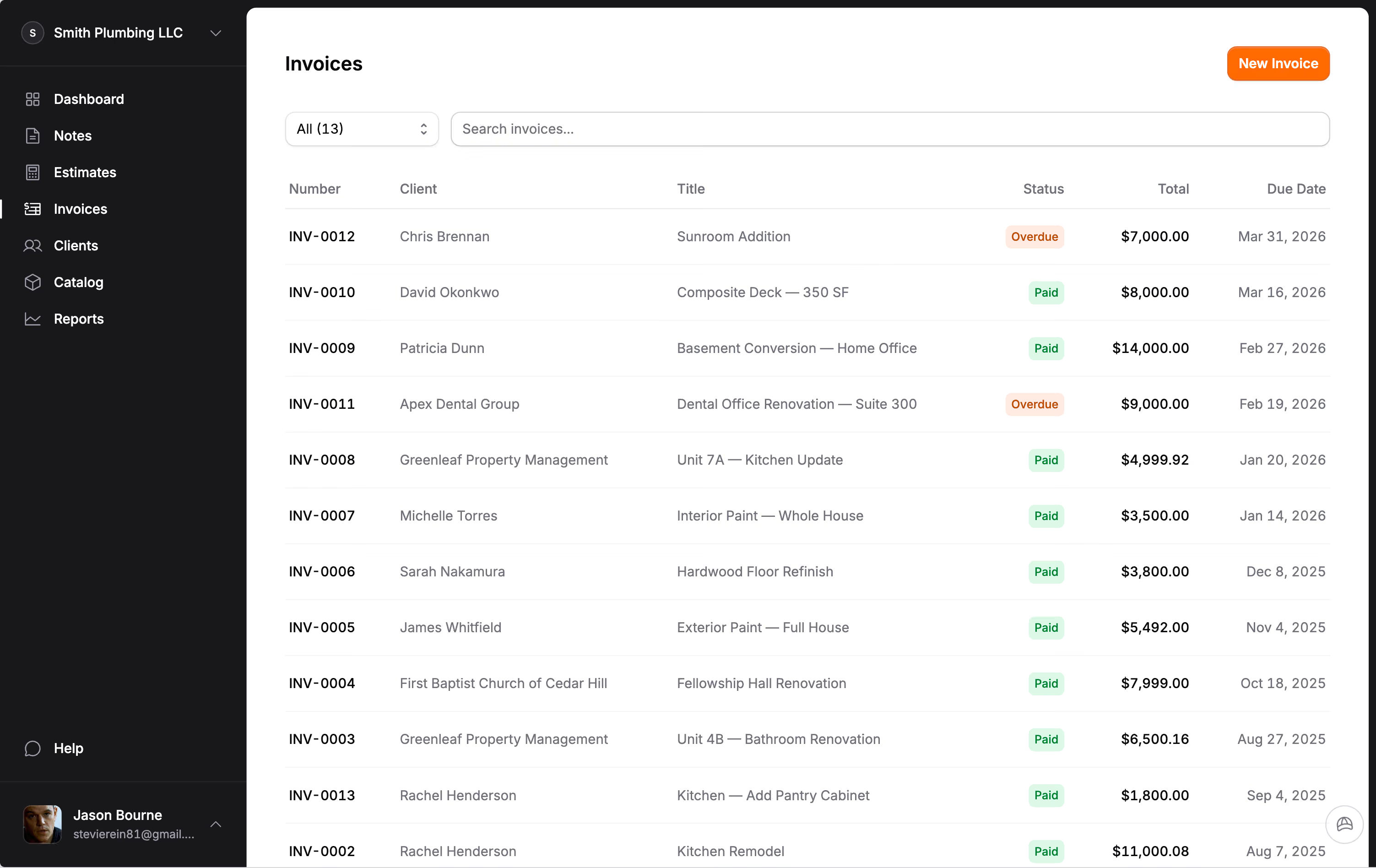
Paving jobs usually pay a deposit when the homeowner signs and the balance at completion; commercial work runs on net terms. Put it on one invoice with a payment schedule, each row named and dated. Payments fill the rows in order and the last row is always the balance.
The client pays by card or bank transfer from the invoice link, or you record a check. Stripe charges its standard rate and Jobkore adds nothing on top. Late payments get reminders at 1, 7 and 14 days. Record commercial checks against the invoice when they arrive, so the balance is always current.
When the proof-roll finds soft spots that need to be dug out and rebuilt, write a change order on the invoice with the extra base and labor. The client signs it online and the invoice total moves to include it. Work in the public right-of-way or a new curb cut usually needs a permit, so check before you quote. More on getting estimates out faster.
Hank knows the paving traps.
Jobkore includes Hank AI™, an assistant that knows the trade you picked at signup. Tell him the job by typing or with a voice memo: tear out and repave a 12 by 60 residential driveway, freeze zone, 6 inches of new base, binder and top course, tie into the garage slab and the street, add an edge along the lawn. He drafts the estimate with removal, base, both courses, saw cuts and edging, priced from your catalog first, with the usual waste.
Turn on a review before sending and he checks it against a paving list: a base too thin for the freeze-thaw, no proof-roll, a tapered edge, no tie-in at the apron, a seal coat quoted on fresh asphalt too soon. He can add the missing line and never changes your prices in a review.
Jobkore does not do takeoff from plans or scheduling. It does estimates, change orders, invoices and payments, in English or Spanish. Related trades: concrete, excavation and landscaping. See the pricing page.
Common questions.
Ready to get after it?
Stop fighting your software. Start running your business.
Try for free14-day free trial. No credit card required.