Restoration estimates and invoices, itemized the way the carrier reads them.
Keep mitigation and rebuild as separate scopes, itemize the equipment and containment an adjuster looks for, and track the insurance checks and the deductible on one invoice. For small restoration crews.
Mitigation and rebuild are two scopes.
Restoration contractor software has to keep two jobs apart that homeowners see as one. Mitigation is the emergency: extraction, drying, demolition of wet materials and containment. Rebuild is putting the house back: drywall, paint, trim and flooring. Mix them on one estimate and every supplement gets messy, and the carrier questions everything.
In Jobkore each room is a section, and mitigation and rebuild can be separate estimates in one project for the loss. Every line has its own unit: affected area by the square foot, drying equipment by the day, board-up and pack-out each, labor by the hour. The homeowner and the adjuster both see what each part costs.
Load the Specialty Services trade pack and your catalog starts with water damage restoration, mold remediation and fire and smoke restoration by the square foot, and emergency board-up. Change the prices to yours once, and every estimate starts from your numbers.
Category, class and the equipment plan.
The homeowner's real question is whether someone can get there now, and whether insurance will cover it. The second half depends on documentation from the first hour. Record the category of water on arrival (clean, gray or black), because it decides the scope, the protective equipment and what has to be torn out and thrown away. Record the class of the loss, because it drives how much drying equipment you need and for how long.
Put the equipment plan on the estimate as lines: dehumidifiers, air movers and air scrubbers by the day, with the count. Containment with poly and zipper doors, and negative air on mold, black water and smoke jobs. Carpet and pad come out on gray and black water losses; wet drywall is cut above the water line.
Photos carry the claim: up to 20 on the document and 6 on a single line. Moisture readings and photos from each day, noted on the invoice, are what an adjuster needs to approve the drying days.
Hank lays out the estimate the way adjusters read it.
Jobkore includes Hank AI™, an assistant that knows the trade you picked at signup. On restoration work, mention the loss ("water damage," "mold remediation," "insurance claim," "Xactimate") and he switches to the insurance layout. He itemizes one line per labor and material category with unit prices, uses standard phases (emergency mitigation, drying, demolition and pack-out, reconstruction), and breaks out protective equipment, containment, negative air and air scrubbers as their own lines instead of absorbing them.
He shows waste as its own line so the adjuster sees it, bills moisture readings and pre-loss documentation on gray and black water losses, keeps overhead and profit separate rather than hiding it in the rates, and records the claim number and adjuster in the notes when you give them.
Jobkore does not write in Xactimate or file supplements; whether a carrier accepts an estimate is up to the carrier. It gives you an itemized estimate that is built to be compared line by line.
Mold: know when it is a remediation job.
Small mold problems and large ones are different jobs. The EPA says that if mold covers more than about 10 square feet, cleanup should follow its remediation guidance rather than a homeowner-style cleanup, and a lot of water damage is a reason on its own to bring in a professional. That is the line where your containment, air filtration and clearance steps become the scope.
Put the remediation steps on the estimate: containment, filtered air, removal, antimicrobial treatment, and clearance testing where the job calls for it. On fire and smoke jobs, the soot cleanup and deodorization are their own lines.
Name the moisture source too. A mold job that does not fix the leak that caused it is a callback, and the estimate is where you say who is fixing it.
Insurance checks, the deductible and supplements.
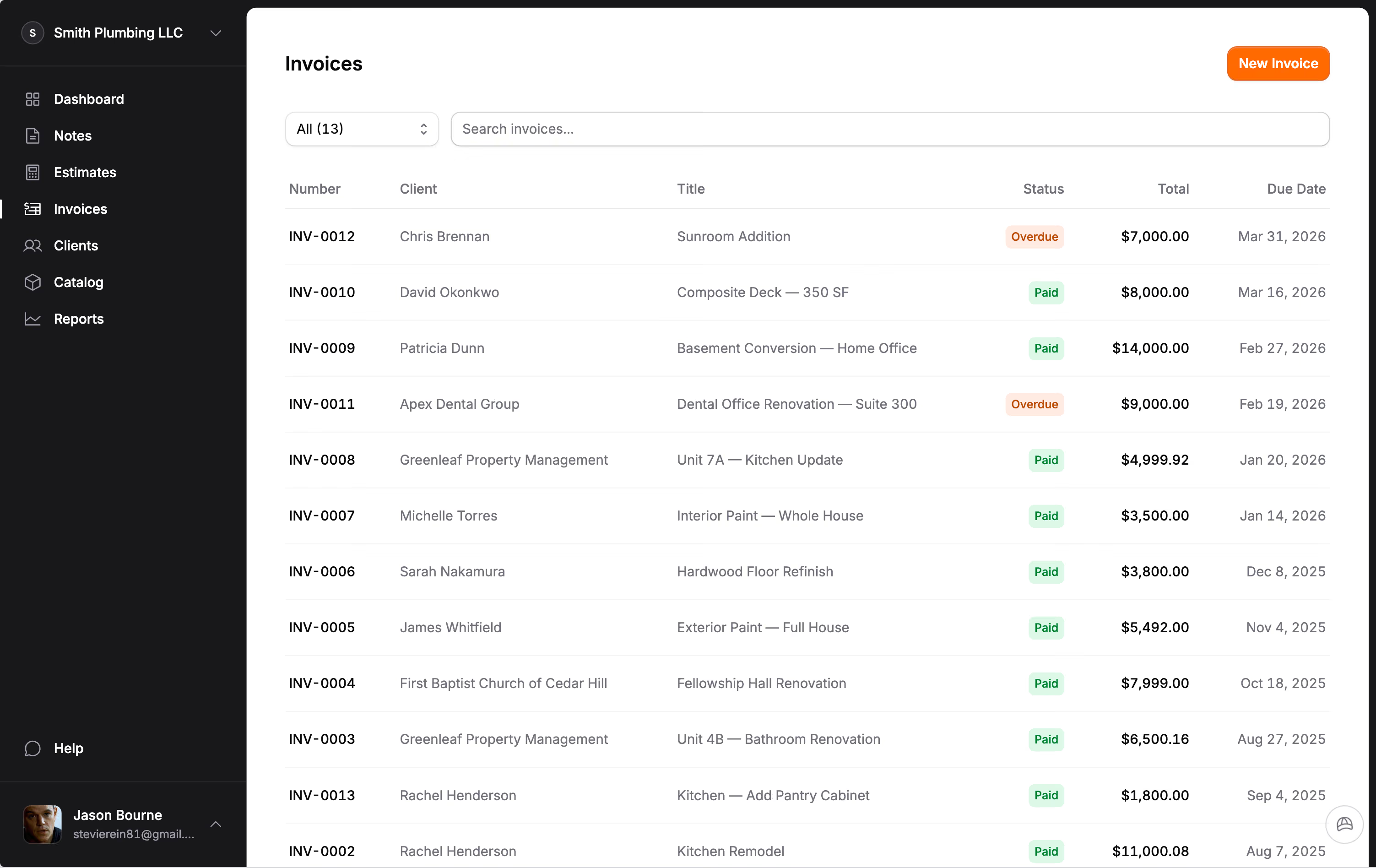
A restoration job is usually paid by the carrier and the homeowner together. Put it on one invoice with a payment schedule, rows in the order the money comes in: the deductible first, then the insurance payments. Payments fill the rows in order and the last row is always the balance. The homeowner pays the deductible by card or bank transfer from the invoice link, and you record each insurance check when it arrives.
When the adjuster approves more scope, or demolition uncovers damage nobody could see, add a change order to the invoice for the added work. The homeowner signs it online and the invoice total moves to include it. More on how change orders work in Jobkore.
Have your authorization paperwork signed at intake, and follow your state's rules on direction to pay and assignment of benefits, which vary and in some states are restricted.
What Jobkore is for a restoration crew.
Jobkore does not do moisture mapping, drying logs, equipment tracking or Xactimate. It does the estimate, the change orders, the invoice with the deductible and insurance payments, and the payments themselves, on your phone, in English or Spanish, with invoices and payments syncing one way to QuickBooks Online. Late payments get reminders at 1, 7 and 14 days.
Turn on a review before sending and Hank checks the estimate against a restoration list: equipment counts that look low, no containment on a black water or mold job, mitigation and rebuild mixed together, no pack-out inventory. He can add the missing line and never changes your prices in a review.
Related trades: plumbing, roofing and general contractor. See the pricing page.
Common questions.
Ready to get after it?
Stop fighting your software. Start running your business.
Try for free14-day free trial. No credit card required.