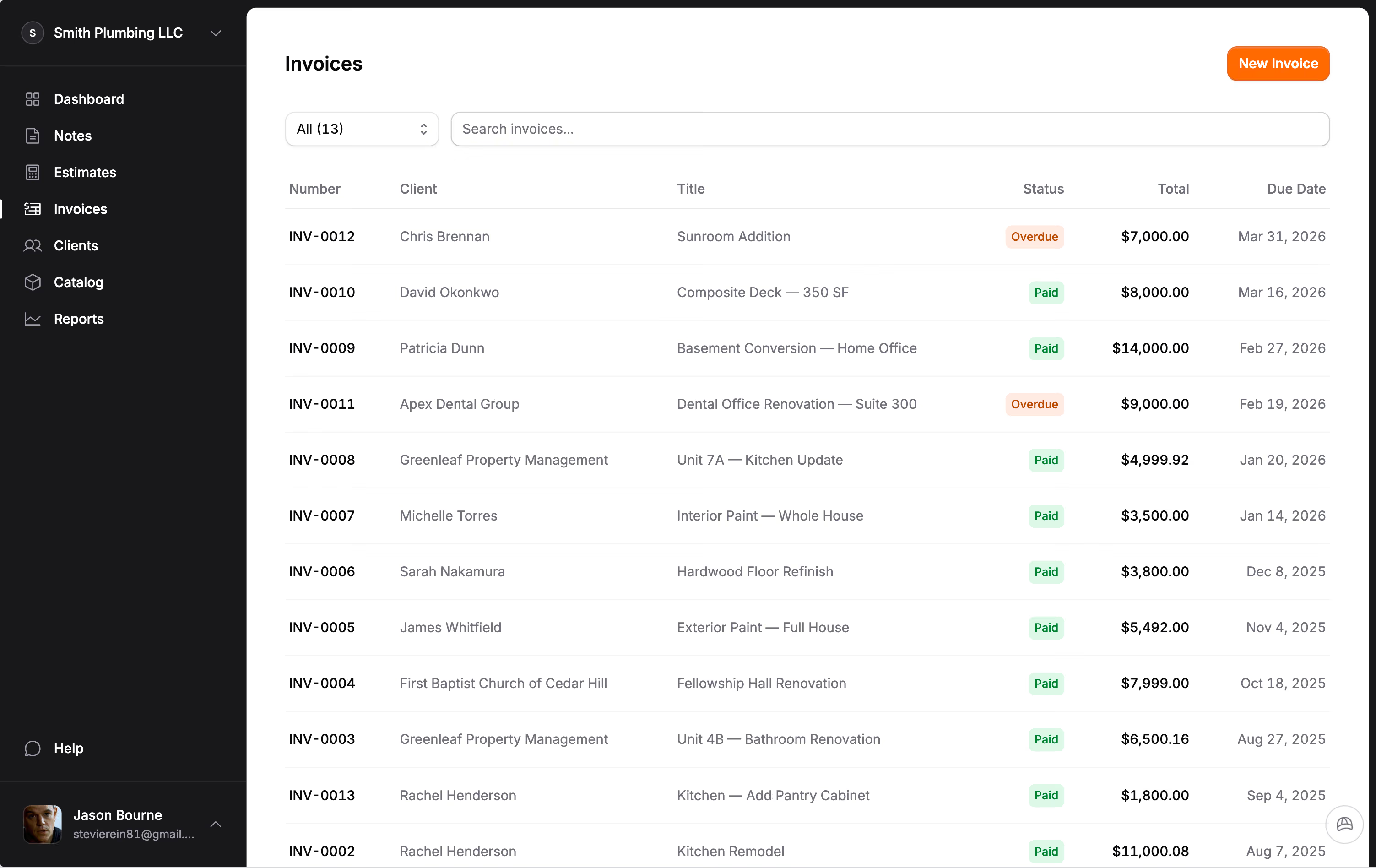
Flooring estimates and invoices, from the subfloor to the shoe mold.
Price each room by the square foot with the waste counted, put the prep and transitions on their own lines, and get paid when the floor is down. For small flooring installers.
Room by room, by the square foot, with the waste counted.
Flooring installer software has to price floors the way you bid them: room by room, by the square foot, with the waste built into the quantity. Straight-lay vinyl plank runs about 8 percent waste, herringbone closer to 15, site-finished hardwood around 10, prefinished around 7, and patterned carpet can reach 20. Guess low and the last room comes out of your margin.
In Jobkore every line has its own unit. Flooring and prep by the square foot, baseboard and shoe mold by the linear foot, transitions and stair treads each. Each room is a section, so the homeowner sees the kitchen apart from the bedrooms and can decide on each.
Load the Flooring & Tile trade pack and your catalog starts with flooring and carpet removal, vinyl plank, laminate and carpet installs, hardwood refinishing, floor leveling and prep, subfloor repair, transition strips and stair treads. Change the national-average prices to yours once, and every estimate starts from your numbers.
The subfloor decides whether the floor lasts.
The homeowner's real question is whether their subfloor is going to be a problem, and whether the new floor will hold up. Answer it on the estimate. Test the slab for moisture before you install, not after, against the manufacturer's limit. Check a wood subfloor's moisture content against the flooring's. Most floors want the surface flat within about 3/16 of an inch over ten feet, so grinding high spots and self-leveling low ones is a line, not a surprise.
Carry an allowance for subfloor repair: rotted plywood, squeaky joists, or tile that has to come up before anything goes down. It is a budget the homeowner signs knowing it will be reconciled. When the demo finds more than the allowance covers, the difference goes on the invoice as a change order they sign online.
Put acclimation on the estimate too. Hardwood needs days in the conditioned space before install, and a homeowner who knows why will not rush you.
The lines "flooring only" forgets.
An estimate that says "install flooring" is the one that ends in an argument about everything around the flooring. List it instead. Demo and haul-off of the old floor. Underlayment matched to the product, and a vapor barrier over the slab. A transition at every doorway and every change of flooring. Shoe mold or quarter round if the baseboard stays, or baseboard removal and reset if it does not.
Then the things nobody thinks of until install day. Moving the refrigerator, washer and dryer, and reconnecting them. Pulling and resetting the toilet with a new wax ring. Undercutting doors that will now hit the higher floor. Trimming out floor registers. Final clean, and a spare box of flooring left with the homeowner for future repairs.
Each one is a line, and each one is a reason your number is higher than the installer who left it off. More on turning an estimate into an invoice without retyping it.
Old resilient flooring: test before you tear it out.
Old vinyl tile, sheet vinyl and the mastic under it can contain asbestos, and the EPA is blunt about what not to do. Its guidance says don't sand or try to level asbestos flooring or its backing, and when it needs replacing, to install the new floor covering over it if possible.
So test before demo on older floors, and write the answer into the estimate. If the old floor can stay, price the new floor over it with the right underlayment. If it has to come out, abatement is a job for trained professionals and belongs on the estimate as its own line or a separate contractor, not folded into "remove existing flooring."
Photos help: up to 20 on the document and 6 on a single line. A photo of the old nine-inch tiles under the carpet beside the line that deals with them explains the scope at a glance.
Material deposit, then paid when the floor is down.
Flooring has a high material cost, so most installers take a deposit for materials and the balance at completion. Put both on one invoice with a payment schedule, each row named and dated. Payments fill the rows in order and the last row is always the balance. The homeowner pays by card or bank transfer from the link; Stripe charges its standard rate and Jobkore adds nothing.
If you also install for a flooring store, bill the store on its terms with an invoice and a due date, and record the check when it comes. Late payments get reminders at 1, 7 and 14 days, whoever the client is.
Invoices and payments sync one way to QuickBooks Online, so your bookkeeper is not retyping anything.
Hank knows the flooring traps.
Jobkore includes Hank AI™, an assistant that knows the trade you picked at signup. Tell him the job by typing or with a voice memo: vinyl plank through the kitchen, hall and two bedrooms, about 900 square feet over a slab, carpet coming out of the bedrooms, keep the baseboard. He drafts the estimate by room, priced from your catalog first, with the usual waste for the product.
Turn on a review before sending and he checks it against a flooring list: no moisture test on the slab, no leveling allowance, transitions and shoe mold left off, no toilet pull on the bathroom, doors that will need undercutting. He can add the missing line or an allowance and never changes your prices in a review.
Jobkore does not do floor plan measuring or diagramming, showroom sales or inventory. It does estimates, change orders, invoices and payments, in English or Spanish. Related trades: tile, carpentry and remodeling. See the pricing page.
Common questions.
Ready to get after it?
Stop fighting your software. Start running your business.
Try for free14-day free trial. No credit card required.