Home Staging
Proposals that separate the consultation, the install, and the monthly. Change orders when the listing sits. Paid before the furniture goes in.
The install is the start of the billing, not the end.
Most trades finish the work and send one invoice. You do a consultation, write a proposal, install a house full of furniture you own, and then the meter runs for as long as the listing sits. Thirty days later the house has not sold and you are billing again.
Jobkore runs from your phone at the property. Write the proposal after the walk-through, invoice the install before the truck unloads, and keep every extension attached to the same job.
Consultation, install, and monthly rental are three different products.
A two-hour consultation with a written plan is a service you sell on its own. The install is labor plus a truck plus your crew. The monthly is rental on inventory you already paid for. Roll them into one number and the seller thinks the whole thing is a furniture bill.
Build the proposal in sections — consultation, design, install labor and delivery, furniture and accessory rental, destage and pickup — so the client sees what each piece costs and can say yes to the parts they want.
Occupied and vacant are not the same job.
An occupied listing is styling — you are editing what is already there, bringing accessories, and working around a family that still lives in the house. A vacant listing is a full furniture install on an empty floor plan. Different labor, different inventory, different risk.
Keep a saved set of line items for each so a vacant four-bedroom and an occupied condo both quote in minutes instead of from a blank page.
When the listing sits, the extension is a change order.
The house did not sell in thirty days and the seller wants to keep the furniture another month. That is a change order written against the original job — scope, price, new end date, signature — not a favor and not a text message.
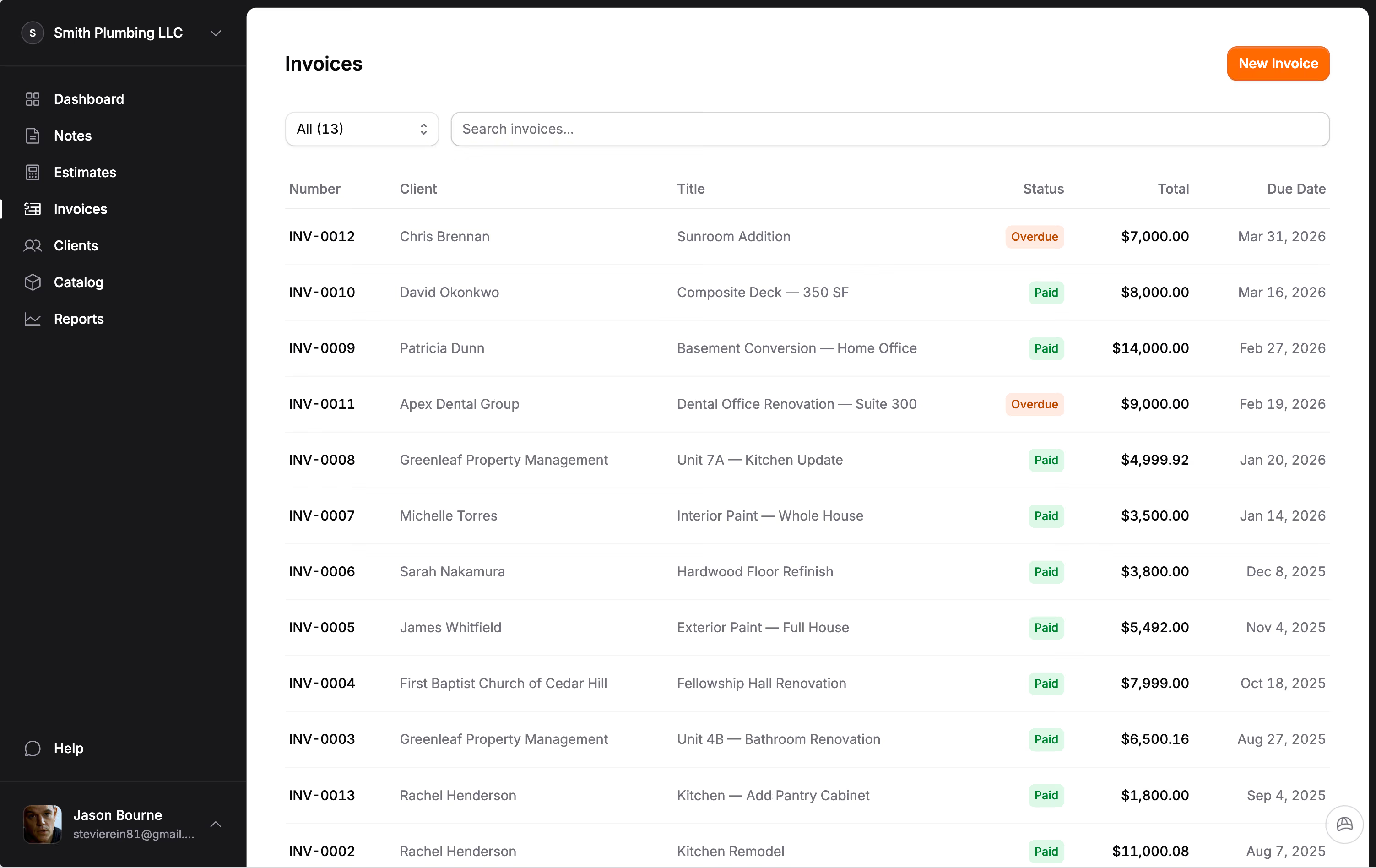
Each extension bills as its own invoice off that change order, so a listing that runs four months has a paper trail showing exactly what was agreed to and when. When the house finally closes, nothing is in dispute.
Sometimes the agent pays. Sometimes the seller does.
The listing agent covers the install to win the listing and the seller picks up the monthly. Or the agent fronts the first thirty days. Or the seller pays everything and the agent reimburses at closing. Every deal is negotiated differently.
Keep the agent and the seller as separate clients with their own contacts and terms, and invoice each for the portion they agreed to. Agents who send you repeat work build a history you can pull up before you quote the next one.
Photograph the inventory going in and coming out.
You are leaving thousands of dollars of your own furniture in a house you do not control, with an agent, a seller, and every buyer who tours it walking through. Photos attach to the job, so the condition of the sofa on install day is documented on the same record as the destage.
Hank AI™ turns the walk-through into a structured proposal.
You walked the house, noted which rooms need staging, photographed what is already there, and wrote down the square footage and the listing date. Hand those notes to Hank AI™ and the proposal comes back in sections — consultation, design, install, rental, destage. Your pricing goes on top.
Hank never invents quantities, rates, or margins. It organizes what you walked.
Paid by card. No platform fee from us.
The invoice goes out with a payment link. The agent or seller pays by card or bank transfer. Stripe processes at their standard rate. Jobkore adds nothing on top.
Common questions.
Ready to get after it?
Stop fighting your software. Start running your business.
Try for free14-day free trial. No credit card required.