Roofing estimates and invoices, built the way roofers bid.
Bid by the square, show the lines cheap bids leave off, and bill insurance jobs in the order the checks arrive. For solo roofers and small crews.
Bid by the square, and count pitch and waste before the supplier does.
Roofing estimate software has to think in squares, because that is how roofs get priced and how shingles get ordered. A square is 100 square feet of roof surface, not of floor plan, so a footprint taken off flat drawings comes up short on every pitched roof. The steeper the pitch, the bigger the miss.
Then comes waste. A simple architectural shingle roof usually runs about 10 percent, a cut-up roof with hips, valleys and dormers closer to 15, and standing seam metal around 5. Leave it out and the job that looked profitable on paper eats your margin at the supply house.
In Jobkore every line carries its own unit: squares for field shingles and tear-off, linear feet for ridge vent and drip edge, each for pipe boots and for sheets of decking. The estimate adds it up so the client sees a clean total and you see every quantity behind it. Load the roofing trade pack and your catalog starts with shingle, metal and flat-roof lines, tear-off by the square for one layer or two, ridge vent, flashing and pipe boots, at national-average prices you change to yours.
One thing Jobkore does not do is measure the roof. Bring your numbers from the tape, the drone or a measurement report, and Jobkore turns them into a bid the homeowner can read and sign.
Itemize the lines a cheap roof bid leaves off.
When a homeowner lines up three roofing bids, the lowest one is usually missing something, and an itemized estimate is how you show them what. Tear-off and a dumpster sized to the square count. Ice-and-water shield at the eaves, valleys and penetrations. Synthetic underlayment over the rest of the field.
Drip edge on every eave and rake, which many building departments now expect even on a re-roof. Starter strip. Step flashing and counter-flashing where the roof meets a wall or a chimney. New pipe boots rather than the cracked ones from the old roof, ridge cap that matches the field, and ventilation that actually meets the attic requirement. A magnetic sweep of the yard for nails at the end.
Group those into sections (tear-off, deck, underlayment and flashing, roofing, ventilation, cleanup) and the bid reads like a plan instead of a number. Attach up to 20 photos to the estimate and up to 6 on a single line, so the photo of the split pipe boot sits right next to the line that replaces it.
Itemizing also protects the warranty. Manufacturer warranties often require the full accessory system, and a bid that lists every component is the paper trail that proves it went on. More on what homeowners actually read on an estimate.
Put rotted decking on the bid before the tear-off finds it.
On an older roof you will find soft decking, and the only question is how many sheets. Put a decking allowance on the estimate, a budget sized for the two to four sheets an older roof usually needs, and state your per-sheet rate beside it. The homeowner signs knowing the allowance is a placeholder and what each extra sheet costs.
When the tear-off turns up nine sheets instead of three, the difference goes on the invoice as a change order. The homeowner signs it online, and the invoice total moves to include it. Nobody argues about it at the end, because the rate was on the original bid and the signature is on the change.
The same goes for the skylight that has been leaking into the framing, or a second layer of shingles nobody mentioned. Write it up, get it signed, keep working. The change order process that holds up is the one you run the day you find the problem.
Hank knows what goes on a roof.
Jobkore includes Hank AI™, an assistant that knows the trade you picked at signup. For a roofer, that means he knows the list above. Tell him the job by typing or by voice memo: 28 squares at 8/12, one layer to tear off, two chimneys, three pipe boots, ridge vent the full length.
Hank drafts the estimate in sections, with the quantities and the usual waste for the roof type, priced from your own catalog first. Change anything you like, or ask him to. When the job is an insurance claim, say so ("insurance claim" or "Xactimate" will do it) and he lays the bid out the way adjusters read one: every line itemized, waste shown on its own line, overhead and profit kept separate.
Turn on a review before sending and Hank checks the bid against the same roofing list. Missing drip edge, reused pipe boots, no permit line: he points it out and can add the missing line or an allowance for you. He never changes your prices in a review. You look it over and send it.
Insurance jobs pay in pieces. Bill them in the same order.
A storm job rarely pays in one check. On a typical replacement-cost policy, the insurer sends a first check for the actual cash value, the homeowner owes the deductible, and the held-back depreciation is released after the work is done. Chasing those three payments on three separate pieces of paper is how money slips.
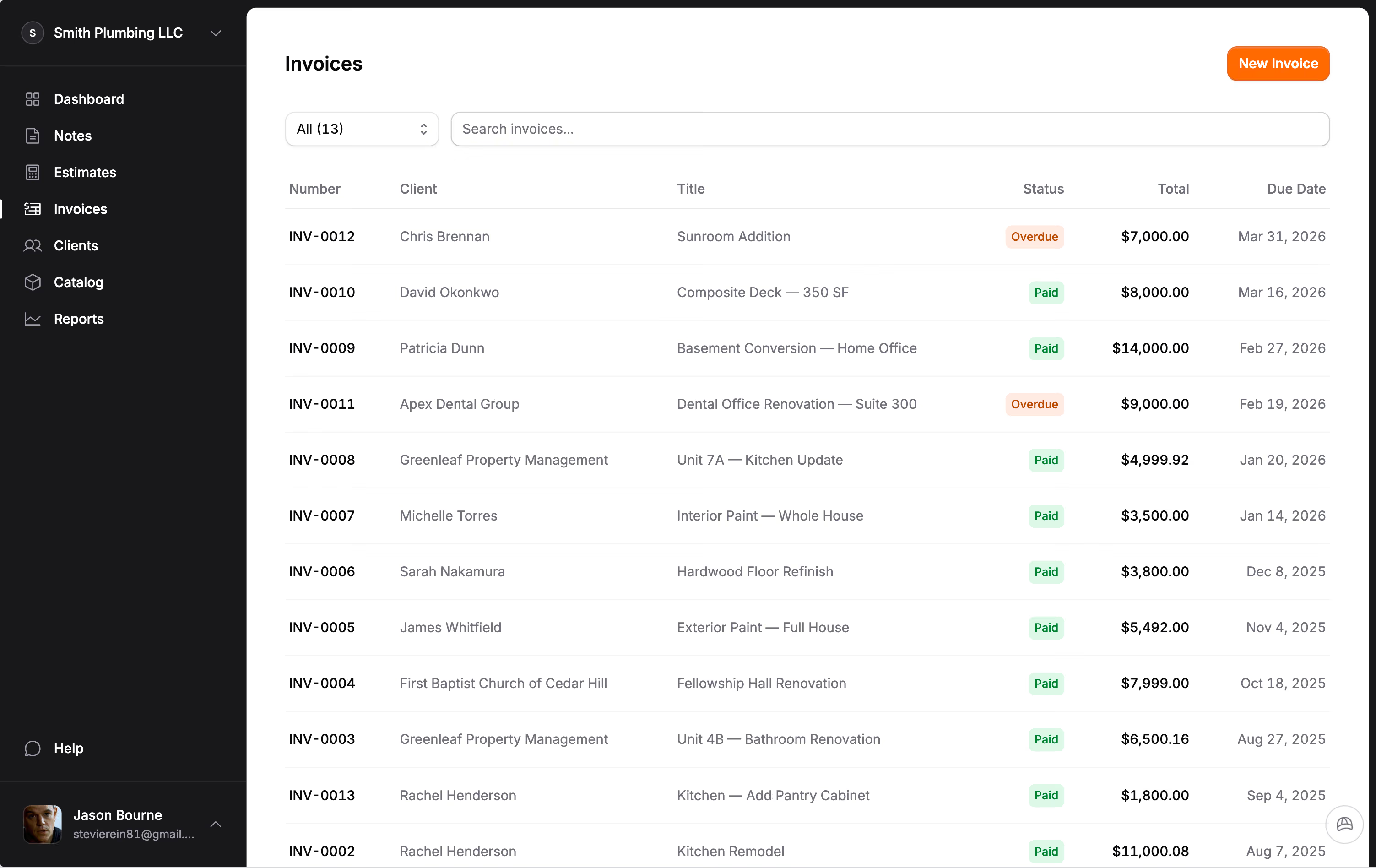
Jobkore puts them on one invoice as a payment schedule: named rows, each with its own due date, such as "Deductible," "Insurance, first check" and "Depreciation release." Payments fill the rows in order, so list them in the order the money comes in; the last row is always the balance, so the math is always right. The homeowner pays the deductible by card or bank transfer from the invoice link, and you record each insurance check when it arrives.
State rules shape the schedule too. New York’s roofing contractor law bars a roofer from requiring a deposit at all, but allows an invoice for materials when they are delivered, disclosed in writing ahead of time, and the rest on completion. That is two rows on the same schedule. Check your own state before you ask for money up front.
Paid online, with the reminders sent for you.
Every invoice goes out with a payment link. The homeowner pays by card or bank transfer from their phone, and the money lands in your account. Stripe charges its standard processing rate and Jobkore adds nothing on top. If a payment runs late, Jobkore sends reminders at 1, 7 and 14 days, then stops.
It all runs from your phone, and the whole app works in Spanish as well as English, Hank included. Invoices and payments sync one way to QuickBooks Online, so your bookkeeper is not typing anything twice.
Roofers who also hang gutters or siding can bill it from the same catalog; see siding and gutters. Storm and water work is covered on the restoration page, and solar installers have their own solar page. The price is on the pricing page: one plan with every feature.
Common questions.
Ready to get after it?
Stop fighting your software. Start running your business.
Try for free14-day free trial. No credit card required.