Tree service estimates and invoices, from the take-down to the stump.
Price the tree by how it comes down, spell out the stump, the chips and the wood, and put your insurance where the homeowner can see it. For small tree service crews.
Price the method, not just the tree.
Tree service estimate software has to price the way a take-down actually costs: by how the tree comes down. Climbing and rigging, a bucket truck and a crane can be several times apart in price for the same tree, and the right one depends on the lean, the decay, what is underneath and whether the equipment can get in. That is why a take-down is priced from a site visit, not a phone call.
Put the method on the estimate, along with the rigging plan when limbs are coming down over a house, a fence or a garden. Plywood mats for the bucket truck, protection for beds in the drop zone, and taking down and resetting a fence panel for access are lines too.
In Jobkore every line has its own unit: trees each, crew time by the hour or the day, chips and logs by the load. Load the Outdoor & Grounds trade pack and your catalog starts with small and medium tree trimming and removal, stump grinding and hedge trimming by the hour. Change the prices to yours and every estimate starts from your numbers.
The stump, the chips and the wood.
The most common argument after a tree job is about what was included. The homeowner assumed the stump was ground; you had already moved the grinder. Make stump grinding its own line, with the depth below grade, and say whether the grindings are hauled off or used to backfill the hole.
Then the debris. Chipped and hauled, chipped and left on site, or the homeowner keeps the wood, cut to firewood length or left in rounds. Each choice has a different price, and writing it down settles it before the saw starts. Put the cleanup on too: raking, blowing, hauling the brush, and repairing ruts in the lawn.
Photos help: up to 20 on the document and 6 on a single line. A photo of the dead limb over the roof beside the line that removes it answers why it is urgent.
Power lines, protected trees and property lines.
The homeowner's real question is whether the tree can come down without hitting the house, and whether you are insured if it does not. Answer both on the estimate. Put your general liability and workers' comp coverage in the notes, and be ready with a certificate of insurance; tree work is among the most dangerous in contracting, and homeowners are right to ask.
Work near power lines takes a line-clearance qualified crew or the utility's own tree crew, not a standard crew. Say which applies. Many cities protect trees above a certain trunk diameter and require a permit to remove them, and work in the public right-of-way usually needs one too, so the permit is a line.
A tree on the property line belongs partly to the neighbor. Getting their agreement before you cut prevents the call nobody wants.
Pruning done right, at the right time.
Pruning is where a good tree company separates from a guy with a saw. Target pruning to the branch collar, not topping, and timing matched to the species: oaks pruned in the warm months risk spreading oak wilt where it is present, so many arborists wait for the dormant season. Put the method and the timing on the estimate, not just "trim tree."
Cabling and bracing for a split trunk or a weak crotch is its own line, with the hardware named. If you have an ISA Certified Arborist on the crew, put it on the estimate; it is a real reason to pay more.
Put your license or certification number in Jobkore once and it prints on every estimate and invoice.
Paid on completion, or a deposit on the big ones.
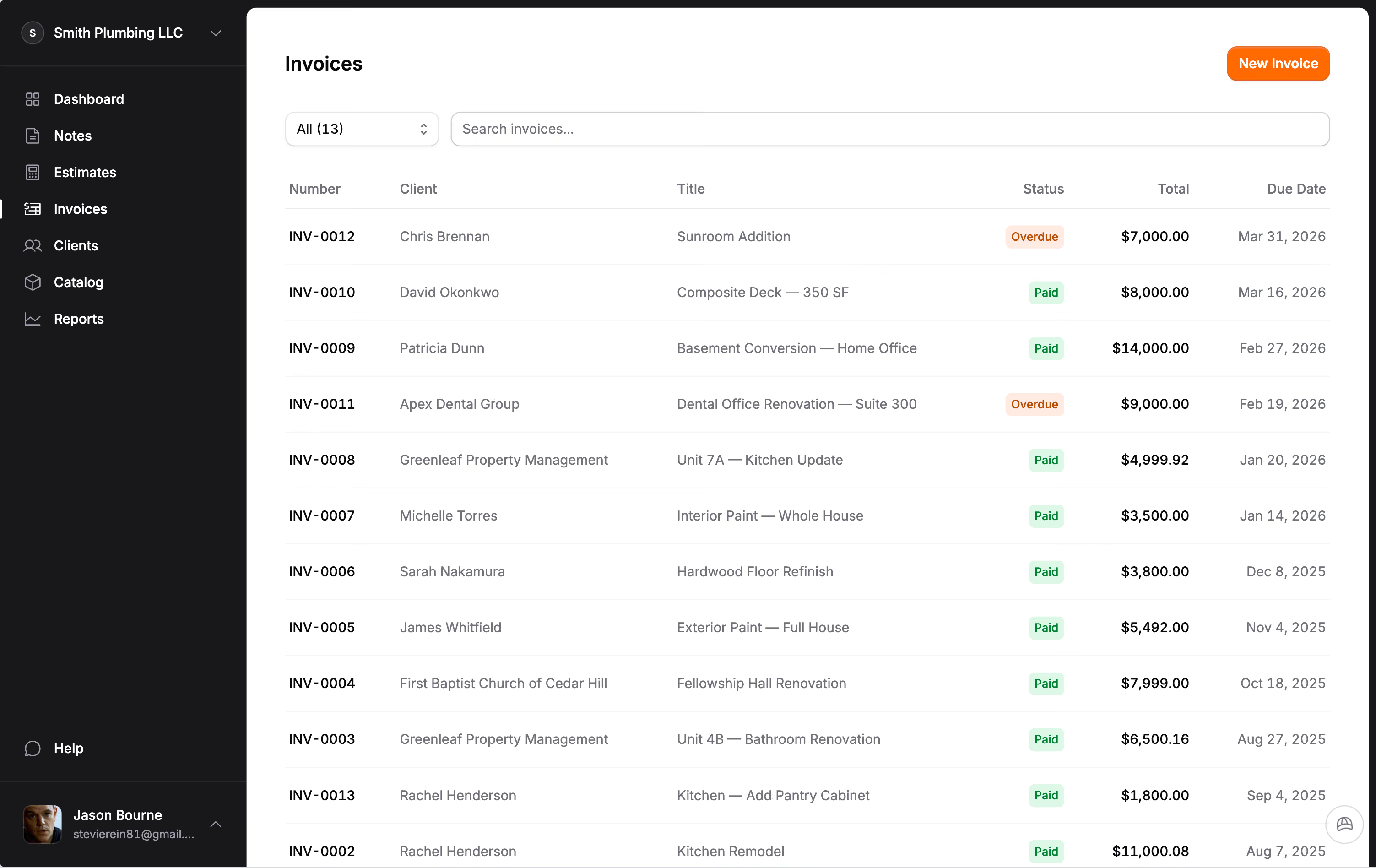
Most tree jobs are paid when the work is done. Send the invoice with a payment link and the homeowner pays by card or bank transfer on their phone. Stripe charges its standard rate and Jobkore adds nothing on top. Big removals and crane jobs often take a deposit; put the deposit and the balance on one invoice with a payment schedule, each row named and dated.
When the climber finds more decay than the ground inspection showed, or the job needs a crane after all, write a change order on the invoice. The homeowner signs it online and the invoice total moves to include it.
Late payments get reminders at 1, 7 and 14 days. More on why contractors get paid late and how to stop it.
Hank knows the tree service traps.
Jobkore includes Hank AI™, an assistant that knows the trade you picked at signup. Tell him the job by typing or with a voice memo: remove a 70-foot silver maple leaning over the garage, climb and rig, no bucket access, grind the stump, chip and haul the brush, homeowner keeps the wood in rounds. He drafts the estimate with the removal, rigging, protection, stump and cleanup lines, priced from your catalog first.
Turn on a review before sending and he checks it against a tree service list: a take-down priced without the method, the stump grind left off, no plan for the debris, pruning with no timing, work near power lines with no mention of a qualified crew. He can add the missing line and never changes your prices in a review.
Jobkore does not do route scheduling or dispatch. It does estimates, change orders, invoices and payments, in English or Spanish. Related trades: landscaping, lawn care and excavation. See the pricing page.
Common questions.
Ready to get after it?
Stop fighting your software. Start running your business.
Try for free14-day free trial. No credit card required.