Painting estimates and invoices, with the prep priced in.
Put prep, walls, ceilings and trim on their own lines, name the paint and the coats, and get paid by card when the last room is done. For solo painters and small crews.
Prep is most of the job, so it gets its own line.
Painting estimate software that prices a repaint as "two coats, so much a square foot" is hiding the biggest cost on the job. On most repaints, prep takes more of the labor than the paint: washing, scraping, sanding, patching, skimming, caulking, priming. Put it on the estimate as its own lines and the homeowner sees why your number is not the cheapest one.
Then split the painting itself. Walls by the square foot. Ceilings on their own. Trim and casings by the linear foot, because trim takes far longer per foot than wall. Doors each. Cabinets by the linear foot, since they are a different job entirely. In Jobkore every line has its own unit, so one estimate holds all of it, grouped by room.
Load the Painting & Drywall trade pack and your catalog starts with interior walls, ceilings, trim, doors, exterior paint, cabinet painting, primer and prep, skim coat, wallpaper removal, deck stain and house pressure washing. Change the national-average prices to yours once, and every estimate starts from your numbers.
Name the paint, the sheen and the coats.
The homeowner's real question is whether it will still look right in three years or start to peel. Answer it with the spec. The brand and product line, the sheen for each surface, the color per room, and the number of coats. Two coats is the usual default, one only on a same-color refresh, and three or a primer coat on a dark-to-light change.
Some surfaces need their own primer, and the estimate should say so: a stain-blocker on a water-damaged ceiling, a bonding primer on glossy trim, PVA on new drywall. Leave those out and the stain bleeds through or the paint peels, and the callback is yours.
Decide who buys the paint. If you supply it, it is in your price. If the homeowner wants a premium line you do not normally use, put it in as an allowance so the difference is clear. Leave labeled touch-up cans behind and list that too. More on building a painting estimate.
Exteriors: wash, scrape, prime, caulk, and watch the weather.
An exterior repaint lives or dies on what happens before the first coat. Pressure wash, then scrape and sand the failing paint, spot-prime bare wood, caulk the trim and siding joints, and reglaze putty on old single-pane windows. Each is a line, and each is the answer when a neighbor's cheaper quote skips it.
Weather is part of the scope too. Most latex paints have a minimum temperature on the product data sheet, and rain stops the job. Say how weather delays are handled on the estimate, so a wet week is not an argument.
Count the waste in your paint quantities: a few percent on interior walls, more on exterior siding and on caulk. Protection belongs on the estimate as well: drop cloths and plastic for floors, masking for fixtures, and covering the landscaping outside.
Painting prep in a pre-1978 house.
Scraping and sanding old paint is exactly what the EPA's lead rule is about. Its renovation, repair and painting rule lists painting preparation among the covered activities in pre-1978 homes, once the work disturbs more than six square feet of painted surface in a room or 20 square feet outside.
That means a certified firm, containment, specific cleanup and verification. It costs time and material, and it belongs on the estimate as its own line, so the homeowner understands the price and you are not paying for compliance out of your margin.
Photos help make the case: up to 20 on the document and 6 on a single line. A photo of the alligatored paint on the old window trim beside the line that deals with it explains more than a paragraph.
Deposit, completion, and the extra room.
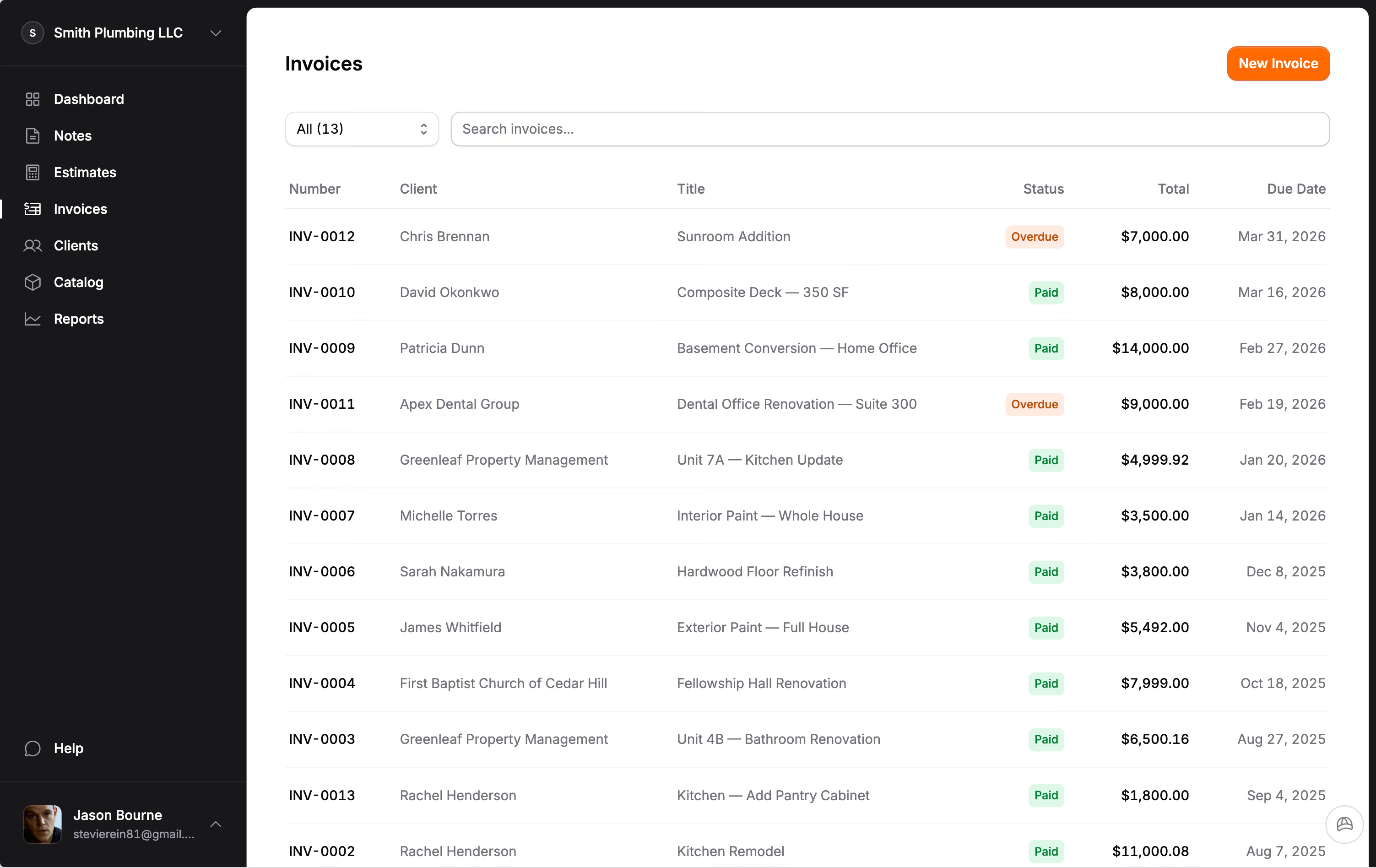
Most residential paint jobs are a deposit to cover materials and the balance at completion. Big exteriors often add a progress payment. Put them on one invoice with a payment schedule, each row named and dated in the order the money comes in. Payments fill the rows in order and the last row is always the balance.
The homeowner pays by card or bank transfer from the invoice link. Stripe charges its standard rate and Jobkore adds nothing on top, and late payments get reminders at 1, 7 and 14 days.
When the homeowner adds the hallway halfway through, or the scraping turns up rotted trim that needs replacing before it can be painted, write a change order on the invoice. They sign it online and the invoice total moves to include it.
Hank knows what a paint bid leaves out.
Jobkore includes Hank AI™, an assistant that knows the trade you picked at signup. Tell him the job by typing or with a voice memo: repaint living room, dining room and hall, walls and ceilings, going from navy to a light gray, trim and six doors in semi-gloss, water stain on the dining ceiling. He drafts the estimate by room, priced from your catalog first.
Turn on a review before sending and he checks it against a painter's list: two coats quoted with no prep, no primer on a dark-to-light change, no stain-blocker on the water spot, trim bundled into the wall price. He can add the missing line and never changes your prices in a review.
Jobkore does not do color visualization, measuring from photos or scheduling. It does estimates, change orders, invoices and payments, on your phone, in English or Spanish. Related trades: drywall, pressure washing and handyman. See the pricing page.
Common questions.
Ready to get after it?
Stop fighting your software. Start running your business.
Try for free14-day free trial. No credit card required.