Insulation estimates and invoices, with the R-value on the paperwork.
Price the attic, the walls and the spray foam each in their own unit, show the air sealing the cheap bid skips, and write down what you installed. For small insulation crews.
Price by area and by product, not one rate for the house.
Insulation contractor software has to handle the fact that the same house holds very different jobs. Blowing an open attic is fast. Dense-packing wall cavities is slow. Spray foam is its own trade, usually priced by the board foot (a square foot one inch thick) rather than the square foot. One rate per square foot for all of it either loses you the spray foam job or overcharges the attic.
In Jobkore every line carries its own unit: square feet of attic, square feet of wall, board feet of closed-cell foam at the rim joists, bags of cellulose, hours for removal. Group the estimate by area (attic, walls, crawlspace or basement) and the homeowner sees where the money goes.
The HVAC trade pack, which covers insulation, starts your catalog with blown-in attic insulation, batt wall insulation, spray foam and insulation removal, all by the square foot. Change the prices to yours, add board-foot spray foam lines if you price that way, and every estimate starts from your numbers.
Air sealing is the half that gets skipped.
The homeowner's real question is whether this will lower the bill, or whether they are paying for something they cannot see. Most of the answer is air sealing, done before the insulation goes in: top plates, plumbing and wiring penetrations, the attic hatch, recessed lights and the rim joists. Put it on the estimate as its own line so it is not the first thing cut.
Then the details that decide whether the job works. Baffles at the soffits so blown insulation never blocks the vents. IC-rated recessed lights, or fire-rated boxes built around the ones that are not. A vapor strategy that fits the climate zone. A thermal or ignition barrier where spray foam is left exposed in an occupied space. Ducts and pipes in an unconditioned attic sealed and insulated on their own.
Protection during the install belongs on the estimate too: masking the HVAC, covering floors, and containing the dust, because cellulose gets everywhere.
Federal law says the R-value goes on the receipt.
This is the part most insulation software never mentions. The FTC's R-value Rule requires installers to give customers a contract or receipt showing the coverage area, thickness and R-value of the insulation installed, dated and signed by the installer. For loose-fill, it also has to show the initial installed thickness, the minimum settled thickness and the number of bags used.
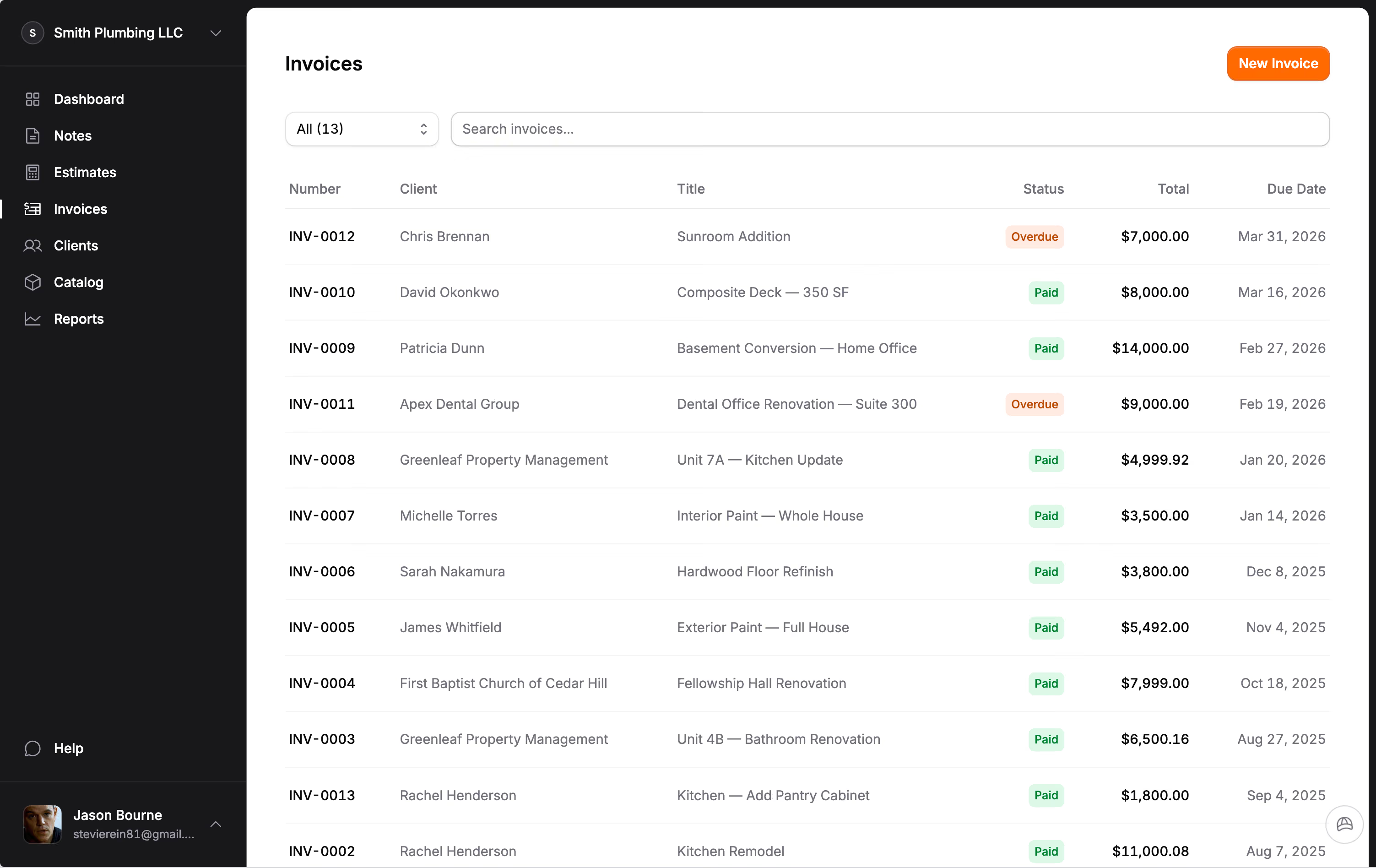
An itemized Jobkore invoice is a natural place for it. Make each area its own line with the square footage as the quantity, and put the product, thickness and R-value in the line's description: attic, 1,400 square feet, blown cellulose, 14 inches installed, 12 settled, R-49, 38 bags. Date it, sign the copy you give the homeowner, and you have met the rule with paperwork you were writing anyway.
The same numbers answer the homeowner who asks, a year later, what exactly went into their attic.
Photos, payments, and the credit that ended.
Insulation is invisible once it is in, so photos do the selling: the bare attic floor before, the ruler in the finished depth after, the sealed rim joist. Add up to 20 on the document and 6 on a single line.
Most insulation jobs are a deposit and the balance at completion. Put both on one invoice with a payment schedule, each row named and dated; payments fill the rows in order and the last row is always the balance. The homeowner pays by card or bank transfer from the link, Stripe charges its standard rate and Jobkore adds nothing, and late payments get reminders at 1, 7 and 14 days.
Update your sales pitch too. The federal 25C credit for insulation and air sealing covered improvements placed in service through December 31, 2025, and does not apply to a 2026 job. Utility and state rebates still exist in many areas, so name only the ones you have checked. More on what homeowners read on an estimate.
Hank knows the insulation traps.
Jobkore includes Hank AI™, an assistant that knows the trade you picked at signup. Tell him the job by typing or with a voice memo: 1,400 square foot attic with R-11 of old batts, 12 can lights, open soffits, unfinished basement with open rim joists, climate zone 5. He drafts the estimate by area, priced from your catalog first, with the usual waste on the product.
Turn on a review before sending and he checks it against an insulation list: insulating without air sealing first, no baffles at the soffits, non-IC can lights left uncovered, open-cell foam in a cold climate with no vapor retarder, the rim joists skipped. He can add the missing line and never changes your prices in a review.
If you find wet or contaminated insulation once you are up there, add a change order to the invoice for the removal. The homeowner signs it online and the total moves to include it.
What Jobkore does for an insulation crew.
Jobkore does not do energy modeling, blower-door reports, rebate filing or scheduling. It does the estimate the homeowner signs, the change orders, the invoice with the R-value details and the payments, on your phone, in English or Spanish. Invoices and payments sync one way to QuickBooks Online.
If you also do HVAC or work alongside a contractor who does, the HVAC page covers that side. Wall insulation before drywall pairs with drywall, and attic ventilation with roofing. Each of those pages covers how that trade prices and bills its part of the same house.
The price is on the pricing page: one plan with every feature.
Common questions.
Ready to get after it?
Stop fighting your software. Start running your business.
Try for free14-day free trial. No credit card required.