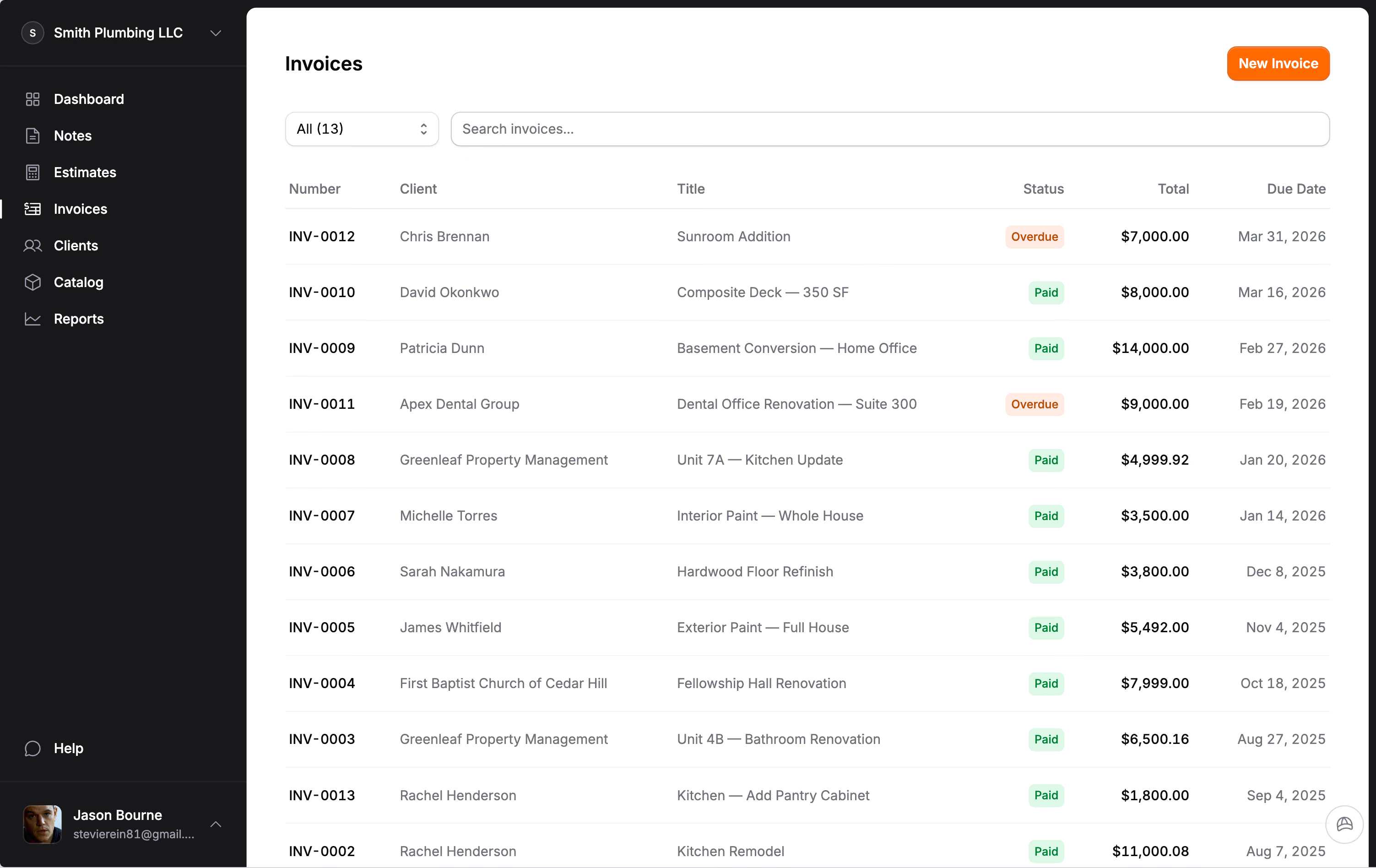
Excavation estimates and invoices, from the locate to the restoration.
Price the trailer haul, the machine days, the yards and the loads, carry an allowance for the ground you cannot see, and leave the yard the way you promised. For small excavation outfits.
Mobilization, machine days, yards and loads.
Excavation estimating software has to price dirt work the way it actually costs. Getting the machine there and back is a flat line, not something buried in an hourly rate, because a one-hour job still needs the trailer. The equipment is by the day, sized to the job: a mini excavator for tight access, a skid steer for moving material, a full-size machine for a foundation, a backhoe for a utility trench.
Then the material. Excavation by the cubic yard, spoil hauled by the load with the tipping fee on it, grading by the square foot, and imported topsoil, backfill or base stone by the yard with the waste counted. Calculate the spoil rather than eyeballing it; underestimate the yards and the dump fees come out of your margin.
In Jobkore every line has its own unit. Load the Concrete & Excavation trade pack and your catalog starts with excavation by the cubic yard, grading, a skid steer with operator by the day, hauling and dump fees by the load, French drains and gravel driveways. Change the national-average prices to yours once, and every estimate starts from your numbers.
The locate, and the lines nobody marks.
The homeowner's real question is whether the job will get done without hitting a utility or wrecking the yard. Start with the locate: call 811 before any digging and write the ticket number on the estimate. Hit a line you did not have located and you own the repair.
Then ask about what 811 does not mark. Sprinkler lines, septic lines, low-voltage lighting and a buried propane line belong to the owner, not the utility, so nobody paints them. Put a note on the estimate that private lines are the owner's to identify, or price locating them.
Protect the property on the way in. Plywood or temporary stone over the lawn and the driveway for heavy equipment is a line, and so is repairing ruts if the ground is soft. It costs less than rebuilding a cracked driveway apron.
Rock, water and buried debris: price the unknown.
Every excavator has hit rock that was not in the bid. The ground under a yard can hold ledge, perched water or old foundations and buried trash, and pricing a job as if it will all dig easily is how you work a week for nothing. Carry an allowance on the estimate for unknown soil conditions, or state the hourly rate that applies if you hit them.
When you do hit rock, the extra goes on the invoice as a change order: the hours, the breaker, the extra haul. The homeowner signs it online and the invoice total moves to include it. Because the rate was on the original estimate, there is nothing to argue about.
If the water table is shallow, put a dewatering plan on the estimate (the pump, the discharge location). Near mature trees, call out the root zones you will stay out of.
Trenches over 5 feet need protection.
Trench collapses kill workers, and OSHA is specific about when protection is required. Under 29 CFR 1926.652, an excavation needs a protective system, such as sloping, shoring or a trench box, unless it is entirely in stable rock or less than 5 feet deep with no sign of a cave-in on inspection by a competent person.
If a job calls for a trench that deep, the shoring or trench box is equipment and time, and it belongs on the estimate. Leaving it off does not make it optional; it just means you are paying for it yourself or skipping it.
Erosion control belongs on the estimate too: silt fence, inlet protection and straw wattles where the stormwater rules call for them. Many jurisdictions require a grading permit above a certain volume or near sensitive water, so check yours.
Restoration, disposal tickets and getting paid.
How the site looks when you leave is part of the job. Topsoil back, seed or sod, and compaction testing where a slab or driveway will go on top. Each is a line, so the homeowner sees what "done" means before you start. Keep your disposal tickets; tipping fees are real money and belong on the invoice or in the haul rate.
Excavation jobs often pay a deposit up front (mobilization is a real cost on day one) and the balance at completion, with progress payments on bigger jobs. Put them on one invoice with a payment schedule, each row named and dated. Payments fill the rows in order and the last row is always the balance.
The client pays by card or bank transfer from the invoice link, or you record a check. Stripe charges its standard rate and Jobkore adds nothing. Late payments get reminders at 1, 7 and 14 days. More on why itemized estimates win.
Hank knows the excavation traps.
Jobkore includes Hank AI™, an assistant that knows the trade you picked at signup. Tell him the job by typing or with a voice memo: dig a 28 by 40 basement, about 9 feet deep, haul the spoil, backfill after the walls, rough grade, suburban lot with a narrow side yard. He drafts the estimate with mobilization, equipment days, yards, loads and restoration, priced from your catalog first.
Turn on a review before sending and he checks it against an excavation list: no 811 ticket, no mobilization line on a small job, no allowance for rock or water, no trench protection on deep work, spoil yardage that looks low. He can add the missing line or an allowance and never changes your prices in a review.
Jobkore does not do earthwork takeoff from plans, machine control or dispatch. It does estimates, change orders, invoices and payments, in English or Spanish. Related trades: concrete, demolition and landscaping. See the pricing page.
Common questions.
Ready to get after it?
Stop fighting your software. Start running your business.
Try for free14-day free trial. No credit card required.