Deck estimates and invoices, from the footings to the rail.
Price the frame, the decking, the rail and the stairs on their own lines, show the homeowner the ledger and footings they will never see, and bill in stages. For small deck builders.
Square feet of deck, plus the rail, stairs and extras.
Deck estimate software has to price more than square feet. The deck surface is by the square foot, but the railing is by the linear foot and the balusters add up fast on a long run. Stairs are each, with their stringers, treads and handrail. Skirting, fascia and lighting are their own lines. Price the whole thing as one square-foot number and the rail eats the profit.
Spec the decking by name. Composite product lines from the same brand can differ by close to double in price, so "composite decking" is not a spec. Count the waste: around 8 percent on pressure-treated framing, 10 on composite, 12 on hardwood, and about 10 on railing pickets.
In Jobkore every line has its own unit. Load the Outdoor & Grounds trade pack and your catalog starts with composite and wood deck builds and deck repair and resurfacing by the square foot. Change the prices to yours once, and every estimate starts from your numbers. More on pricing a deck.
The ledger and the footings are the deck.
The homeowner's real question is whether the deck will be solid in fifteen years and built to code. Most of the answer is in the parts they will never look at again, so put them on the estimate. The ledger flashed against the house and fastened with bolts or structural screws per the code's schedule, never nails; ledger failure is how decks come down. Footings below the frost line, sized to the load, with post bases instead of posts buried in concrete.
Then the framing details. Galvanized or stainless hangers rated for the load. Joist spacing matched to the decking; composite laid on a diagonal usually needs closer spacing. Butyl joist tape on top of every joist so water does not sit and rot them. Exterior-rated structural screws where the plan calls for them.
Each is a line or a spec note. A homeowner comparing your number with a cheaper one should be able to see what the cheaper one left out.
Permits, rails and stairs.
Many building departments require a permit for a deck attached to the house, built more than 30 inches above grade, or over a certain size, so check yours and put the permit on as a line. Call 811 before digging footings.
Guards and stairs are where inspectors look first. Codes based on the International Residential Code commonly require a guard where the deck is more than 30 inches above grade, at least 36 inches high, with openings a 4-inch sphere cannot pass through, and stairs with a graspable handrail. Your local code may differ, so confirm it and write the rail height and baluster spacing on the estimate.
Photos help: up to 20 on the document and 6 on a single line. A photo of the old ledger pulling away from the house beside the line that replaces it explains why the job is a rebuild.
Repair or rebuild, and what is under the old boards.
A resurface over a sound frame is a very different price from a rebuild, and the only way to know is to look under the boards. Say on the estimate whether the existing footings and framing are being reused, and on what basis.
When the old decking comes up and the rim joist or ledger is rotted, write a change order on the invoice with the framing repair. The homeowner signs it online and the invoice total moves to include it. Carry an allowance for framing repair on any resurface of an older deck so the change is expected, not a surprise.
For pressure-treated and natural wood, the first sealer coat usually waits until the lumber has dried, often several months. Price it as a separate visit and say so, so the homeowner is not left wondering why their new deck looks gray.
Deposit, framing and completion.
Deck jobs usually pay a deposit for materials, a payment when the framing is done and inspected, and the balance at completion. Put them on one invoice with a payment schedule, each row named and dated in the order the money comes in. Payments fill the rows in order and the last row is always the balance.
The homeowner pays by card or bank transfer from the invoice link. Stripe charges its standard rate and Jobkore adds nothing on top. Late payments get reminders at 1, 7 and 14 days.
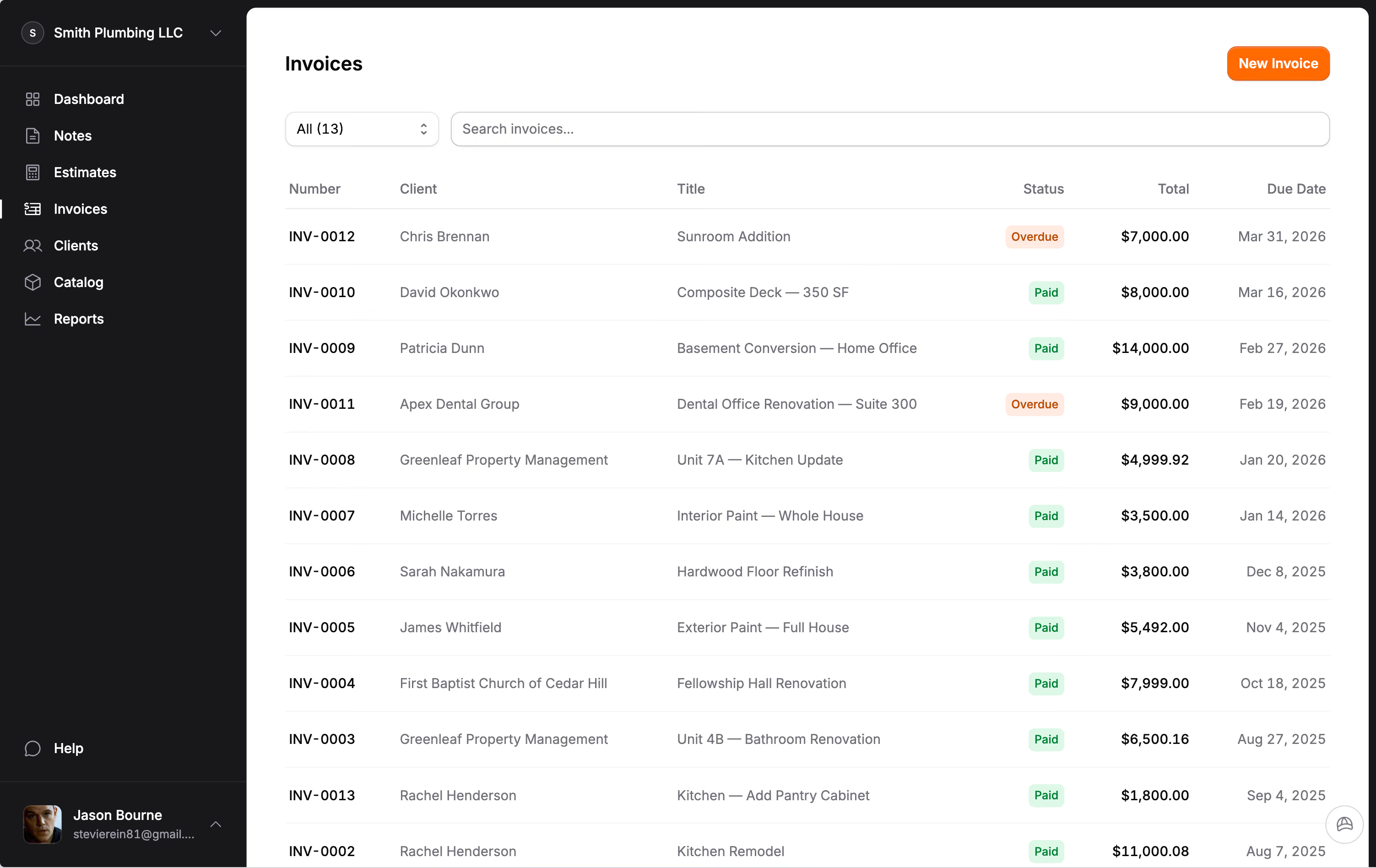
Invoices and payments sync one way to QuickBooks Online, so your bookkeeper is not retyping anything.
Hank knows the deck traps.
Jobkore includes Hank AI™, an assistant that knows the trade you picked at signup. Tell him the job by typing or with a voice memo: 16 by 20 composite deck, attached to the house, 4 feet off grade, picture-frame border, aluminum rail with glass on the view side, one set of stairs to the yard, freeze zone. He drafts the estimate with footings, framing, decking, rail and stairs, priced from your catalog first, with the usual waste.
Turn on a review before sending and he checks it against a deck list: a ledger with no flashing or bolt pattern, footings above the frost line, no joist tape under composite, the railing underpriced, a composite line with no product named. He can add the missing line and never changes your prices in a review.
Jobkore does not do 3D deck design or scheduling. It does estimates, change orders, invoices and payments, in English or Spanish. Related trades: fencing, carpentry and landscaping. See the pricing page.
Common questions.
Ready to get after it?
Stop fighting your software. Start running your business.
Try for free14-day free trial. No credit card required.