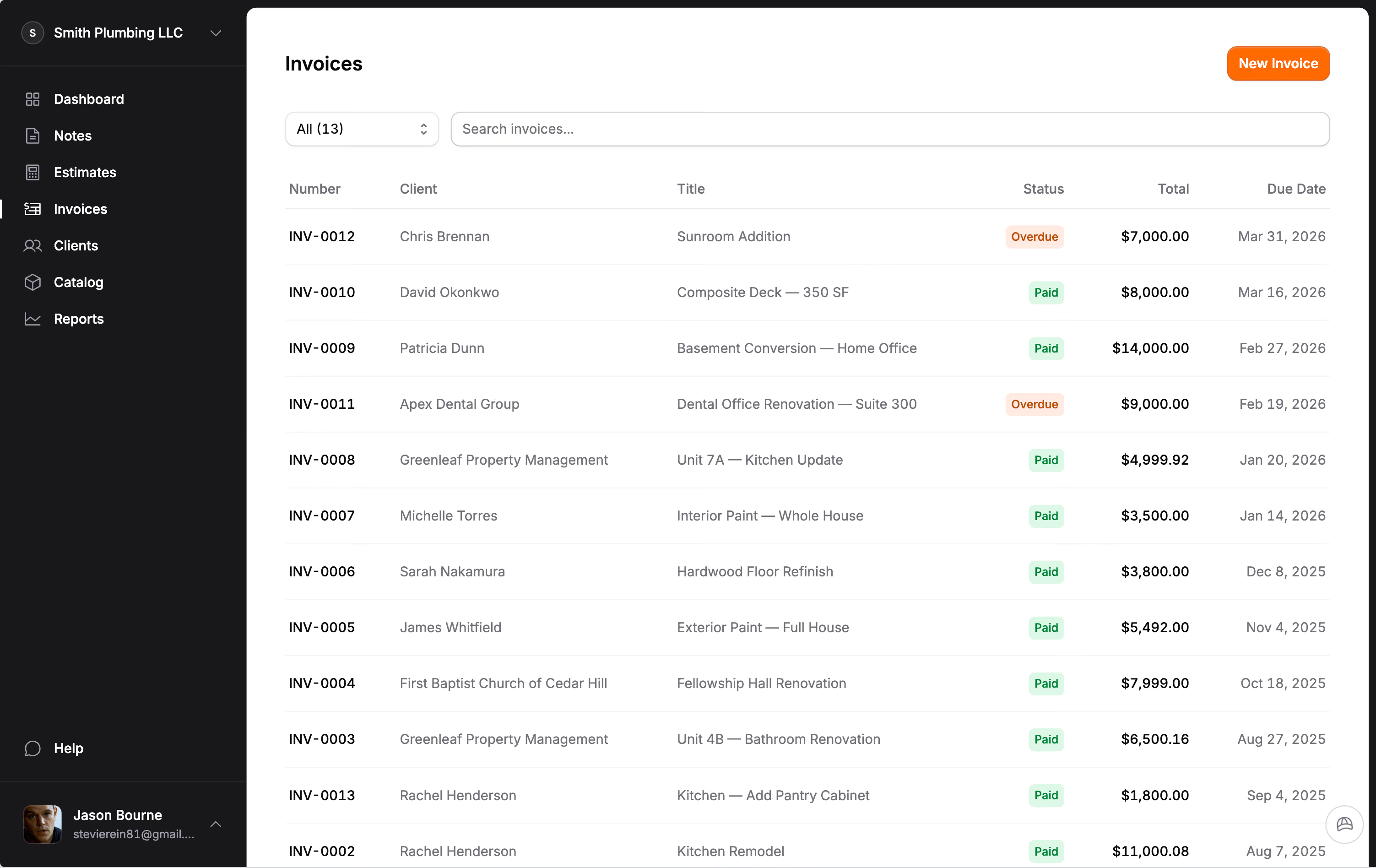
Demolition estimates and invoices, from the survey to the broom-clean.
Price the tear-out, the dumpster pulls and every haul, put the disconnects, shoring and hazardous-material checks on the page, and hand the space back clean. For small demolition crews.
Price the tear-out, the pulls and every haul.
Demolition estimating software has to price the part of demo that eats the margin: getting the debris out. The tear-out itself is by the square foot or by the day. The dumpsters are each, and the pull count matters, because a gutted kitchen with tile and cabinets fills a 20-yard container fast. Hauling is by the load, with the dump fee on it.
Separate the streams. Metal goes to recycling and can earn a credit. Concrete is heavy and hits a dumpster's weight limit long before it fills it. Appliances need their own removal, and refrigerators need the refrigerant recovered. Hazardous material never goes in the general dumpster at all.
In Jobkore every line has its own unit. Load the Demolition trade pack and your catalog starts with interior demolition by the square foot, bathroom and kitchen demo, wall removal by the linear foot, flooring and concrete removal, shed and deck demolition, 10- and 20-yard dumpsters, debris haul-off by the load, and a skid steer with operator by the day. Set each price once, and every estimate starts from your numbers.
Before anything swings: disconnects, shoring and permits.
The homeowner's real question is whether it will come out cleanly without taking something structural with it. Answer it on the estimate before the first hit. Utility disconnects scheduled and documented: the water shut off, the gas capped, the circuits dead. A live wire in a wall you are pulling is the one surprise you do not want.
If a wall might be load-bearing, say how you will know, and price the temporary support to hold it while it comes out, with an engineer on larger spans or anything multi-story. Many building departments want a separate demolition permit for structural, exterior or full-gut work, so the permit is a line too.
Plan the salvage with the client before demo day, not after. Cabinets, doors, fixtures and hardwood they want to keep are easy to set aside and impossible to get back out of a dumpster. More on the terms worth putting on an estimate.
Asbestos and lead: know which rules apply.
Older homes can hide asbestos in floor tile, mastic, pipe insulation and textured ceilings, and lead in the paint. The federal asbestos rule for demolition and renovation requires a thorough inspection before work on the buildings it covers, but the EPA notes that it excludes residential buildings with four or fewer dwelling units, unless they are demolished as part of a larger commercial or public project. State and local rules are often stricter, so check yours.
Whether or not a rule requires it, disturbing asbestos you did not know about is a health hazard and a liability. On older homes, a survey before demo belongs on the estimate, and abatement is a separate, licensed trade, priced as its own line or its own contractor. Painted surfaces in a pre-1978 home fall under the EPA's lead renovation rule.
Photos of what you found, up to 20 on the document and 6 on a single line, back up the survey line when the homeowner asks why it is there.
Protect what is staying.
On interior demo in an occupied house, the rest of the home is part of the job. Dust walls and negative air around the work area, not just a sheet of plastic. Floor and stair protection along the whole path from the work to the dumpster. Each is a line, so it is not the first thing cut.
Broom-clean at the end of every day, not just the end of the week, and a final sweep with photos before you hand off to the next trade. That handoff is where demo crews get blamed for damage they did not do, and dated photos settle it.
Hidden conditions change the scope: a second layer of flooring under the first, plaster behind the drywall, a buried slab. When they do, write a change order on the invoice with the extra labor and pulls. The client signs it online and the invoice total moves to include it.
Deposit, completion, and billing the GC.
Homeowner demo jobs usually pay a deposit, since dumpsters and disposal are paid for up front, and the balance at completion. Put both on one invoice with a payment schedule, each row named and dated. Payments fill the rows in order and the last row is always the balance.
When you demo for a general contractor, bill on their terms and add a separate row for any amount they hold until the project is finished, with a later due date. The client pays by card or bank transfer from the invoice link, or you record a check. Stripe charges its standard rate and Jobkore adds nothing.
Late payments get reminders at 1, 7 and 14 days, and invoices and payments sync one way to QuickBooks Online.
Hank knows the demolition traps.
Jobkore includes Hank AI™, an assistant that knows the trade you picked at signup. Tell him the job by typing or with a voice memo: gut a 1962 kitchen and hall bath to the studs, take out the wall between kitchen and dining room, keep the hardwood in the dining room, occupied house. He drafts the estimate with tear-out, disconnects, shoring, dumpsters, hauls and protection, priced from your catalog first.
Turn on a review before sending and he checks it against a demolition list: no survey on an older house, too few dumpster pulls, utility disconnects left off, no shoring on a wall that may be load-bearing, salvage not planned. He can add the missing line and never changes your prices in a review.
Jobkore does estimates, change orders, invoices and payments, in English or Spanish. Related trades: excavation, general contractor and remodeling. See the pricing page.
Common questions.