Stucco and plaster estimates and invoices, coat by coat.
Say whether the wall gets patched, skimmed or redone, price each coat and the cure time between them, and bill new work phase by phase. For small stucco and plaster crews.
Patch, skim or redo: the price starts with the diagnosis.
Stucco and plaster estimating software has to handle the fact that the same cracked wall can be three very different jobs. A patch and blend, a full skim coat, or tearing it out and doing it again can differ in price by three to five times. The homeowner's real question is whether it can be repaired properly, or whether someone is going to tell them to rip it out.
Answer it by writing the diagnosis on the estimate. What the substrate is: lime and horsehair on wood lath, gypsum on rock lath, veneer plaster on blueboard, or stucco over block or frame. Whether the keys are holding. On old wood lath, broken keys mean the plaster is letting go, and a patch over them will not hold.
In Jobkore every line has its own unit: square feet for skim and finish coats, linear feet for trim and corner work, each for small repairs, bags for material, days for a crew. Group the estimate by wall or room. More on organizing an estimate into sections.
Price each coat, and the cure time between them.
Traditional three-coat work is scratch, brown and finish; veneer plaster is one or two coats over blueboard. Put each coat on its own line so the homeowner sees what the system is and why it costs what it does. Add a bonding agent wherever the surface is smooth, painted or tight.
Then put the schedule on the estimate. Coats need cure time between them, commonly a day or two, longer with lime, and rushing it is how you get shrinkage cracks, hollow spots and lap lines. A homeowner who knows the wall sits for a few days between coats will not call to ask why nobody came.
Choose the material for the wall. Lime breathes and belongs on old masonry; gypsum sets faster and belongs on gypsum lath. Count the waste, around 15 percent on plaster. Decorative finishes like Venetian plaster or lime wash are their own skill and their own line.
Exterior stucco: the weep screed and what is behind it.
On exterior stucco, the details that keep water out are the ones a cheap bid skips. The weather barrier and lath, flashing at openings, and the weep screed at the bottom of the wall so trapped water can drain. Building code sets where that screed goes: at least 4 inches above the earth or 2 inches above paved areas. A wall finished right down to the dirt is a wall that will rot behind the stucco.
Put the screed, the lath and the barrier on the estimate as lines. On repairs, carry an allowance for texture and color matching, because blending new stucco into a weathered wall is never exact.
Photos make the case: up to 20 on the document and 6 on a single line. A photo of the stucco buried in the planter bed beside the line that fixes it explains the scope better than a paragraph.
Old plaster: dust, lead and asbestos.
Plaster work is some of the messiest work in a house, especially demolition of failed plaster. Put dust containment and floor protection on the estimate as their own line. On older homes, screen before aggressive demo: some plaster and texture from before 1980 contains asbestos, and painted plaster in a pre-1978 home falls under the EPA's lead renovation rule once the work disturbs more than six square feet of painted surface in a room.
Testing and lead-safe setup cost time and material. Giving them their own lines means the homeowner understands the price and you are not absorbing compliance.
Finally, the hand-off. New plaster needs the right primer before paint, or the paint soaks in blotchy. Say on the estimate whether priming is yours or the painter's.
New work in phases, repairs on completion.
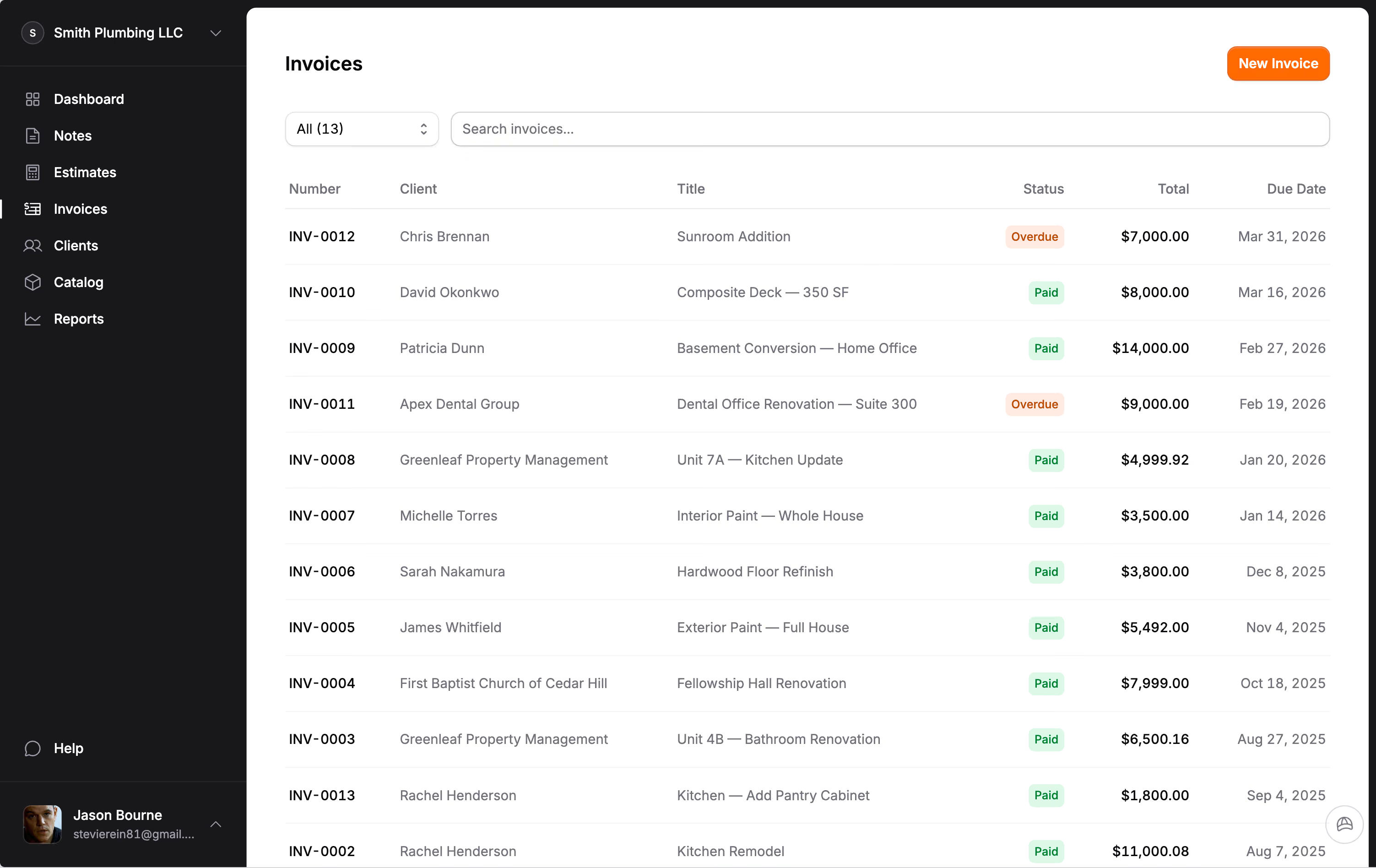
A new stucco or plaster job usually pays in stages: a deposit, then payments as coats or phases are finished. Put them on one invoice with a payment schedule, each row named and dated in the order the money comes in. Payments fill the rows in order and the last row is always the balance. Repairs are simpler: invoice on completion.
The homeowner pays by card or bank transfer from the invoice link, or you record a check. Stripe charges its standard rate and Jobkore adds nothing. Late payments get reminders at 1, 7 and 14 days.
When the repair you quoted turns into a ceiling that is separating from its lath, write a change order on the invoice. The homeowner signs it online and the invoice total moves to include it.
Hank knows the plaster traps.
Jobkore includes Hank AI™, an assistant that knows the trade you picked at signup. Tell him the job by typing or with a voice memo: 1920s house, lime plaster on wood lath, living room ceiling sagging in one corner, cracks in two walls, matching a sand finish. He drafts the estimate with the repair strategy, coats and protection, priced from your catalog first.
Turn on a review before sending and he checks it against a plaster list: a patch over failed keys, gypsum on old masonry, no cure time between coats, a heavy texture match priced as a flat skim, primer left out. He can add the missing line and never changes your prices in a review.
The Painting & Drywall trade pack starts your catalog with small and large plaster repair lines and a skim coat. Jobkore does not do takeoff from plans or scheduling. Related trades: drywall, painting and masonry. See the pricing page.
Common questions.
Ready to get after it?
Stop fighting your software. Start running your business.
Try for free14-day free trial. No credit card required.