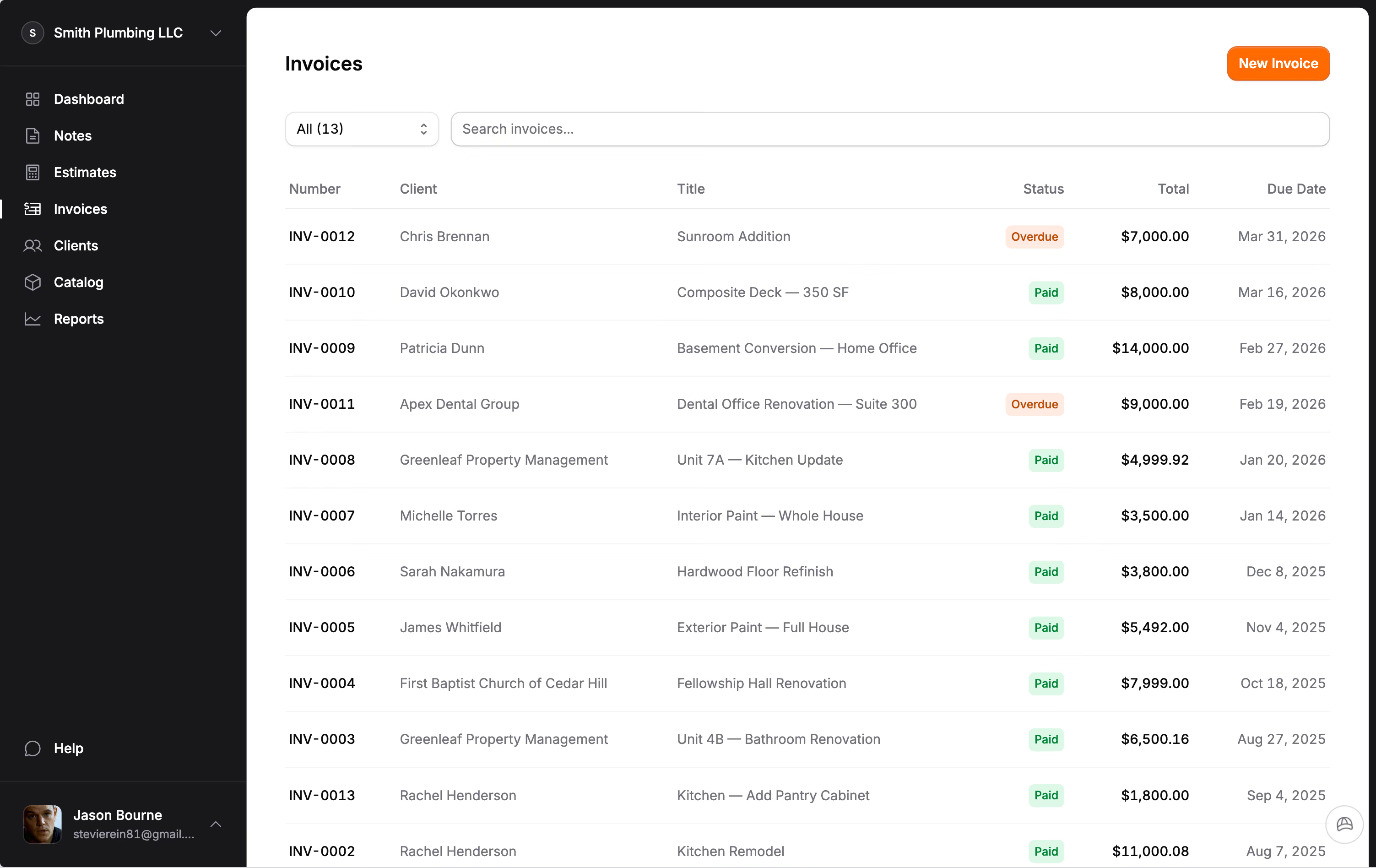
Handyman estimates and invoices, sized for small jobs.
Set a minimum, bundle the honey-do list into one estimate, and get paid by card the same visit. For one-person and two-person handyman businesses.
Charge a minimum, or the small job costs you the morning.
A handyman invoice app has to handle the fact that most of your jobs are small, and small jobs lose money without a floor under them. A 15-minute faucet fix still costs the drive, the parking and the setup. Set a minimum visit charge (commonly the first hour or half hour) and put it on every estimate so it is never a surprise.
In Jobkore each line has its own unit, so the minimum can be one visit, the repair can be a flat price per job, and anything open-ended can be by the hour. Use hourly when you cannot see the problem yet, and a fixed price when the scope is clear. The customer sees the method on the page.
Load the General Contractor trade pack and your catalog starts with work handymen do every week: drywall patches small and large, door installs, baseboard and casing by the linear foot, interior paint, fixture, faucet and toilet installs, fan and light swaps. Change the national-average prices to yours once. More on how to price handyman work.
Bundle the honey-do list into one estimate.
The customer with a list of eight small things is your best customer, if you quote it right. Pricing each task on its own lets the trip charge eat the profit on every one. Put the whole list on one estimate, a line per task, or quote it as a half-day or a full day and list the tasks underneath so the customer knows what is included.
Add photos to the estimate so there is no argument about which cabinet door or which leak: up to 20 on the document and 6 on a single line. The customer accepts and signs it online.
When the list grows on the day ("while you are here, can you look at the garbage disposal"), write a change order on the invoice. The customer signs it on their phone and the invoice total moves to include it. The extra work is priced before you do it, not after.
Materials: mark them up, or let the customer buy.
Three trips to the hardware store on someone else's job is a morning you did not bill. Decide per job whether you supply materials with a markup or the customer buys and you install, and say which on the estimate. In Jobkore each catalog item carries a rate and an optional markup on top, so the markup is set once and applied every time you use the item.
Consumables are different. Screws, anchors, caulk, spackle and tape are not worth a line, but they are not free either. Build them into your hourly rate or your minimum.
The customer's real question is simple: will somebody come out for a small job, and do it right? A clear estimate with the minimum, the materials policy and the tasks on it answers the first half before you arrive.
Know where handyman work ends and licensed work begins.
Every state draws the line differently, and crossing it can void your right to be paid. California requires a contractor license once labor and materials on a project reach $1,000, or if the job needs a permit or you have employees, and a larger job cannot be split into smaller contracts to stay under it. Florida's exemption covers casual, minor work under $2,500 in labor and materials, and not if you advertise as a contractor.
Plumbing, electrical and structural work usually need a trade license no matter the dollar amount. When a job crosses the line, decline it or refer it out. It is cheaper than the liability.
Put your license or registration number in Jobkore once and it prints on every estimate and invoice. For property managers and landlords, that and a certificate of insurance are often the first things they ask for.
Get paid the same visit.
Small jobs should be paid when they are done. Turn the estimate into an invoice, send it with a payment link, and the customer pays by card or bank transfer on their own phone. Stripe charges its standard rate and Jobkore adds nothing on top. If a payment runs late, Jobkore sends reminders at 1, 7 and 14 days, then stops.
Attach completion photos to the invoice. For a landlord or a property manager who never sees the unit, a photo of the fixed closet door next to the line that fixed it is what gets the invoice approved.
Invoices and payments sync one way to QuickBooks Online, so your bookkeeper is not typing anything twice.
Hank turns a list into an estimate.
Jobkore includes Hank AI™, an assistant that knows the trade you picked at signup. Read him the customer's list by typing or with a voice memo: rehang two closet doors, patch three nail holes and a doorknob hole, replace the bath fan, caulk the tub, fix the running toilet. He drafts the estimate with a line per task, priced from your catalog first.
Turn on a review before sending and he checks it against a handyman's list: no minimum or trip charge, materials left off, a job that looks like it needs a licensed trade. He can add the missing line and never changes your prices in a review.
Jobkore does not do online booking, dispatch or GPS. It does estimates, invoices and payments, on your phone, in English or Spanish. Related trades: carpentry, painting and drywall. The price is on the pricing page.
Common questions.
Ready to get after it?
Stop fighting your software. Start running your business.
Try for free14-day free trial. No credit card required.