What to Do When a Client Won't Pay (Before It Gets Ugly)
According to the U.S. Small Business Administration, 82 percent of small businesses that fail cite cash flow problems as the reason. For contractors, the most painful version of that problem is a client who owes you money and will not pay. We talk to contractors about this constantly, and the good news is that most non-payment situations never need to involve a lawyer. About 90 percent of them can be resolved with a direct conversation and solid documentation. But you have to handle it right, and you have to handle it early.
Here is a practical escalation path that works, step by step, before things get ugly.
Start with a phone call, not an email
The instinct when a payment is overdue is to send an email or a text. It feels safer. Less confrontational. But emails are easy to ignore, and tone gets misread in text. A phone call is harder to dodge and much more likely to produce a real answer.
Keep it professional and direct. "Hey, I wanted to check in on the invoice from the Smith kitchen project. It was due on the 15th and I have not seen the payment come through yet. Is there an issue on your end?" That is it. No accusations, no attitude. Most of the time, the client has a reason: they forgot, the invoice got buried, they are waiting on their own payment, or there is a question about the work they have not brought up.
A five-minute phone call resolves the majority of late payments. The longer you wait to make that call, the harder the conversation gets and the less likely you are to collect.
Send a formal demand letter
If the phone call does not produce payment within a week, put it in writing. A demand letter is not a legal document in the courtroom sense, but it signals that you are serious and creates a paper trail. It should include the original amount owed, the date the work was completed, a reference to the signed estimate or contract, any payments already made, and a clear deadline for the remaining balance.
Send it by email and by certified mail. The certified mail part matters because it proves the client received it, which becomes important if things escalate later. Give them 10 to 15 business days to respond. Most clients who were dragging their feet will pay after receiving a formal letter because it tells them you are not going to let this quietly disappear.
Offer a payment plan
Sometimes the client is not refusing to pay. They genuinely cannot afford the full amount right now. This is more common than most contractors expect, especially on larger residential projects. Rather than letting the balance sit unpaid for months while resentment builds on both sides, offer a payment plan.
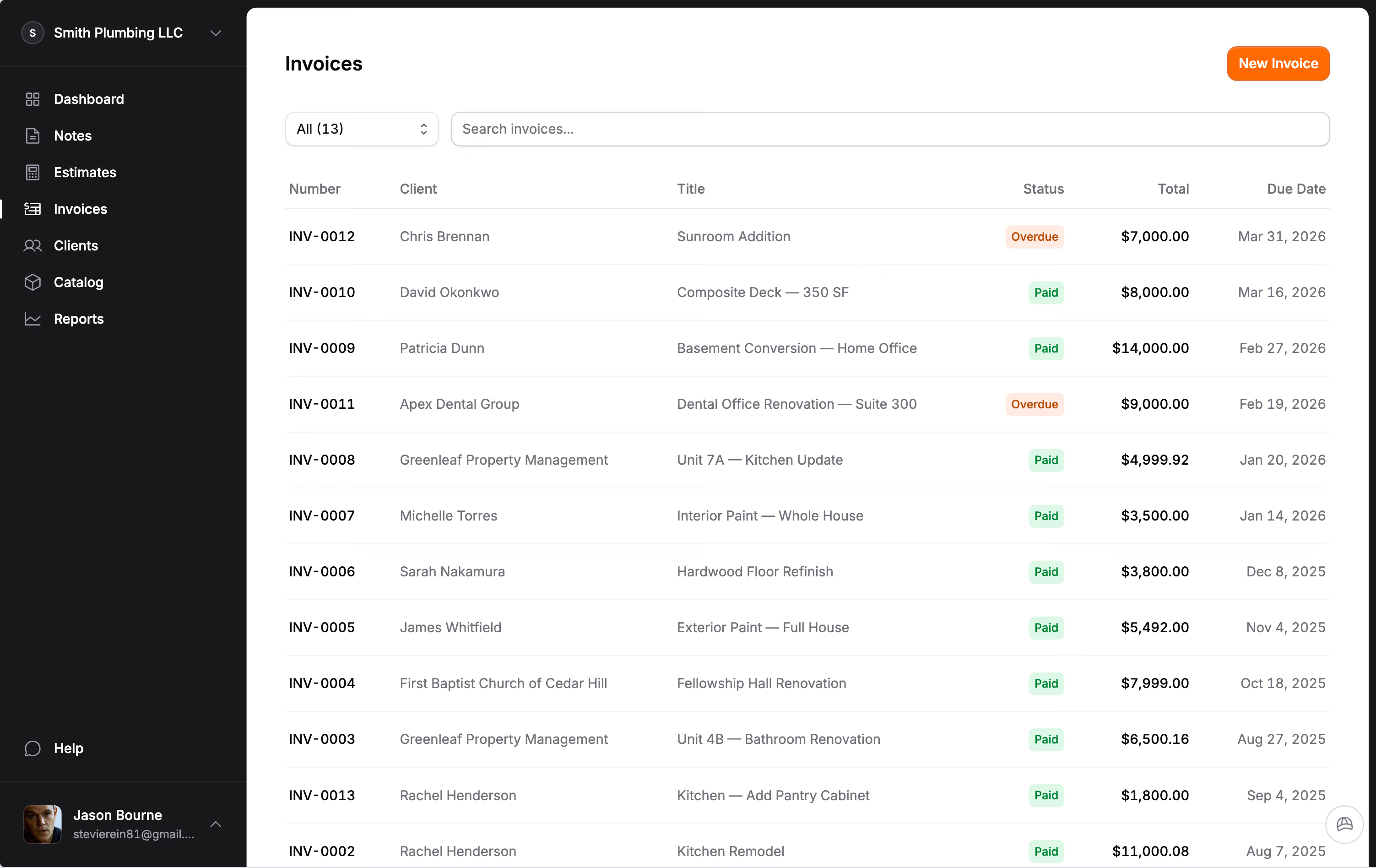
A simple structure works: split the remaining balance into three or four monthly payments with specific due dates. Put the agreement in writing and have both parties sign it. If you use a tool that lets you send invoices with online payment links, you can create a separate invoice for each installment so the client can pay with one click on each due date.
A payment plan is not a concession. It is a strategic move. Collecting 100 percent over three months is better than collecting zero percent over six months of silence.
Understand your mechanic's lien rights
If the client is unresponsive or actively refusing to pay, a mechanic's lien is one of the most powerful tools a contractor has. A mechanic's lien is a legal claim against the property where you performed the work. It means the owner cannot sell or refinance the property without settling your claim first. That gets people's attention fast.
The rules vary significantly by state. Most states require you to send a preliminary notice before or shortly after starting work, and there are strict deadlines for filing the lien after the work is completed, typically 60 to 90 days. Miss the deadline and you lose the right entirely. The state-by-state requirements are different enough that you need to know the rules where you work.
Filing a lien costs a small fee at the county recorder's office and does not require a lawyer in most states, though consulting one is smart if the amount is significant. Even threatening to file a lien, in writing, often produces payment because the client realizes their property title is at stake.
Small claims court as a last resort
If the demand letter, payment plan, and lien threat have all failed, small claims court is the final step before hiring an attorney for a full civil suit. Small claims handles disputes up to $5,000 to $10,000 in most states, with some states allowing claims up to $25,000. You represent yourself, the filing fee is usually under $100, and cases are typically resolved in a few weeks.
To win in small claims, you need documentation. The signed estimate, any change orders, photos of completed work, invoices, payment records, and your communication history. This is where contractors who kept clean records have an enormous advantage over those who operated on handshakes.
The reality is that most disputes never reach this point. The escalation path from phone call to demand letter to lien threat resolves the vast majority of non-payment situations. Small claims is the backstop, not the first move.
Prevention is cheaper than collection
Every contractor who has been through a non-payment situation says the same thing afterward: "I should have had better paperwork from the start." They are right. The best way to handle a client who will not pay is to make it very difficult for the situation to happen in the first place.
That means a detailed, signed estimate before work begins, not a verbal agreement. It means documented change orders for every scope addition, not a text that says "sure, I can add that." It means invoicing on the day the work is complete, with clear terms and an online payment option that makes paying easy. And it means keeping every email, text, and signed document in one place so you have a complete record if you ever need it.
Contractors who run a tight documentation process rarely end up chasing money. The paperwork itself changes the dynamic. When a client signs an estimate with clear payment terms, agrees to change order pricing in writing, and receives a professional invoice with a payment link the day the work is done, paying feels like the natural next step. There is no ambiguity to hide behind.
The earlier you act, the better the outcome
The single biggest mistake contractors make with non-payment is waiting. They wait because the conversation is awkward. They wait because they are busy on the next job. They wait because they hope the client will just pay eventually. And every week they wait, the odds of collecting drop.
If an invoice is five days past due, pick up the phone. If it is two weeks past due, send the demand letter. If it is 30 days past due, you should already be researching your lien rights. The contractors who get paid are the ones who treat overdue invoices as a problem to solve today, not something to deal with later.
Non-payment is a reality of the trades. But it does not have to define your business. A clear process, good documentation, and the willingness to have uncomfortable conversations early will resolve the situation more often than not. And when they do not, you will have the paper trail to back up every dollar you are owed.
Frequently Asked Questions
What should a contractor do when a client refuses to pay?
Start with a direct phone call, not an email. Most non-payment is not malicious; it is a miscommunication, a forgotten invoice, or a dispute about scope. A calm, professional conversation resolves 90 percent of cases. If that fails, send a formal demand letter, offer a payment plan, and document everything. Legal options like mechanic's liens and small claims court are last resorts.
What is a mechanic's lien and when should a contractor file one?
A mechanic's lien is a legal claim against a property for unpaid work. It gives the contractor a security interest in the property until the debt is paid. Filing deadlines and requirements vary by state, typically 60 to 90 days after project completion. It is a serious step that usually motivates payment, but consult a local attorney for your state's specific rules.
Can a contractor take a client to small claims court?
Yes. Small claims court handles disputes up to $5,000 to $25,000 depending on the state. You represent yourself, the filing fee is usually under $100, and cases are resolved in weeks, not months. Bring your signed estimate, invoices, change orders, photos, and any communication. Documentation is what wins these cases.
How can contractors prevent non-payment before it happens?
Get a signed estimate with clear payment terms before work starts. Collect a deposit. Use milestone payments on larger jobs so you are never too far ahead of the money. Invoice the day work is completed. Include late fee terms on your estimate. The contractors who rarely deal with non-payment are the ones whose paperwork leaves no room for ambiguity.