How to Invoice Clients as a Contractor (Without Looking Amateur)
According to Intuit's 2025 Late Payments Report, 56 percent of US small businesses are owed money from unpaid invoices, averaging $17,500 per business. We talk to contractors about this every week, and a surprising amount of the time the problem is not a bad client. It is a bad invoice. The invoice showed up late, was missing details, or looked so unprofessional that the client did not take it seriously. Your invoice is the last impression you leave on a job. If it looks like an afterthought, the payment will be treated like one too.
What a professional contractor invoice actually looks like
Most advice on invoicing starts with a checklist: include your name, add a number, list the work. That is obvious. What separates a professional invoice from an amateur one is not the presence of information but the quality and presentation of it.
A contractor who invoices "$14,200 for kitchen remodel" in a text message is technically invoicing. But compare that to an invoice with the client's name and project address, an itemized breakdown of demolition, electrical, plumbing, cabinets, countertops, and finish work, a reference to the signed estimate, and a link to pay online. The second one gets paid faster because it answers every question the client might have before they have to ask it.
The SBA recommends that small businesses use unique invoice numbers, clear payment terms, and detailed line items as standard practice. For contractors, this is even more important because the dollar amounts are higher and the client is often comparing your invoice against the original estimate they signed weeks or months ago.
The seven elements that separate professional invoices from the rest
After reviewing invoicing patterns across hundreds of contractors we work with, the difference between invoices that get paid promptly and ones that sit in a client's inbox comes down to seven things.
Your business identity. Your company name, logo, license number, phone, and email. This is not vanity. It tells the client they are dealing with a legitimate operation, and it makes the invoice easy to find later.
The client's information. Their name, address, and the project address if it is different. This matters more than you think. Property managers and homeowners with multiple projects need to match the invoice to the right job instantly.
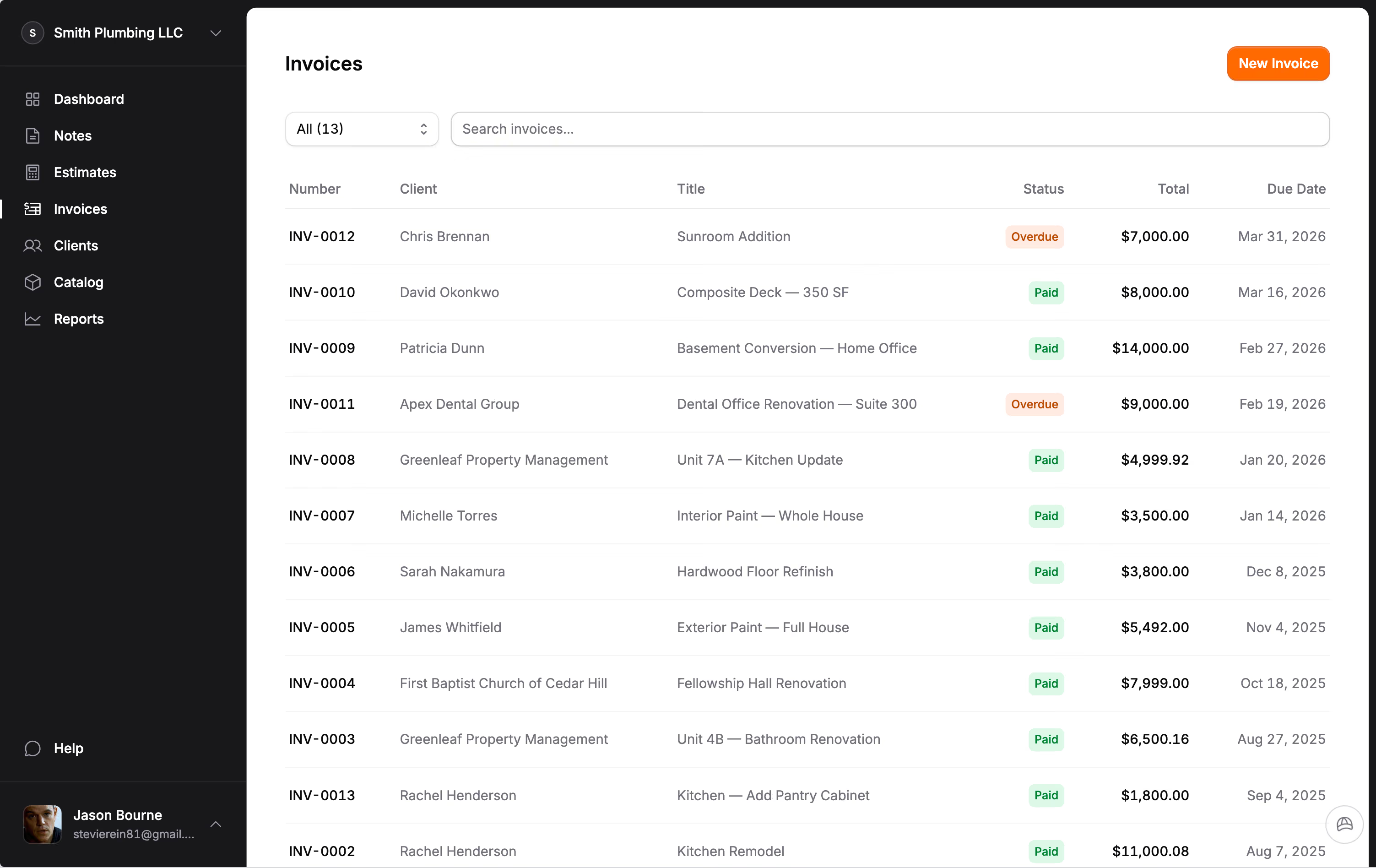
A unique invoice number. Sequential numbering (INV-001, INV-002) is fine. The point is traceability. When a client calls about a payment, you should be able to pull up the invoice in seconds.
Itemized line items. Break down the work into sections that mirror the original estimate. If you quoted demolition, framing, electrical, and finish work separately, your invoice should show those same categories with their actual costs. This builds trust because the client can see exactly what they are paying for.
Change order references. If the scope changed during the job, each change order should appear as its own line item with its approval date. This eliminates the "that was not in the original price" conversation because the documentation is right there on the invoice.
Payment terms and due date. "Due upon receipt" or "Net 15" or "Net 30," stated clearly. If you agreed to late fee terms in the estimate, restate them on the invoice. The client already agreed to these terms when they signed the estimate. The invoice is just enforcing what was already in writing.
A payment link. An online payment option removes the biggest barrier to getting paid: effort. The client clicks, enters their card, and the payment is done. No check to write, no stamp to find, no trip to the bank. Contractors we work with who accept online payments report average time to payment under seven days. Those relying on checks average three weeks or more.
Timing matters more than most contractors realize
The single most impactful thing you can do to get paid faster has nothing to do with the invoice itself. It is when you send it.
Invoice on the day the work is completed. Not the weekend. Not next Monday. The day it is done. If you can, send it before you leave the job site. The client's satisfaction is at its peak. Their budget is still mentally allocated to your project. Every day you wait, that urgency fades.
We see this pattern constantly. A contractor finishes a bathroom remodel on Thursday, waits until the following week to invoice, and then wonders why the client takes another three weeks to pay. By that point, the client has moved on mentally. The project is in the rearview. Your invoice is just another item on their to-do list competing with everything else.
The contractors who consistently get paid fastest all share the same habit: the invoice goes out before the tools go back on the truck.
Why your estimate and your invoice need to speak the same language
One of the most common invoicing mistakes we see is a disconnect between the estimate and the invoice. The estimate has detailed sections and line items. The invoice is a single lump sum with "Balance due: $18,500." The client cannot reconcile the two documents, so they hesitate.
Your invoice should read like the final chapter of the estimate. Same sections, same line items, with actuals instead of quotes. If the estimate broke the job into five categories, the invoice should show those same five categories. If there were two change orders during the project, those should appear on the invoice with their approved amounts.
When the client can trace the thread from estimate to change order to invoice without any gaps, paying feels like closing the loop rather than opening a negotiation. That continuity is what turns a piece of paper into a payment trigger.
The invoice is not the end of the process
Sending the invoice is step one. Following up is step two, and most contractors skip it because it feels awkward. But a polite reminder at seven days and again at fourteen days is not nagging. It is professional, and it works.
Think about your own life. How many emails have you intended to respond to but forgot? Your clients are the same way. A follow-up is a courtesy, not a confrontation. Keep it brief: "Just checking in on invoice #247 for the deck project. Let me know if you have any questions."
For larger projects, consider structuring payments as milestones rather than a single invoice at the end. A deposit before work starts, a progress payment at rough-in or framing, and a final payment at completion. This keeps cash flowing throughout the project and reduces the risk of a large unpaid balance at the end. The SBA's financial management guide recommends milestone billing for any project exceeding 30 days, and for good reason. It works.
What your invoice says about your business
Contractors spend weeks on a job site getting every detail right. Then they send an invoice that looks like it was typed in the notes app on their phone. There is a disconnect there, and clients notice it.
Your invoice is a document that represents your business. It is the last thing the client sees before they decide how quickly to pay you. A clean, professional invoice with your logo, clear line items, and an easy way to pay signals that you run a real business. A vague text message with a Venmo request signals the opposite.
The contractors who build repeat business and earn referrals tend to be the ones whose paperwork matches the quality of their work. Not because the paperwork is fancy, but because it is clear, complete, and easy for the client to act on. That is the bar. It is not high, but most contractors are still not clearing it.
Frequently Asked Questions
What should a contractor include on an invoice?
A professional contractor invoice should include your business name and contact info, the client name and address, a unique invoice number, the invoice date and due date, an itemized list of work completed with quantities and rates, any change order amounts, the total due, payment terms, and clear payment instructions including an online payment link if available.
When should a contractor send an invoice?
Invoice on the day the work is completed, ideally before you leave the job site. Client satisfaction and payment urgency are highest at project completion. Every day you wait, the likelihood of a prompt payment drops. Contractors who invoice same-day consistently report getting paid in under a week versus three or more weeks for delayed invoices.
How do contractors handle partial payments on invoices?
For larger jobs, set up milestone payments in your estimate: a deposit before work starts, a progress payment at a defined stage like rough-in or framing, and a final payment at completion. Each milestone gets its own invoice tied back to the original estimate. This protects your cash flow and keeps the client engaged throughout the project.
Should contractors charge late fees on overdue invoices?
You can, and it is standard practice in many trades. The key is to include late fee terms on the original estimate so the client agrees before work begins. Common rates are 1 to 1.5 percent per month. State laws vary on maximums, so check your local regulations. The real goal is not to collect fees but to motivate on-time payment.