5 Reasons Contractors Don't Get Paid on Time
Slow payments cost the US construction industry an estimated $280 billion in 2024. That is not a typo. According to a 2025 survey by Built, 82 percent of contractors now wait over 30 days for payment, up from 49 percent just two years earlier. The average time to receive payment has stretched to 90 days, double what most businesses consider healthy. We talk to contractors about this problem every single day, and the pattern is always the same: the reasons they get paid late are almost never about the client being dishonest. They are about gaps in the contractor's own process.
Here are the five reasons we see most often, and how to fix each one before it costs you another dollar.
1. No written estimate before work starts
This is the single biggest predictor of a payment dispute. When there is no detailed, signed estimate before the first day of work, you have given the client room to question every line on the final invoice.
"I thought that was included." "We never agreed to that price." "I didn't know the materials would cost that much." Every contractor has heard some version of these. And the frustrating part is that the client is not always wrong. If the scope was discussed verbally or scribbled on the back of a business card, there is no shared record of what was actually agreed to.
A detailed estimate with sections, line items, and terms is not just a sales tool. It is a payment protection tool. When the client signs an estimate that spells out the work, the materials, and the price, you have a reference point for every conversation that follows. Disputes drop dramatically when both sides are looking at the same document.
2. Scope creep without a change order
Scope creep is the silent margin killer. The client asks for one more outlet in the kitchen. Then they want the hallway painted too. Then the deck boards they picked are out of stock and they want a different material that costs more. Each request feels small. But by the end of the job, the total has drifted $3,000 to $5,000 past the original estimate, and there is nothing in writing to justify the difference.
We hear this story constantly: a contractor finishes the job, sends the final invoice, and the client pushes back. "That's not what we agreed to." And technically, they are right. The original estimate said one thing. The invoice says another. Without a documented change order for each addition, the contractor has no leverage.
The fix is straightforward. Every change, no matter how small, gets a written change order with its own approval and its own price. The client sees the running total. There are no surprises on the final invoice. It takes two minutes to document a change. Skipping that step can cost you thousands.
3. Slow invoicing after the job is done
This one is entirely self-inflicted, and it is more common than most contractors want to admit. The job wraps on Friday. The contractor is already on the next job Monday morning. The invoice gets pushed to "this weekend" and then to "next week" and then it is three weeks later and the client has mentally moved on from the project.
According to Intuit's 2025 Small Business Late Payments Report, 56 percent of US small businesses are owed money from unpaid invoices, averaging $17,500 per business. A huge portion of that is not because clients refuse to pay. It is because the invoice showed up late, got buried in email, or lacked the detail needed to process it quickly.
The contractors we work with who get paid fastest all do the same thing: they invoice on the day the job is complete, sometimes while they are still on site. The client's satisfaction is highest at job completion. Their budget is still allocated. Every day you wait to invoice, the urgency to pay drops.
4. Vague or incomplete invoices
Even when invoices go out on time, they can stall if they do not give the client enough information to confidently pay. An invoice that says "Kitchen remodel: $12,400" with no line items, no reference to the original estimate, and no payment instructions creates friction. The client has to dig through emails to remember what was agreed to. If they have questions, the invoice sits in their inbox while they wait to hear back from you.
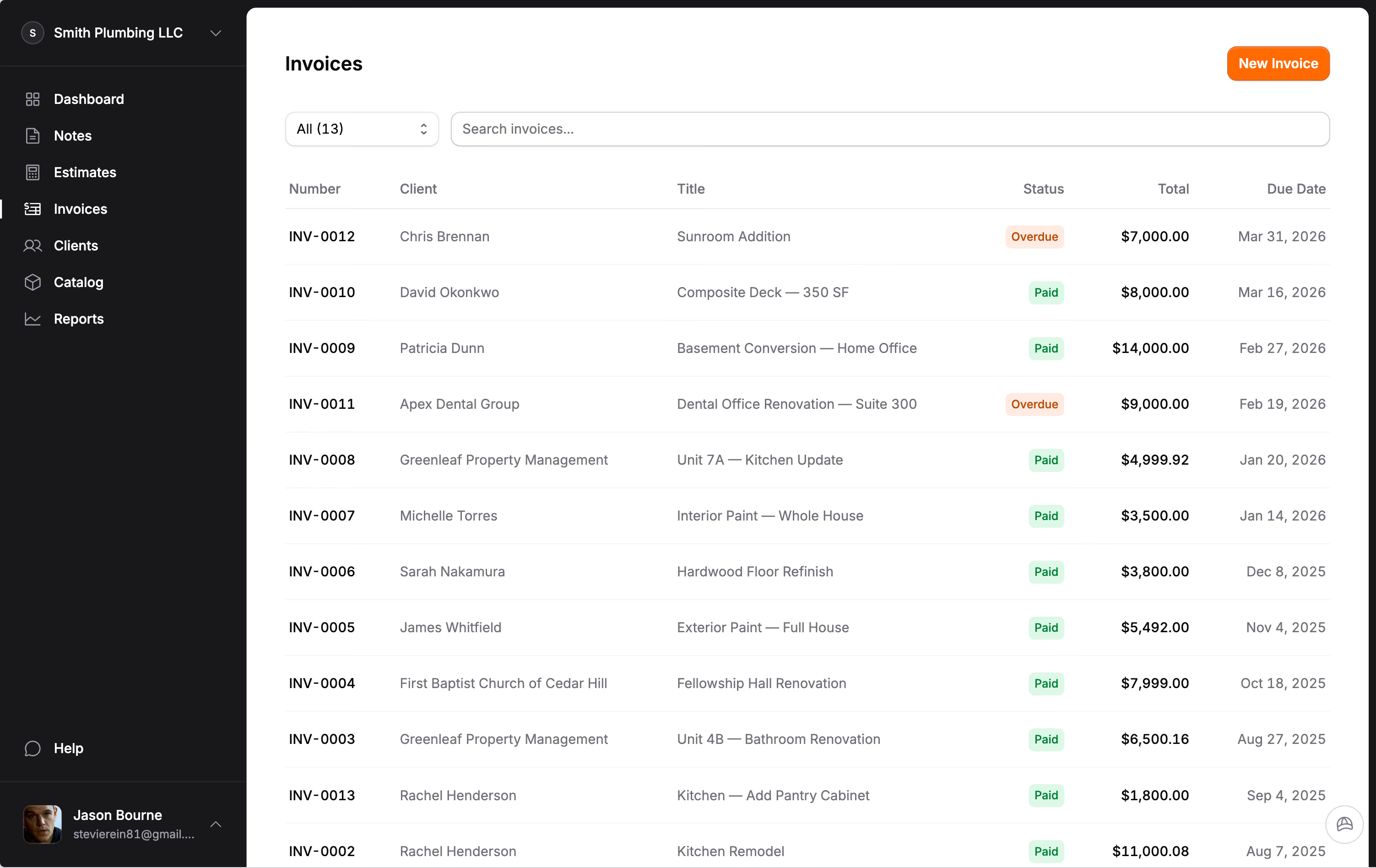
A professional invoice references the original estimate, breaks out the work completed, accounts for any change orders, and includes a clear total with payment terms. When the client can see the thread from estimate to invoice to total, paying feels like a natural next step rather than an open question.
Adding online payment through a service like Stripe removes the final barrier. The client clicks a link and pays. No writing a check, no finding a stamp, no "I'll send it this weekend." Contractors who accept online payments consistently report that average time to payment drops from 20 or more days to under a week.
5. No payment terms or follow-up system
If your estimate and invoice do not specify when payment is due, you have given the client permission to pay on their own schedule. And their schedule is "whenever they get around to it."
Payment terms should appear on the estimate (so the client agrees before work begins) and again on the invoice. Net 15 or Net 30 is standard for residential work. For larger jobs, milestone payments (a deposit, a progress payment at rough-in, and a final payment at completion) protect your cash flow and reduce the risk of a full non-payment at the end.
The other half of this problem is follow-up. Most contractors hate chasing money. It feels awkward. So they send the invoice and hope for the best. But a simple reminder at the 7-day and 14-day marks is not nagging. It is professional. And it works. A 2025 survey by Mobilization Funding found that 56 percent of contractors have turned down projects due to cash flow concerns. That is work left on the table because money from completed jobs has not come in yet.
The pattern behind all five problems
If you look at these five reasons together, a pattern emerges. Every one of them is a gap in the paperwork chain: estimate to change order to invoice to payment. When each link is solid, clear, and documented, the money flows. When any link is missing or vague, it creates an opening for delays, disputes, and excuses.
Contractors who treat that chain as a system, where the estimate feeds the invoice and the invoice includes a payment link, get paid faster than those who handle each step separately with different tools, templates, or scraps of paper. It is not about being aggressive with clients. It is about making payment the path of least resistance.
The trades lose enough to slow payments as an industry. The five problems above are the ones you can actually control. Fix your process, and the money follows.
Frequently Asked Questions
How long should a contractor wait to get paid?
Industry standard for residential work is Net 15 to Net 30 from invoice date. For larger projects, progress payments at milestones are common. The average contractor currently waits over 90 days for payment, which is well beyond healthy. If your invoices are consistently past 30 days, the issue is usually in your process, not your clients.
What can a contractor do if a client won't pay?
Start with a written demand letter referencing the signed estimate and completed scope. If that fails, file a mechanics lien (deadlines vary by state). Small claims court handles disputes under $5,000 to $10,000 depending on your state. Prevention is cheaper than collection: detailed estimates, signed approvals, and milestone invoicing stop most disputes before they start.
Should contractors charge late fees on invoices?
Yes, but state the terms upfront. A typical late fee is 1 to 1.5 percent per month after a grace period of 15 to 30 days. Include late fee terms in your estimate and invoice so the client agrees before work begins. Late fees rarely need to be enforced when they are clearly stated, they simply encourage on-time payment.
How do contractors prevent payment disputes?
The biggest prevention tool is a detailed, signed estimate before work starts. When scope, pricing, and terms are documented and approved, there is very little room for dispute. Change orders with separate approvals handle scope changes. Professional invoices that reference the original estimate close the loop.
What percentage of contractor invoices are paid late?
Industry surveys show that 82 percent of contractors now wait over 30 days for payment. Over half of US small businesses are owed money from overdue invoices, averaging $17,500 per business. Late payment is the norm in contracting, but it does not have to be. Contractors with professional invoicing systems and clear terms get paid significantly faster.