Manage Clients Without a CRM You Hate
More than half of all CRM deployments fail. Not because the software is broken, but because it was built for inside sales teams running 90-day deal cycles, not for contractors scheduling jobs by the week. If you have tried a CRM and abandoned it within a few months, you are in the majority. The problem was never your discipline. It was that the tool asked you to do work that has nothing to do with how you actually run your business.
Most CRMs fail, and contractors are not the reason
Between 55 and 70 percent of CRM implementations do not achieve their planned objectives, according to research from Johnny Grow and Vantage Point. Low user adoption is the single biggest cause, responsible for 38 percent of failures. Over 60 percent of the time, the failure is a people problem, not a technology problem.
That makes sense when you think about it. Half of all businesses with fewer than 10 employees do not use a CRM at all. The tools were designed for companies with sales pipelines, deal stages, and account executives. A contractor with 50 clients and a phone full of text messages is not that business.
The contractor client management problem is real. But the solution is not a $69-per-month platform with pipeline stages and deal forecasting. It is something much simpler.
What you actually need to track about each client
We talk to contractors constantly about how they manage clients. The ones who stay organized are not using fancy systems. They are tracking five things consistently.
Name, phone, email, and address. What you quoted them and when. Whether they paid, how much, and what is still outstanding. Notes from conversations and site visits. And job history: what you did, where, and how it went.
That is it. Five categories. Not 50 fields in a CRM pipeline. Not a lead score. Not a "deal stage." Just enough information that when a past client calls, you can pull them up and know the full story in 10 seconds.
The problem is not that contractors do not know this. It is that the information is scattered: some in a phone contact, some in a text thread, some in a notebook in the truck, some in your head. When it is scattered, things fall through. And when things fall through, you lose work.
The follow-up that wins or loses the job
According to Scorpion, 78 percent of customers hire the first contractor who responds. The MIT/InsideSales study found that following up within five minutes makes you 21 times more likely to close the deal. After 30 minutes, conversion drops by more than half.
Here is the uncomfortable part: most contractors only try to contact a lead once. Industry research shows that 80 percent of successful sales require at least five follow-up contacts. That gap between one attempt and five is where jobs disappear.
You do not need automation or a drip campaign to fix this. You need a system where you can see who you quoted, when you quoted them, and whether you followed up. If that information is visible, you will act on it. If it is buried in a text thread from three weeks ago, you will not.
Your repeat clients are worth more than you think
Over 70 percent of a contractor's business comes from repeat customers and referrals. That number shows up consistently across industry surveys, and it matches what contractors tell us every week. Referrals alone account for more than half of all new business for nearly 49 percent of residential builders, according to the Association of Professional Builders.
The economics are staggering. It costs five to seven times more to acquire a new customer than to keep an existing one. Referred customers convert at 30 percent higher rates and stay 37 percent longer. Businesses that prioritize retention are 60 percent more profitable.
Losing one client does not cost you one job. It costs you their entire referral network. If your average job is $8,000 and a happy client sends you two referrals a year, losing that relationship is a $24,000 annual hole. Multiply that by a few neglected clients and you start to understand why some contractors stay booked while others chase leads constantly.
What simple client management actually looks like
The contractor who remembers the client's name, follows up on time, and knows what they quoted six months ago wins more work than the one with the fanciest truck. The system that makes this possible does not need to be complicated. It needs to be usable from a phone between jobs.
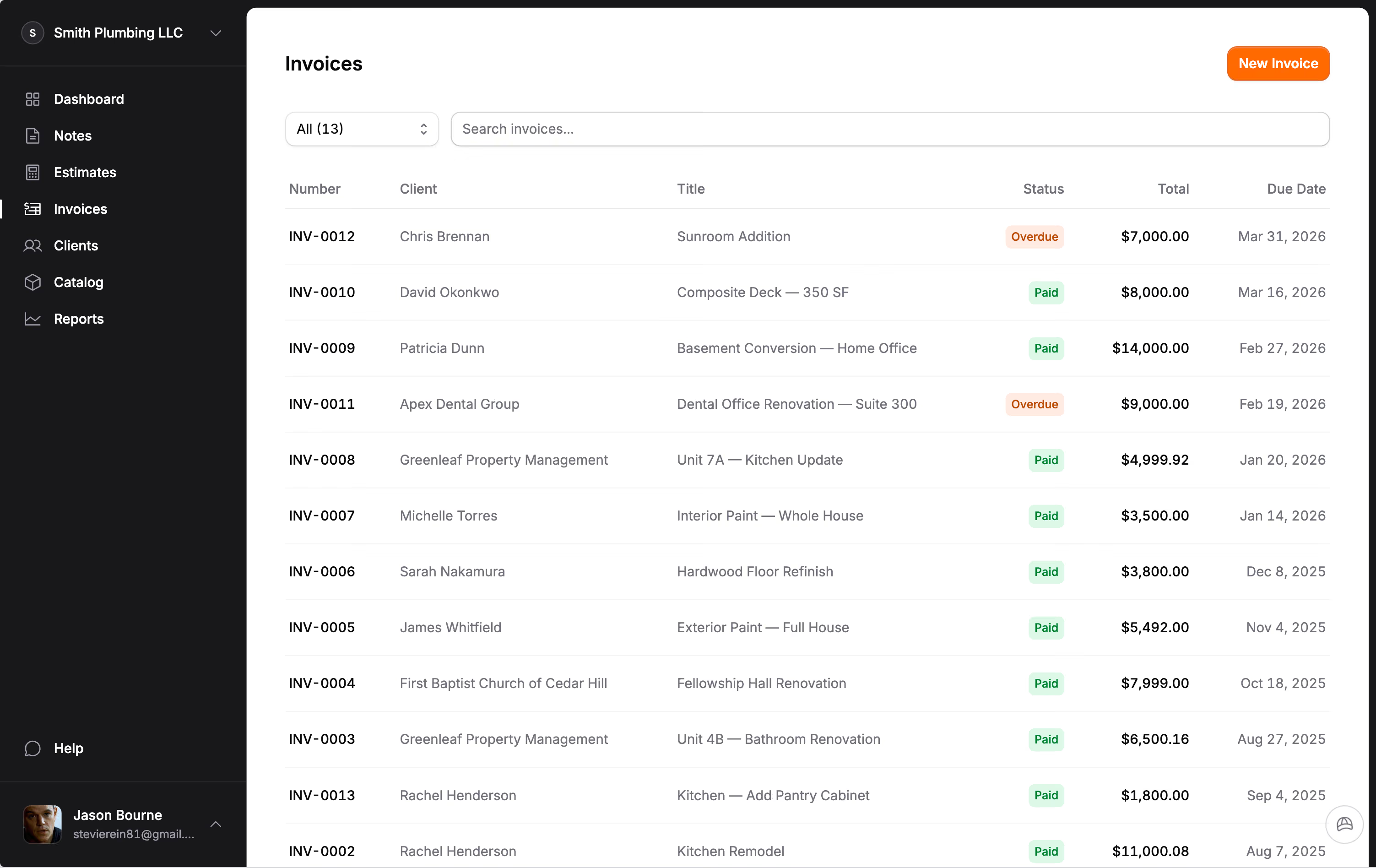
What we built into Jobkore is not a CRM. It is a client record with everything attached. Contacts, service locations, notes, and an activity feed that logs every estimate sent, every invoice paid, every email opened, and every document signed. Revenue per client is tracked automatically. You open a client and see the whole picture without entering anything manually.
On your phone from the job site, you can pull up any client, see what you last quoted them, check if they paid, and add a note from a conversation you just had. When that client calls back in four months, you are not guessing. You know.
No pipeline stages. No deal forecasting. No monthly fee for features designed for a company with an office and a sales team. Just the information you need to not lose track of the people who pay you.
The contractors who stay booked year after year are rarely the cheapest. They are the ones who make clients feel remembered. A simple system that you actually use beats a powerful system collecting dust every single time.
Frequently Asked Questions
Do contractors need a CRM?
Most contractors do not need a traditional CRM. CRMs are designed for sales teams with pipelines and deal stages, which is why 55 to 70 percent of CRM implementations fail. What contractors need is a simple client record that tracks contact info, job history, quotes, payments, and notes in one place they can access from their phone.
How do contractors keep track of clients?
The most effective contractors track five things per client: contact information, what they quoted and when, payment status and outstanding balances, notes from conversations and site visits, and job history. The key is keeping it all in one place rather than scattered across phone contacts, text threads, and notebooks.
How do contractors get more referrals?
Over 70 percent of contractor revenue comes from repeat clients and referrals. The best way to earn referrals is to stay organized: follow up on time, remember client details, deliver professional documents, and maintain a record of past work. Clients refer contractors who make them feel remembered, not just contractors who do good work.
What is a good follow-up time for contractor leads?
Research shows that 78 percent of customers hire the first contractor who responds. Following up within five minutes makes you 21 times more likely to win the job. After 30 minutes, your chances drop by more than half. Most contractors only contact a lead once, but 80 percent of sales require at least five follow-ups.
How much does it cost to lose a client as a contractor?
Losing one client costs far more than one job. It costs five to seven times more to acquire a new customer than to retain an existing one. If your average job is $8,000 and a happy client sends two referrals per year, losing that relationship costs roughly $24,000 annually in lost revenue from their referral network alone.