Slow Season for Contractors: 5 Things to Do When the Phone Stops Ringing
Contractor slow season is real. Construction unemployment in the United States runs in the low fours through November and climbs to nearly seven percent by the end of January, every single year. What is not real is the idea that the work has disappeared. Your scheduling cleared, last year's invoices stopped paying, and your inbox went quiet. Those are three different problems, and most slow-season guides only try to fix the third one.
The work didn't disappear. Three different problems hit at once.
The seasonal pullback in construction is not a feeling. According to AGC's analysis of BLS data, the not-seasonally-adjusted unemployment rate for construction sat at 4.1 percent in November 2025, climbed to 5.0 percent in December, and hit 6.9 percent by January 2026. That is the rest of the industry going quiet at the same time you did. But the underlying demand did not move. NAHB's Remodeling Market Index has held above the break-even line for twenty-four consecutive quarters. The work is there. What changed is that schedulers stopped booking, last year's invoices stopped paying, and your inbox cleared out at the same time. Three different problems, and a "do more marketing" answer only addresses one of them. The contractors who recover fastest from a slow February treat each one separately, in order.
Here is the position most slow-season advice gets wrong: the highest-ROI move in the next thirty days is almost never marketing. It is collecting the money you already earned and sending the estimates you have been putting off. Marketing belongs in the rotation, but it belongs third or fourth, not first. The five moves below are ordered roughly the way we would run them if our own phone went quiet on a Monday in February.
1. Start with the money you're already owed
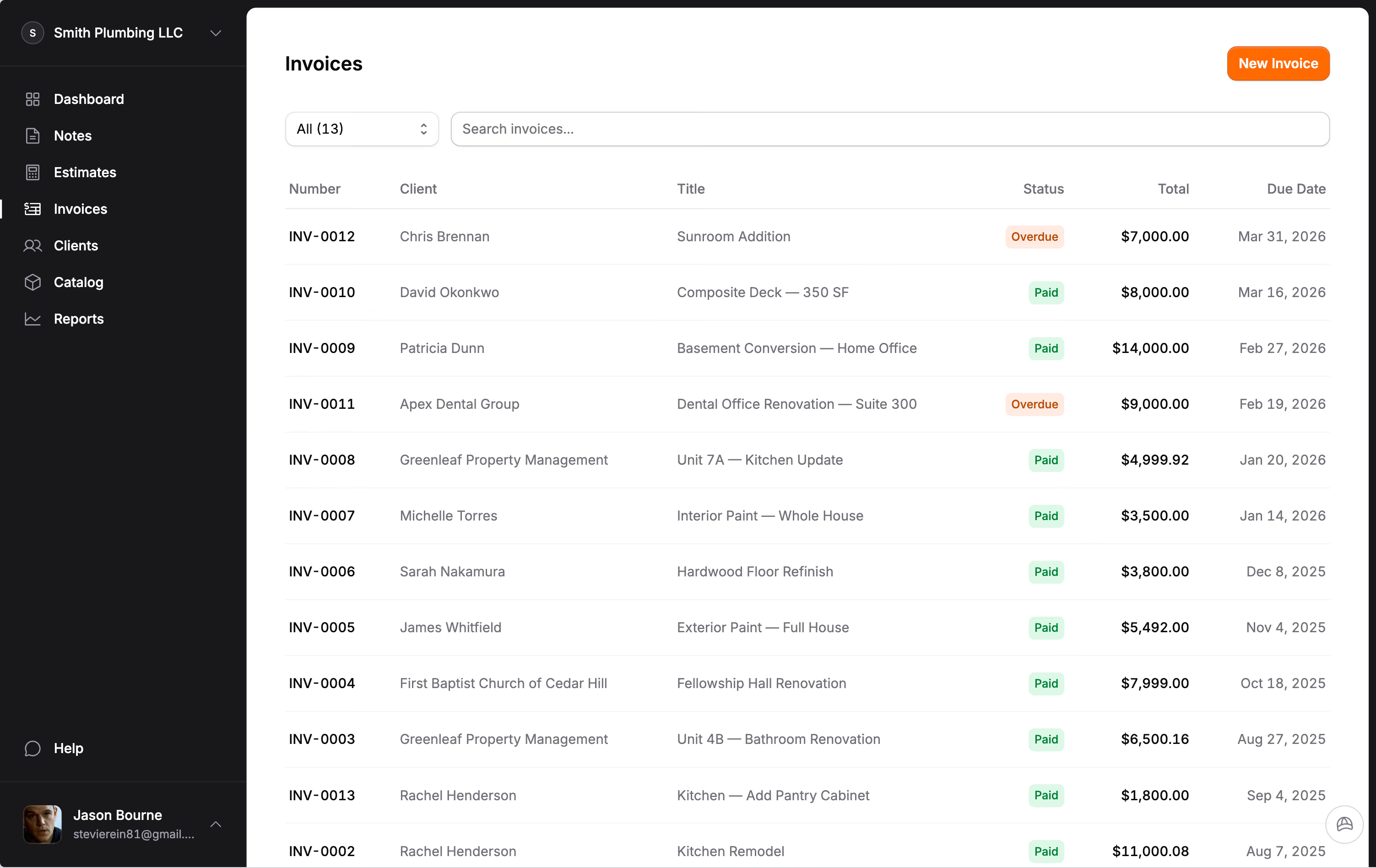
Before you spend a dollar on flyers, open your invoicing list and find every unpaid invoice over thirty days old. The contractor we worked with in Asheville this winter was sitting on $6,800 in stale receivables across four clients while telling himself he needed "more leads." Two of those four paid within a week of getting a single short reminder with the original invoice attached and a payment link. The math is brutal: a $4,200 invoice from October that gets paid this week is worth more than two new estimates that might close in March. Across small contractors we work with, the typical unpaid balance sitting in the system at the start of February lands somewhere between two and five thousand dollars, and most of those clients will pay if asked once, by name, with the original document. We have written about the dispute end of this in what to do when a client won't pay, but the slow-season version is simpler. Send the reminder. Attach the original. Include a one-tap payment link. Move on.
The reason this move beats marketing is that the cost is zero and the timeline is days. A flyer or a Google Ads campaign takes weeks to convert and might not. The reminder you send tomorrow morning either gets paid this week or surfaces a real dispute you needed to know about anyway. Sending it from a tool with a payment link built in turns a thirty-day collection window into a forty-eight-hour one.
2. Send the spring estimates before the phone rings again
The contractors who get crushed in March are the ones who waited for the calls to come back before sending bids. The smarter play is the opposite: estimate the backlog now, while the inbox is quiet enough that you can give each one twenty minutes instead of five. Pull the list of leads from October, November, and December that never got a quote, the ones who said "send me something whenever you get a chance," and send them now. A formatted PDF estimate with a real scope, sections, and a payment link beats a text-message total any day of the week, but it especially beats one in February when nobody else is sending anything at all. Healthy cold close rates land between thirty and forty percent. If you sit on twenty old leads through the slow season and finally get to them in April, you will close maybe four. If you send them this month, you will close six and have crews booked through May.
The other half of this is your estimate template itself. Most contractors have not opened theirs since last spring. The slow season is the right moment to update line items, sharpen scope language, and clean up your terms before the first new bid goes out at the higher rate. Estimating from a single template turns the next twenty quotes into a thirty-minute job instead of a week-long one.
3. Reactivate one specific kind of past client
"Reach out to past clients" is generic slow-season advice that most contractors interpret as "send a mass email to everyone I have ever worked with." That almost never works. The version that does work is narrow: identify every client from the last two years who said "we want to do the kitchen next" or "let's talk again in spring," pull their contact info, and send a two-sentence message naming the specific project they mentioned. Not a newsletter. Not a "stay in touch." A real, addressable note that says "you mentioned the kitchen last September. Spring is filling up. Want me to walk it again?" Across the contractors we talk with, that script consistently converts somewhere between a fifth and a third of the people it goes to. The mass email converts almost nobody. The difference is that one of them sounds like a contractor remembering a real conversation, and the other sounds like marketing.
Keeping that list is the part most contractors skip, which is why the script never gets used. A simple tagged client list with notes from the original walk-through is enough. The system does not have to be fancy. Storing client notes against the client record beats trying to remember which homeowner said what, eight months later, from a phone full of text threads.
A roofer in central Oregon told us he ran this exact play during a slow stretch in February 2025. He pulled fourteen names from the previous fall who had asked about gutters, sent each one a single sentence ("you mentioned the gutter run on the back of the house, want me to come measure?"), and booked four jobs that week without spending a dollar on advertising. "I had been telling myself I needed a website redesign," he said. "Turns out I needed to remember what fourteen people had told me six months earlier."
4. Reprice your template before March hits
The slow season is the right time to reprice. Most contractors wait for a busy stretch to raise rates because it feels safer, but that timing is backwards. When the calendar is full, you do not have time to rework line items, scope language, or terms; you just shove the new number into the existing template and hope nobody notices. February gives you a quiet week to actually rebuild. Pull the three line items that show up on most of your bids, recheck them against current supply-house pricing, and update them. While you are in there, double-check your overhead and margin math: a 30 percent markup is not a 30 percent margin, and the gap is the difference between a profitable spring and a frustrating one. We covered the full version of this in how to raise your prices without losing clients and the math piece in markup versus margin, but the slow-season takeaway is short: reprice in February so the first March bid quietly carries the new number with no announcement required.
The freshness anchor here matters. Heading into spring 2026, materials and wages have both kept moving. BLS producer-price data shows construction inputs still drifting up year over year. A template that has not been touched since last March is leaking margin on every quote it sends.
5. Pick one thing that costs you hours and fix it
The last move is the one most contractors skip because it does not feel urgent. Pick the single workflow that costs you the most weekly time, like building estimates from scratch, chasing signatures, writing invoices on Sunday night, or hunting through text threads for change-order details, and fix that one thing in February. Do not try to overhaul everything. One workflow. One fix. The reason the slow season is the right window is that you actually have the four uninterrupted hours required to set up a new template, build a saved item catalog, or migrate your client list out of three different spreadsheets. The contractor who fixes one thing in February starts March with that hour back every week, compounded across the whole busy season. The contractor who waits until May to fix it loses that hour fifty more times before the year is done.
What this looks like in practice is unglamorous. It is one Wednesday morning, one cup of coffee, one workflow rebuilt cleanly. It is not a project. It is not a software migration. It is one small thing that you will be glad you did the first time you send an estimate from your truck in April without retyping anything you have already typed before.
Spring fills the schedule. February fills the bank account.
If you are looking for one place to start this week, open your invoicing list and circle every unpaid invoice older than thirty days. Then write down the three past clients who said something specific about a spring project. That is the entire morning. The reminders go out by lunch, the past-client messages go out by dinner, and you will know by Friday whether February is actually as quiet as it felt on Monday or whether you had a few thousand dollars and a couple of warm leads sitting in your own inbox the whole time.
Spring shows up either way. The question is whether your March looks like a scramble or a smooth handoff from a February you actually used. The contractors who treat the slow season as a planning window enter the busy one with cleaner pricing, paid invoices, and a backlog of quoted work. The ones who treat it as time off come back to the same inbox they left, three months older.
Frequently Asked Questions
When is the slow season for contractors?
For most US residential trades, the slow season runs from late November through February, with January typically the deepest dip. Construction unemployment usually rises from the low fours in November to nearly seven percent by January, then recovers as spring bidding picks up. Regional weather, trade type, and local market conditions shift the exact window by a few weeks.
How do contractors make money during the slow season?
The highest-ROI moves in the slow season are collecting unpaid invoices, sending estimates on backlog leads from the prior fall, and reactivating past clients who mentioned a specific spring project. Marketing belongs in the rotation, but it pays off slower than these three. Most contractors who thrive in February treat the slow stretch as a planning and collection window, not as time off.
Should I lay off crew during the slow season?
For most small crews, no. Replacing a skilled trades worker in the spring costs significantly more than carrying them through February, both in hiring time and in lost productivity during onboarding. The exception is when the slow stretch is a structural problem, not a seasonal one. If demand has not returned by April, the issue is no longer the season.
Is February a good month to raise contractor prices?
Yes. The slow season gives you the uninterrupted time to rework line items, scope language, and terms before the next busy stretch starts. Repricing the template in February means the first March bid quietly carries the new number with no announcement required. Waiting until you are slammed forces a rushed update that usually under-corrects.
How much cash should a contractor have during the slow season?
Most small-business advisors recommend three to six months of operating expenses in reserve. For seasonal trades, the upper end of that range is more realistic because the slow stretch can last twelve to fourteen weeks before invoices from spring jobs start landing. Building that reserve during the busy months is what makes a quiet February tolerable instead of stressful.