How Solo Contractors Look Bigger Without Faking It
Two solo contractors, both handymen with about ten years on the tools, walked the same kitchen refresh in a Portland suburb on a Tuesday morning in March. Same skill, same honesty, same $18,000 ballpark. One of them landed the work that weekend. The other never heard back. What decided it was not crew size, price, or even the handshake. It was the documents each one sent three days later, and how those documents made the homeowner feel about handing over the down payment.
What the homeowner is actually comparing
Homeowners do not compare crew size. They compare the things you put in their hands. The walk-through, the text messages, the proposal, the change order, the final invoice, the payment process — every artifact the client touches is a signal about whether you are running a business or running errands. A solo contractor sending a formatted PDF estimate with clear line items looks bigger than a ten-person company sending a handwritten total on a notebook page. The ten-person company might do better work. That is not the comparison the client is making at the moment she decides who to hire. She is making a trust call based on what she can see, and everything she can see at this stage is paperwork.
This is counterintuitive because contractors assume clients are judging the work. On the day you are hired, they cannot judge the work. The work does not exist yet. All they can judge is the experience of dealing with you so far, and that experience is almost entirely made of documents.
According to NAHB's Eye on Housing, nearly 80 percent of home builders and specialty trade contractor firms in the United States are self-employed independent contractors. Solo is not the exception in this industry. It is the default. Most of your actual competition for that kitchen refresh is one other person in a pickup truck, not a construction company with a name on a building. That changes the math of what "looking professional" even means.
Stop pretending you have a crew
The advice to hide your solo status is bad advice. Every small-business guide tells one-person operations to say "our crew" and "our team" and never admit it is just you. In our experience working with solo handymen and remodelers, this backfires. Homeowners can tell when someone is pretending. The moment they figure it out, and they always do, the entire relationship tilts toward mistrust. The better play is to acknowledge you are solo, then make your documents so crisp the homeowner forgets it matters. A contractor who says "I am a one-person crew and I handle everything myself, here is the estimate, the contract, and the payment link" sounds honest and organized. A contractor who says "our team will handle it" and shows up alone looks slippery before the job even starts.
One handyman in Salem told us plainly: "The second the homeowner figures out it is just me and I have been saying 'we,' she loses trust in everything I showed her before that. I stopped doing it. Honesty is the upgrade." That stuck with us because it inverts the standard advice. Solo is not a weakness to hide. For a big chunk of residential work, it is the reason the homeowner hired you. They want the person who walked the job to be the person who does the work. Pretending otherwise kills the very thing they liked about you.
Where professionalism actually shows up
Professionalism is not a style. It is a set of specific moments where the homeowner sees how you operate. There are four of them, and each one sinks or carries the impression. The first is the estimate, sent within a day of the walk-through, formatted as a real document with sections, line items, and a signature block. The second is the follow-up, a single clean check-in message that is not pushy and confirms you remembered the scope. The third is the invoice, sent the day the work is finished, not three weeks later from a kitchen table. The fourth is the payment experience: a link, a tap, a confirmation, not a request for a check mailed to an address. Skip any of them and the impression collapses.
The estimate does the heaviest lifting because it sets the entire tone. If your estimate looks like it was typed on a phone in thirty seconds, nothing after that recovers the impression. We have covered this in more depth elsewhere, but the short version is that the homeowner reads your estimate the way she would read a proposal from her accountant or her kid's doctor. The format matters more than the price.
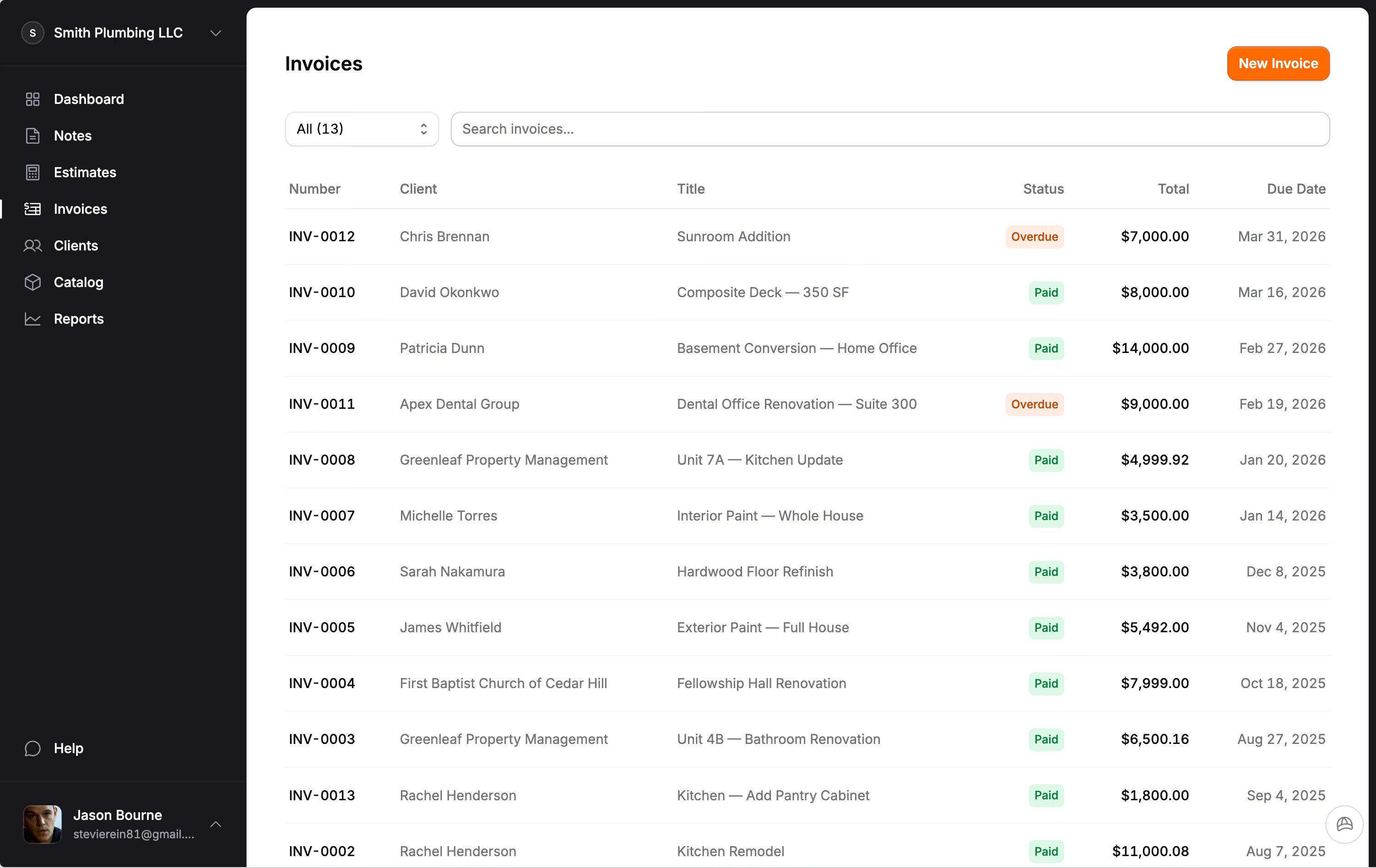
The invoice is the second biggest lever, and it is also the one most often skipped. A contractor who emails a clean invoice the day the work ends, with a direct payment link, gets paid days or weeks faster than a contractor who writes the invoice at home on Sunday. Same work. Same price. Wildly different cash flow. The homeowner remembers which one it was the next time a neighbor asks for a referral.
Same job, two contractors
Here is what the comparison actually looks like in the homeowner's inbox. Picture two solo contractors bidding the same bathroom refresh in the same town within the same week. Same scope, same price range, same trade, equally skilled on the tools. The only difference is the tools each one uses to send documents. Three weeks later, one of them has been paid and the other is still waiting to hear whether the homeowner even wants to move forward. Neither of them did better work. Neither of them was friendlier or faster. The entire outcome rode on six small moments where the homeowner saw how each contractor operated, and all six of those moments were about paperwork, not craft. Here is what each of those moments looked like side by side:
| What the homeowner saw | Contractor A | Contractor B |
|---|---|---|
| Estimate | PDF with logo, line items, signature line | Text message with a total |
| Follow-up after sending | One clean email the next day | Nothing |
| Contract | Digital, signed on phone in ten seconds | Verbal agreement |
| Invoice | Same-day PDF with direct payment link | Handwritten receipt two weeks later |
| Payment experience | One tap, card or ACH | "Can you drop off a check" |
| Change orders | Signed before work began | Disputed at the end |
Neither of these contractors is lying, lazy, or incompetent. They are both solo operators running the best version of their business they know how to run. The only real difference is that one of them has tools that make professional documents easy and the other is still doing it from a notebook and a text thread. That gap is closing fast as tools get cheaper, and the contractors who close it first are the ones winning the comparisons heading into the spring bidding season.
Bigger is not the goal. Buttoned-up is.
The goal was never to look bigger than you are. It was to look like you know what you are doing, regardless of size. Those are two different things, and mixing them up is how solo contractors end up buying slick websites that do not move the needle while their estimates still go out as a notebook photo. Professionalism in the trades is not a logo or a trade show booth. It is the feeling a client gets when every document you send arrives on time, looks clean, and does what it says it will do. Solo contractors who hit that bar outcompete every other solo contractor in their market, and a good number of the bigger ones too.
If you do nothing else this week, pull up the last estimate you sent and read it the way a homeowner would, cold, with three other bids stacked next to it on the kitchen counter. Does it look like something a serious business would send, or does it look like a text message with a dollar sign? That answer tells you where to spend the next hour. The fix is never hiring people. It is fixing the thing you already hand the client every week without thinking about it.
Solo is a good place to be right now. The homeowner already wants the person who does the work to be the person she talked to. You do not have to hide that. You have to match it with documents that earn her trust before the first tool comes out of the truck.
Frequently Asked Questions
How can a solo contractor compete with bigger companies?
Solo contractors compete with bigger companies by being more professional, not by pretending to be bigger. Homeowners choose the contractor whose documents, communication, and process feel organized. A solo operator with clean estimates, fast invoices, and digital payment links outcompetes a larger crew that sends handwritten notes and asks for mailed checks.
Should I pretend to have a crew as a solo contractor?
No. Homeowners can usually tell when a solo contractor is pretending to have a crew, and it undermines trust the moment they figure it out. The stronger move is to acknowledge you are a one-person operation, then let your documents and process look buttoned-up. Honesty plus professionalism is what separates you from contractors who feel slippery.
What do homeowners look for in a professional contractor?
Homeowners judge contractors by the tangible things they can evaluate before work begins: the estimate format, response time, communication tone, and how the payment process works. Skill matters once the job starts, but presentation decides who gets hired. The professional contractors in a homeowner's mind are the ones who feel organized from the first interaction.
How do I make my contractor estimates look more professional?
Professional contractor estimates are sent within 24 hours, formatted as a real PDF document with clear line items and sections, include company info and payment terms, and offer a clear way to accept or sign. The biggest single upgrade most solo contractors can make is switching from typed-up text or handwritten notes to a proper formatted estimate.
Is it okay to be a one-person contractor?
Yes. Being a one-person contractor is a legitimate and often preferred setup for residential work. Nearly 80 percent of trade contractor firms in the United States are self-employed. Homeowners frequently want the person who walks the job to also do the work. The issue is never the size of the crew, it is whether the business side of the operation feels professional.