Is AI Estimating Accurate? What It Gets Wrong on Estimates
AI is good at the parts of an estimate that were never the hard part, and confidently wrong about the parts that decide whether you make money. It will write a clean scope paragraph in ten seconds. It cannot see the job, it does not know what your supplier charged last week, and when it does not know a number it tends to produce one anyway, in the same calm tone it uses for everything else.
Most contractors already use AI for the paperwork, not the pricing
The industry has quietly sorted this out for itself, and the split is worth noticing before anyone sells you the opposite. In the Associated General Contractors of America and Sage 2026 outlook survey, 45 percent of firms used AI for office and administrative work, while 23 percent used it for estimating. Roughly twice as many firms trust it with office work as trust it with the number, and that instinct is correct.
Paperwork is where a wrong answer is cheap and obvious. A clumsy sentence in a terms paragraph gets fixed when you read it. A wrong quantity on a 30-square roof does not announce itself; it sits quietly in a total until the job is half done and the shingles run out.
So the useful question is not whether AI is accurate. It is which parts of an estimate you can check at a glance, and which parts you cannot.
A confident number is not a checked number
General chat tools are built to answer, and an answer that sounds sure is what they are rewarded for producing. That is not our opinion. In a September 2025 paper, researchers at OpenAI argued that language models hallucinate partly because training and evaluation reward guessing over admitting uncertainty, the way a student guesses on a multiple-choice test. For an estimate, that shows up in predictable places. Square footage converted to squares or sheets with the waste factor dropped. A labor figure built from a production rate nobody on your crew has ever hit. A code section cited by number that may or may not say what the sentence claims. Each one reads exactly as confident as the parts that are right.
The fix is not a better prompt. It is knowing that a number from a chatbot is a draft that has not been checked by anyone, including the chatbot.
What it cannot know about your job
Even a perfect model is working without the four inputs that make an estimate yours: the site, your crew, your supplier and your permit office. It did not see the rot behind the siding or the 40-foot carry from the driveway. It does not know your framer is fast on decks and slow on stairs. It does not know that your lumber yard's price moved last Tuesday, and prices are moving. Per the AGC's September 2026 analysis of federal price data, inputs to nonresidential construction rose 8.9 percent from August 2025 to August 2026, with diesel up 77.8 percent and steel mill products up 23.4 percent.
A model trained before those moves is pricing a market that no longer exists. A model with web search is pricing a national average, which is still not the invoice sitting on your dashboard.
None of this is a flaw that the next version fixes. The information simply is not in the text the model can read, and no amount of confidence in the answer puts it there. The only place those four inputs exist is your walkthrough, your crew's last few jobs and the quote on your supplier's letterhead.
Where it earns its keep on an estimate
AI is genuinely useful on the words around the numbers, and on catching what you forgot, because both are things you can verify by reading. Turning a voice memo from the site into a scope a homeowner can follow is a real time saver. So is drafting exclusions, cleaning up a terms paragraph, or asking "what am I missing on a bathroom tear-out?" and getting back a list you can check against the job in two minutes. The pattern is the same every time: the AI produces something, and you can tell at a glance whether it is right, because you know the job and it does not. We wrote about the other side of this, when a customer brings you a chatbot number, in how to handle an estimate checked with ChatGPT.
Same bathroom, two ways to use AI
Asking it for the price: "What should I charge to redo a 5x8 bathroom?" returns a range built from national averages, with no tear-out conditions, no local labor rate and no idea whether the subfloor is sound. It reads like an answer, and every figure in it still needs checking.
Asking it to check your work: "Here is my scope for a 5x8 bathroom. What lines are commonly missed?" returns a list: disposal, a permit, backer board, a vent fan duct run, touch-up paint. You glance at it, add two lines you forgot, and your prices are still yours.
Let it check the estimate, never set the price
Here is the rule some contractors will call too strict: never paste an AI-generated number into an estimate you have not rebuilt yourself, not even as a quick ballpark over the phone. A ballpark becomes an anchor the moment the client hears it, and a figure you did not build is one you cannot defend line by line when they push back. Use the tool to find gaps, tighten wording and catch a missing expiry date. Keep the quantities, the rates and the markup in your own hands. Those three are where your walkthrough, your crew and your supplier live, and they are the part of the estimate a client is actually agreeing to pay. That split costs you almost nothing in speed, because checking your own numbers was always part of the job anyway.
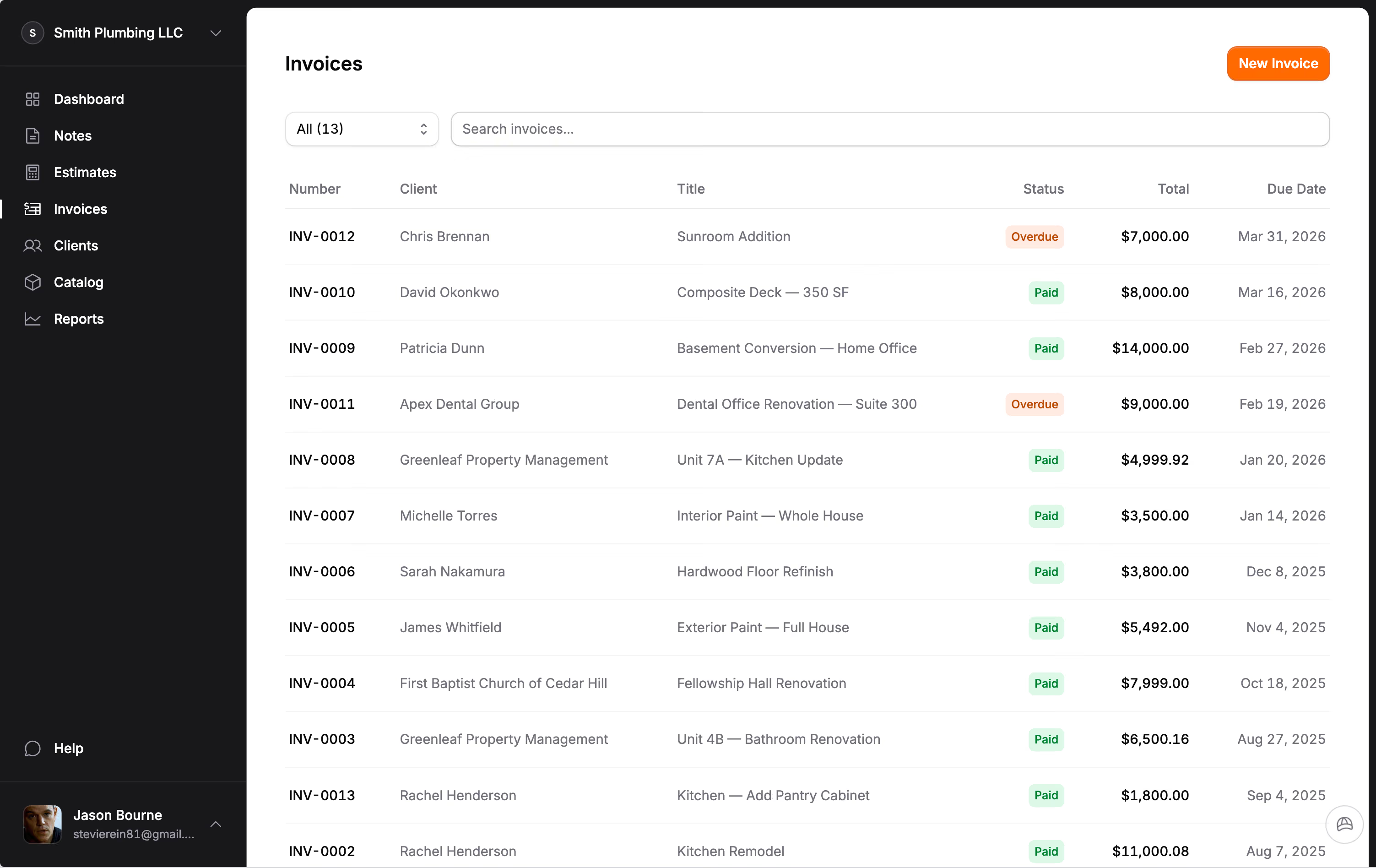
Hank AI is set up the same way. Before you send, Hank's review reads the estimate and suggests what looks missing, from lines to an expiry date to terms. Every suggestion is yours to apply or ignore. When the review adds a line, it prices it from your own catalog or leaves the price blank for you to fill in; it never invents a figure.
The estimate that goes out is still one you read line by line and sent yourself.
Test it on a job you already priced this week
Pick an estimate you sent and won this month, one where you know the real costs. Give a chatbot the scope with no numbers and ask it to price the job. Then compare line by line and mark where it was close, where it was off and where it left something out entirely. Ten minutes of that will tell you more about where to trust it than any article, including this one.
Keep the list of what it got wrong. That list is the part of your job no tool is doing for you.
Frequently Asked Questions
Is AI estimating accurate for construction?
Not on its own for pricing a specific job. General AI tools cannot see the site, do not know your crew or supplier prices, and tend to answer confidently even when guessing. They are far more reliable at drafting scope wording and flagging commonly missed lines, which you can check by reading.
Can ChatGPT do a construction estimate?
It can produce something that looks like one, built from national averages and whatever prices it learned before its training cutoff. It has no site conditions, local labor rates or current supplier quotes, so every quantity and price in it needs to be rebuilt before it goes to a client.
Does AI know current material prices?
Usually not in a way you can bid on. A model trained months ago has not seen recent moves, and prices for nonresidential construction inputs rose 8.9 percent in the year to August 2026 per AGC. Even with web search it finds national averages, not your supplier quote.
How should contractors use AI on estimates?
Use it for the parts you can verify at a glance: turning site notes into a readable scope, drafting terms and exclusions, and asking what lines are commonly missed. Keep quantities, rates and markup in your own hands, and never send a number you did not build yourself.